
© Universität Bielefeld
Vorkurse im Fach Sprachliche Grundbildung
Studienanfänger*innen im Fach Sprachliche Grundbildung sind herzlich eingeladen an einem Vorkurs teilzunehmen, der vom 23. bis 27. März 2026 täglich von 10 bis 16 Uhr stattfindet. Der Vorkurs soll Ihnen […]
Weiterlesen
© Anke Himmelreich
OWLing 2
Sprachrätsel lösen und gewinnen Die Sprachwissenschaft (Linguistik) der Uni Bielefeld lädt Schüler*innen der Klasse 8-13 ein zum 2. regionalen Linguistikwettbewerb der Region OWL (OWLing 2). Neben kniffligen Sprachrätseln gibt es […]
Weiterlesen
© Bau- und Liegenschaftsbetrieb NRW
Rafał Jończyk (Adam Mickiewicz Universität Poznań): How thinking in another language modulates creativity and brain dynamics
Creativity is widely regarded as a key cognitive resource in the 21st century, yet it remains a complex and elusive phenomenon. Language constitutes a central medium of creative thought and […]
Weiterlesen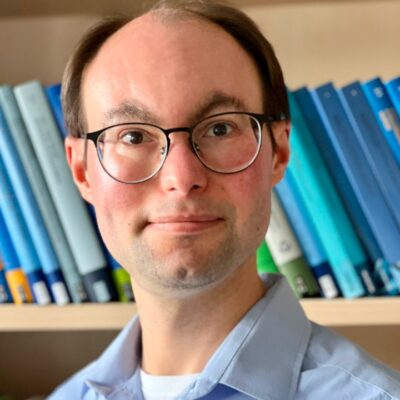
© Stefan Hartmann
Stefan Hartmann (HHU Düsseldorf): Constructions on the verge of a creative breakdown. What constructional idioms reveal about linguistic creativity and productivity
Linguistic creativity has become one of the most prominent topics in Construction Grammar. Taking up Sampson’s now well-established distinction between F(ixed)-creativity and E(xtending)-creativity, constructionist approaches are concerned with both types […]
Weiterlesen
© Sterfoto Vakfotograaf, Zwolle
Muriel Norde (HU Berlin): When creativity becomes routine, and vice versa
Abstract: It is a well-known paradox in current theorising about creativity that successful creative forms may at some point become routine and are consequently no longer perceived of as creative […]
Weiterlesen
© Universität Bielefeld
Marlene Böttcher (CAU Kiel): Filler particles in language contact – What their phonetic form, their frequency, and their use can tell us about heritage speakers
Abstract: This talk focuses on the investigation of filler particles like “uh” or “uhm’” in the speech of bilingual heritage speakers as part of these speakers‘ linguistic repertoire. Filler particles (FPs, Belz […]
Weiterlesen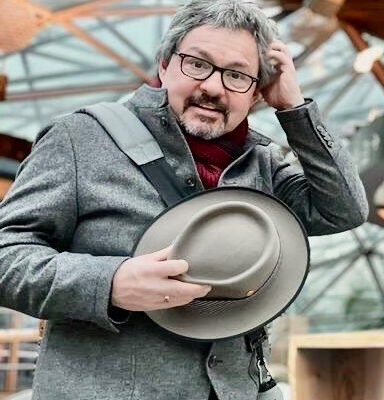
© Eric Fuß
Eric Fuß (Bochum): Whoever’s dogs are running around in the garden is in big trouble. Properties and historical development of ‘asymmetric’ free relatives in German
‘Asymmetric’ free relative clauses, in which a DP undergoes pied-piping along with a fronted genitival/possessive wh-word, exhibit a set of peculiar properties that set them apart from run- of-the-mill free […]
Weiterlesen
© Michael Adamski/ TRR 318
Forschung im direkten Gespräch erleben
Update: Die Veranstaltung muss leider entfallen!
Die neue Veranstaltungsreihe BI.research Talk der Universität macht Spitzenforschung in Bielefeld erlebbar. Interessierte sind in die Wissenswerkstadt eingeladen.
© Hendrik de Smet
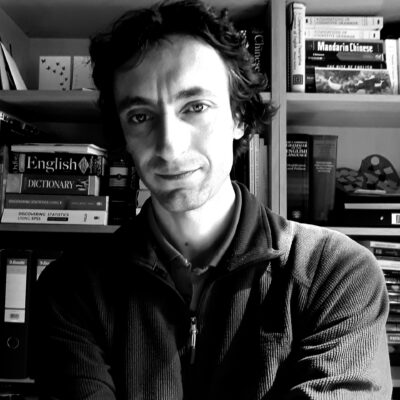
Hendrik De Smet (KU Leuven): In language change, analogy is like gravity: omnipresent, weak, and poorly understood
In this paper I develop a particular view on analogy in language change. Although analogical reasoning underlies both creativity and language change, its involvement comes in different flavours. Where creativity […]
Weiterlesen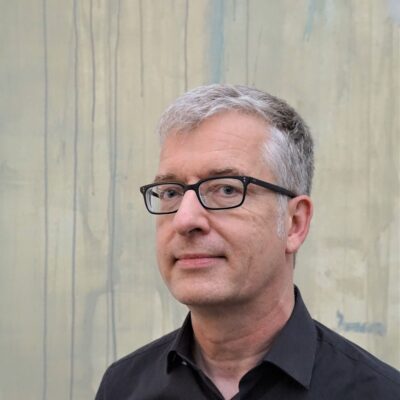
© Sascha Hermannski, Universität Bielefeld
think!lab creativity: Christian Nimtz (Bielefeld): „ Let’s get ‘creative’. Conceptual pluralism about creativity”
Abstract: Conceptual pluralism about creativity holds that we use multiple, systematically related concepts of creativity rather than a single one. I argue for pluralism from the philosophy of language. Both […]
Weiterlesen
© Helen Fu
Joshua Hartshorne (MGH of Health Professions Boston): New findings and a reappraisal of critical periods in language acquisition
Abstract of his talk: Compared with adults, children are sharply limited when it comes to many intellectual activities (math, science, art) or cognitive abilities (memory, attention, social inference). Nonetheless, they […]
Weiterlesen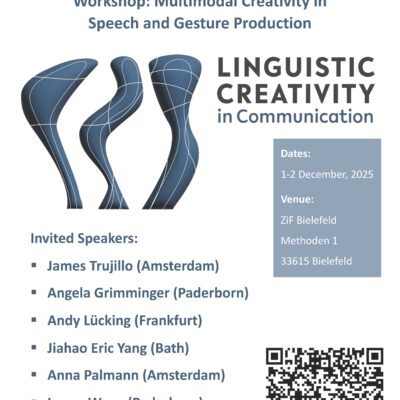
© SFB 1646
Multimodal Creativity in Speech and Gesture Production
The workshop is organized by CRC 1646 Project C02. Its broad topic is how humans employ speech and gesture creatively in communicative challenging situations, e.g., when conventionalized or commonly used communicative resources are […]
Weiterlesen
© TRR 318, Mike-Denis Müller
Sonderforschungsbereich „Erklärbarkeit konstruieren“ verlängert
Der von der Deutschen Forschungsgemeinschaft (DFG) geförderte Sonderforschungsbereich/Transregio „Erklärbarkeit konstruieren“ (TRR 318) der Universitäten Bielefeld und Paderborn geht ab Januar 2026 in die zweite Förderphase.
Weiterlesen
© Universität Bielefeld
Creative Discourse. Beyond Discourse Expectations and Implicit Meaning
The workshop is a collaboration between two projects of the Bielefeld Collaborative Research Center 1646 „Linguistic Creativity in Communication“ and deals with the phenomenon of semantic or pragmatic enrichment, that […]
Weiterlesen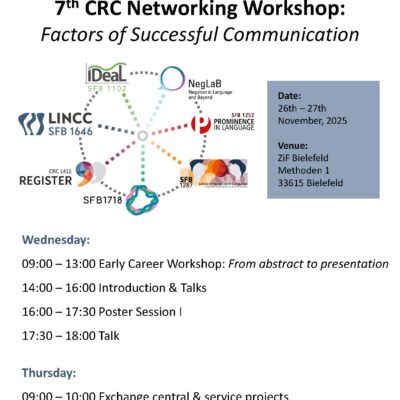
© SFB 1646
7th CRC Networking Workshop: Factors of Sucessful Communication
The Inter-CRC-Meeting for 2025, along with a special Early Career Researcher Workshop, is highlighting „Factors of Successful Communication“. This networking event brings together linguistic CRCs from Berlin, Bielefeld, Frankfurt, Cologne, Potsdam, […]
Weiterlesen
© Universität Bielefeld
SALA2026
We are pleased to announce that the 40th South Asian Languages Analysis Roundtable (SALA-40) will take place from 9th to 11th September, 2026 at the Department of Linguistics, Bielefeld University, […]
Weiterlesen
© Robert Kneschke/stock.adobe.com
Schüler*innen fit machen für die Informationsgesellschaft
Bildungsforschende entwickeln Methoden, um kritisches Denken und den Umgang mit digitalen Informationen zu stärken.
Weiterlesen
© University of Geneva
Julia Langkau (Geneva): „How to think about creativity“
This talk explores how insights from philosophy, psychology, and other disciplines can inform one another in advancing our understanding of creative thought and action, and considers what philosophy can distinctively […]
Weiterlesen
© Universität Bielefeld/V. Mette
„Gerüchte sind Spiegel gesellschaftlicher Unsicherheit“
Gerüchte sind mehr als bloßer Klatsch: Sie zeigen, wie Gesellschaften mit Unsicherheit umgehen. Ein Gespräch mit Historiker Jan Siegemund über medialen Wandel und Wissensgrenzen.
Weiterlesen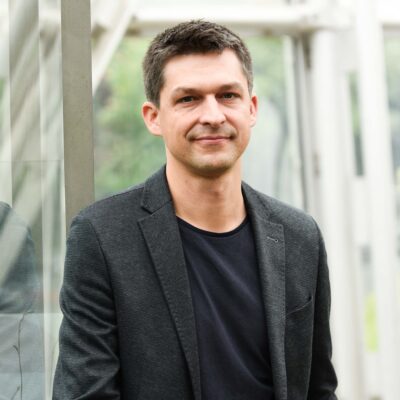
© K. Tzivanopoulos, Uni Graz
Prof. Dr. Mathias Benedek (Uni Graz): The Cognitive Basis of Creative Thinking
Creative ideas change our world, from small improvements in everyday life to major contributions in the arts and science. But what are the (neuro)cognitive mechanisms underlying creative ideas? In this […]
Weiterlesen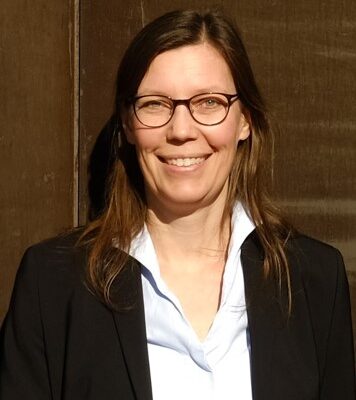
© A. Schwab
Prof. Dr. Esme Winter-Froemel (JMU Würzburg): Worldplay traditions and their dynamics: Between constraints and creativity
The paper focuses on linguistic creativity in its interplay with various types of constraints imposed by the structures of the language system, discourse traditional conventions, situational aspects or individual, self-imposed […]
Weiterlesen
© Wissenswerkstadt
Mitmach-Station: Wer hat’s geschrieben? Mensch oder Maschine? (Geniale Veranstaltung)
Kannst du erkennen, ob ein Text von einem Menschen stammt – oder von einer KI wie ChatGPT? Bei diesem interaktiven Exponat kommst du dem Sprachgefühl auf die Spur: Was macht […]
Weiterlesen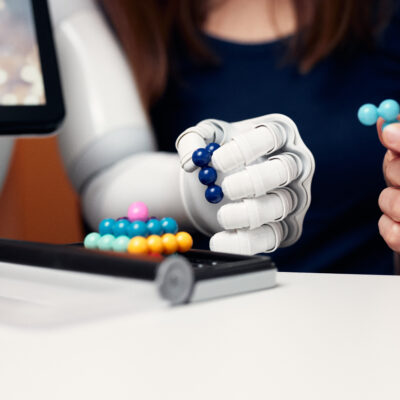
© Universität Bielefeld
Wie Mensch und KI als Team funktionieren
Wie kann Zusammenarbeit zwischen Mensch und KI gelingen? Der Fokusbereich FAITH der Universität Bielefeld erforscht das hybride Teamwork von morgen.
Weiterlesen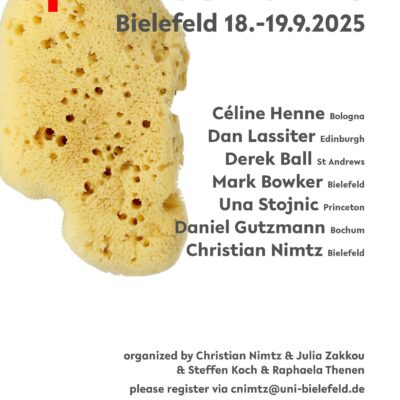
© Universität Bielefeld
Open Texture. A Research Workshop
Are burritos a kind of sandwich? Could bitcoin count as money? Would it be fair to say that action figures are dolls? And should a racehorse count as an athlete? […]
Weiterlesen