© Kate Scardifield
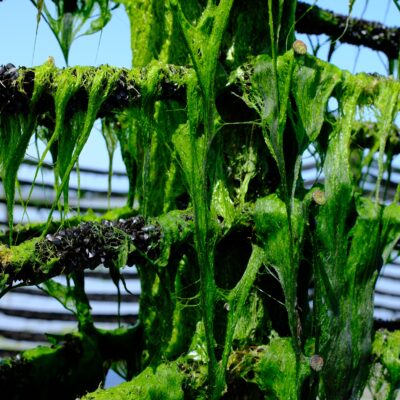
Turn of the Green Tides
Algal blooms are intensifying worldwide, posing growing challenges for ecosystems and coastal communities. The ZiF workshop “Turn of the Green Tides” explores new ways of working with algal biomass to foster coastal resilience and climate adaptation.
Read more »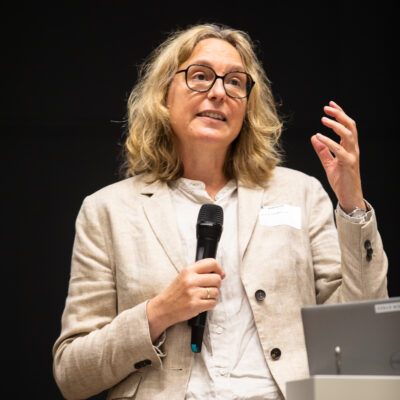
© Bielefeld University/ Stefan Sättele
Gender, Diversity and Social Change
Achievements in gender equality are increasingly being debated.
Sociologist Diana Lengersdorf explains the social dynamics behind these developments.
© Paul Bielefeld, Bielefeld University
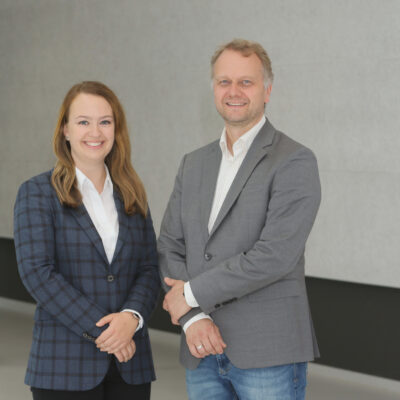
When digitalization and sustainability go hand in hand
How can digitalization and sustainability drive transformation together? In this interview, the organizers of the workshop “Global Responsibility for Twin Transition” explain what matters most in achieving the twin transition.
Read more »
© IRStone/stock.adobe.com
How literature and language construct gender
The Faculty of Linguistics and Literary Studies has invited two visiting professors in Gender Guest Professors.
Read more »
© Bielefeld University
1.58 million euros in funding for physicist Gert Aarts
The researcher is moving to Bielefeld University with support from Wübben Stiftung Wissenschaft. He is known for his work on strongly interacting matter in connection with machine learning.
Read more »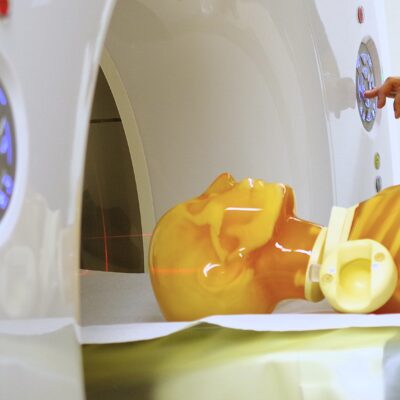
© Elena Berz
Saving lives with physics
Bielefeld University and Evangelisches Klinikum Bethel collaborate in medical physics research and teaching.
Read more »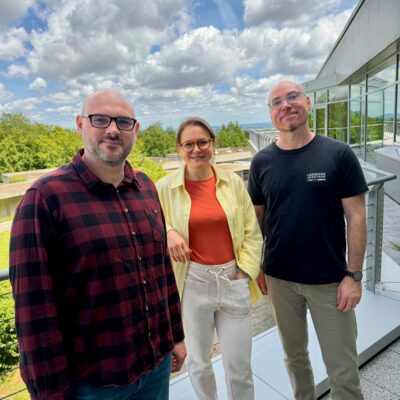
© Rebecca Moltmann
Postsocialist & Postcolonial Legacies Across Borders
The postsocialist legacy continues to shape power relations and conflicts to this day. An international workshop at the ZiF – Center for Interdisciplinary Research at Bielefeld University explores how these interconnections can be better understood.
Read more »
© Kunstzeug/adobe.stock.com
Using AI to harness the gut microbiome for therapies
Consortium uses microbiome data for personalised treatment. Bielefeld researchers contribute bioinformatics expertise.
Read more »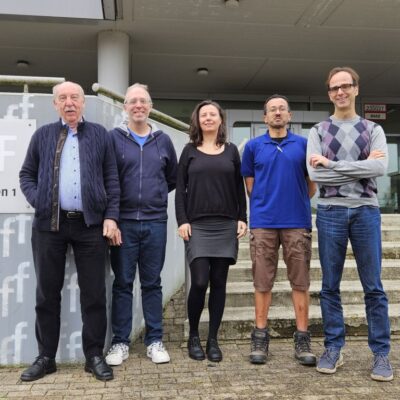
© Bielefeld University/ ZiF
Robust Decisions for Humans and AI
In the latest episode of the ZiF podcast ‘Interspaces’, the leaders of the Long-term Research Group discuss their research and the key challenges facing their interdisciplinary project.
Read more »
© Alejandro Arditi
Study investigates World Cup football fever 2026
Researchers at Bielefeld University are investigating how fans of different national teams physically respond to match events during the 2026 FIFA World Cup.
Read more »
© Marga van den Meydenberg
The nexus of drugs and violence
A new international research group at the Centre for Interdisciplinary Research is investigating how the boundaries between legality and illegality influence economic life, political power and social relations.
Read more »
© Sarah Jonek
In Search of Shared Patterns
Dr Annika Burmester has been awarded a Klaus Tschira Boost Grant, which will fund her interdisciplinary research in mathematics. In this interview, the postdoctoral researcher discusses international influences and new opportunities for her work.
Read more »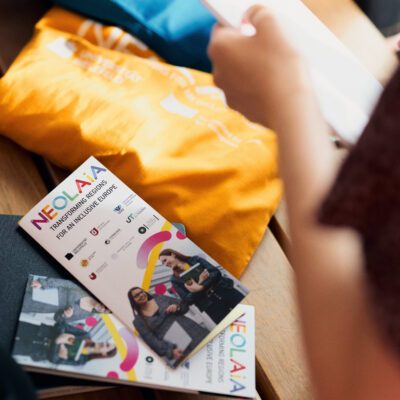
© Bielefeld University
Your first experience abroad, made easy
On Europe Day on 9 May, Bielefeld students will report on their experiences abroad in the European University Alliance NEOLAiA.
Read more »
© Bielefeld University
Deconstructing ‚Displacement‘, Reconstructing Housing
An international research group at Bielefeld University’s Centre for Interdisciplinary Research (ZiF) is exploring what good housing solutions might look like.
Read more »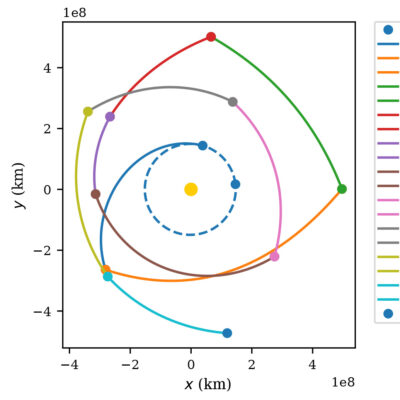
© Isaac Rudich
Space logistics on the right track
How does one plan a space mission that involves visiting multiple celestial bodies which are constantly moving? Researchers at Bielefeld University have, for the first time, developed a precise mathematical approach to this problem.
Read more »
© Patrick Pollmeier
‘We want to develop AI with people rather than for them’
Artificial intelligence meets inclusion: Interview on new approaches to medical participation in the AI*IM Focus Area.
Read more »
© Philipp Ottendörfer
Three questions on post-socialism and coloniality
Can post-socialism be colonial? Research group leader Professor Dr Anna Amelina explains how this question is being explored from an interdisciplinary perspective at the ZiF in Bielefeld.
Read more »
© Bielefeld University
The Power of the Individual – Talks Now Online
The Individualisation Symposium 2026 brought leading researchers to Bielefeld. Two of the talks are now available online, offering insights into cooperation and social identity in humans and animals.
Read more »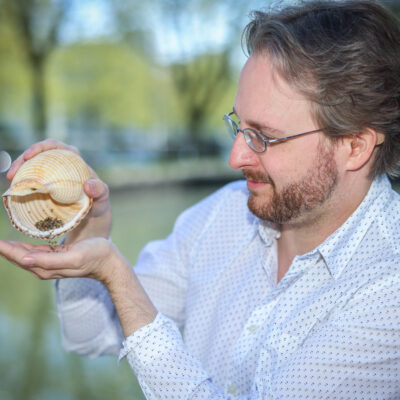
© Sarah Jonek/ Bielefeld University
Why No Individual Is Like Another
Why do animals behave differently, and what are the consequences of this? A research team from the Collaborative Research Centre NC³ now provides a new explanation: epigenetic processes may play a key role.
Read more »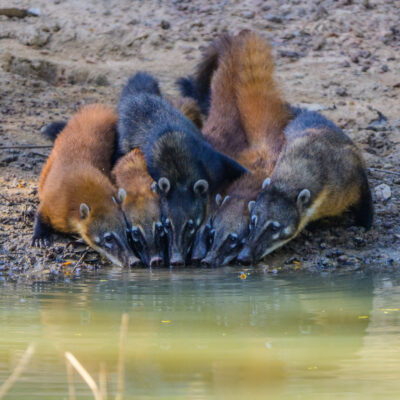
© Oliver Krüger
The Power of the Individual
At the Individualisation Symposium 2026, leading international researchers will gather at Bielefeld University to explore how individual differences shape social relationships in humans and animals.
Read more »
©
Measuring and Managing Uncertainty
An international series of workshops in March will bring together researchers from mathematics, economics, computer science, psychology, and sports science to develop new methods for dealing with uncertainty.
Read more »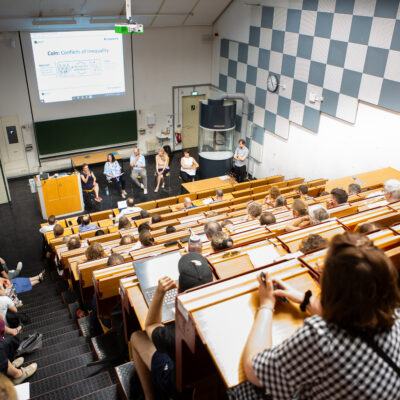
© Stefan Sättele
Researching inequality, understanding conflicts
Inequality triggers conflict. The CoIn Focus Area is creating a framework to explore these tensions in an interdisciplinary manner and to decipher their causes.
Read more »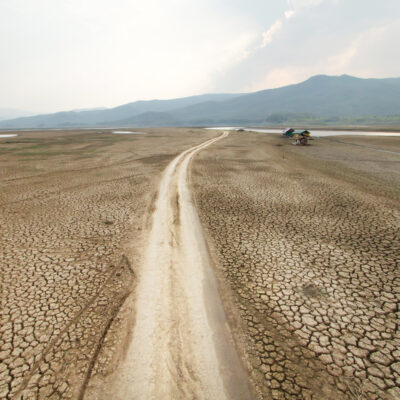
© piyaset/stock.adobe.com
From climate risks to football fever
Systematically quantifying and managing uncertainty is the core of the QUAMU Focus Area.
Read more »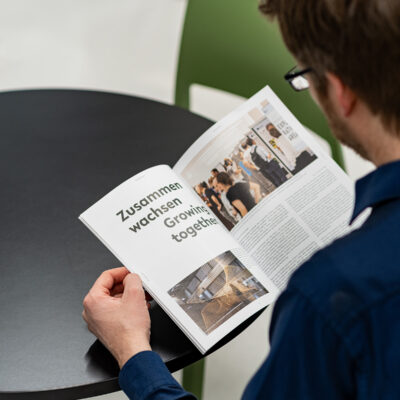
© deteringdesign
New BI.research: Growing together
13 Focus Areas are bringing together academics from different disciplines to advance outstanding topics. They demonstrate how the university is growing together. The new BI.research magazine presents them all.
Read more »