From April to July, the research group “Postcolonial and Postsocialist Interdependencies Across Borders” will be working at ZiF. Convened by Anna Amelina (Chemnitz), Karolina Barglowski (Luxembourg), Helma Lutz (Frankfurt a.M.) and Andreas Vasilache (Bielefeld), the group brings together researchers from various disciplinary fields to study long-term complex interdependencies between postsocialist and postcolonial relations. The group will focus on the cross-border interactions and entanglements within and between former socialist countries and regions. We asked convener Anna Amelina, a professor of intercultural communication, about the project.
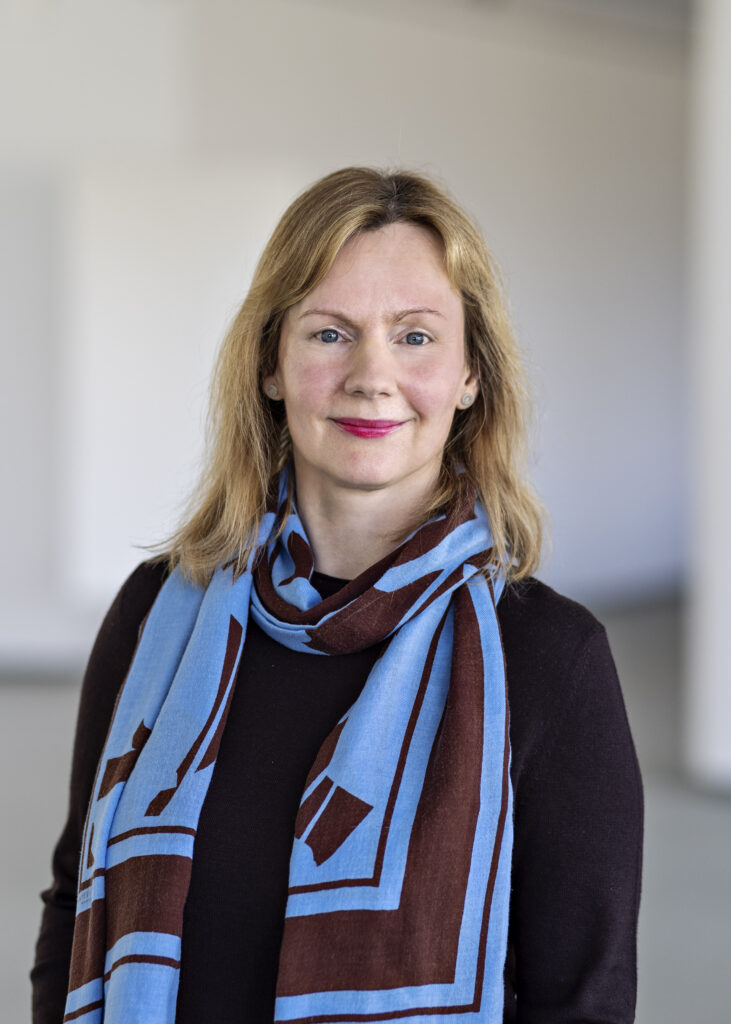
© Bielefeld University/ P. Ottendörfer
What do you mean by ‘post-socialism’?
Broadly speaking, post-socialism refers to the set of social, political, and economic conditions that emerged after the collapse of socialist regimes, primarily in Central and Eastern Europe, the former Soviet Union, and parts of Central Asia and Africa, following the fall of the Berlin Wall in 1989 and the dissolution of the USSR in 1991.
More precisely, the research group defines post-socialist societies as those shaped by the collective experience of three major ruptures: the collapse of a centrally planned (command) economy, the end of one-party authoritarian rule, and the abandonment of official Marxist-Leninist ideology.
Maybe the most important legacy in this regard is the notion of socialist “civilizing mission”: the idea that socialism was spreading progress and equality to “backward” populations. Therefore, our group studies how these missionary claims around socialist modernity have contributed and still contribute to hierarchies of race, gender, and belonging across former socialist geographies.
How do you plan to address the central question?
The central question of the project – “can postsocialism be colonial?” – is addressed by a combination of conceptual innovation and empirical investigation across five thematic areas: citizenship, violence, migration and mobility, collective memories, and gender relations. These themes are not arbitrary: they are the domains where the post-socialist as ‘postcolonial’ relations are empirically most visible.
What role does interdisciplinary collaboration play in this project?
Interdisciplinary collaboration is not merely a methodological preference here: it is an epistemological necessity. The central question of the project (can post-socialism be colonial?) cannot be answered by any single discipline alone, because the (quasi-) colonial logics in post-socialism are simultaneously historical, political, economic, spatial, cultural, and gendered phenomena.
The group brings together scholars from sociology, political science and international relations, history, geography, education, ethnology, and gender studies. Each discipline contributes a different analytical lens: historians trace long-term continuities; geographers map spatial inequalities; gender studies scholars reveal how colonial hierarchies are reproduced through the body and sexuality; sociologists examine societal conditions and changes; political scientist and IR scholars focus on institutional as well as international settings and dynamics.
Public outreach is also genuinely important to us. We don’t want this research to remain confined to academic journals. Therefore, we will be hosting a public stakeholder workshop in July. The program includes public lectures from leading international experts, as well as two panel discussions designed to encourage cross-sector dialogue.
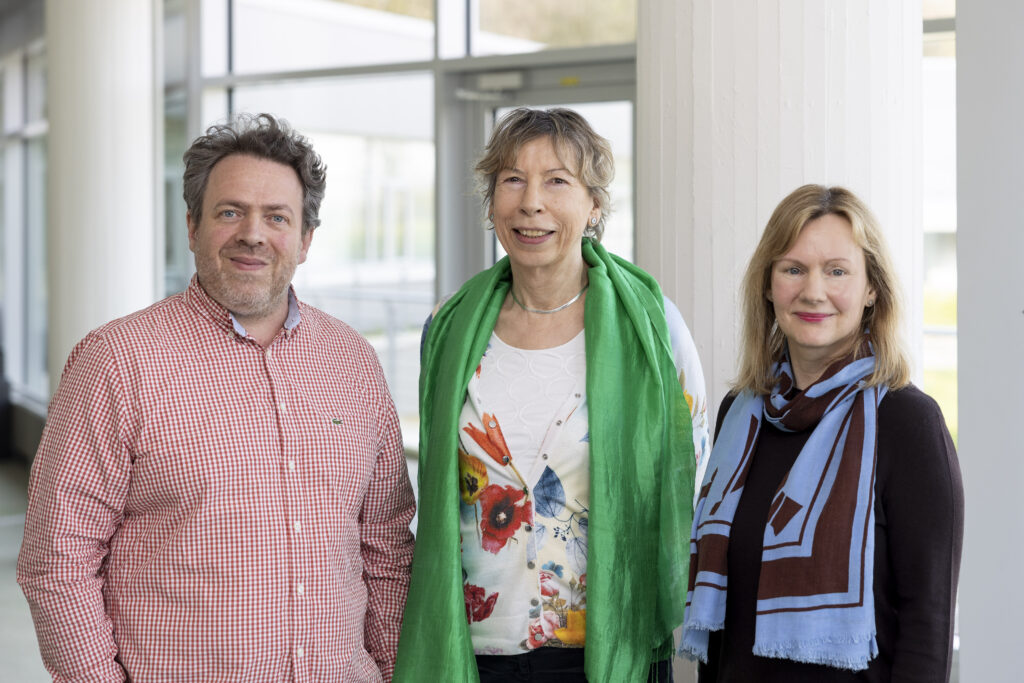
© Bielefeld University/ P. Ottendörfer