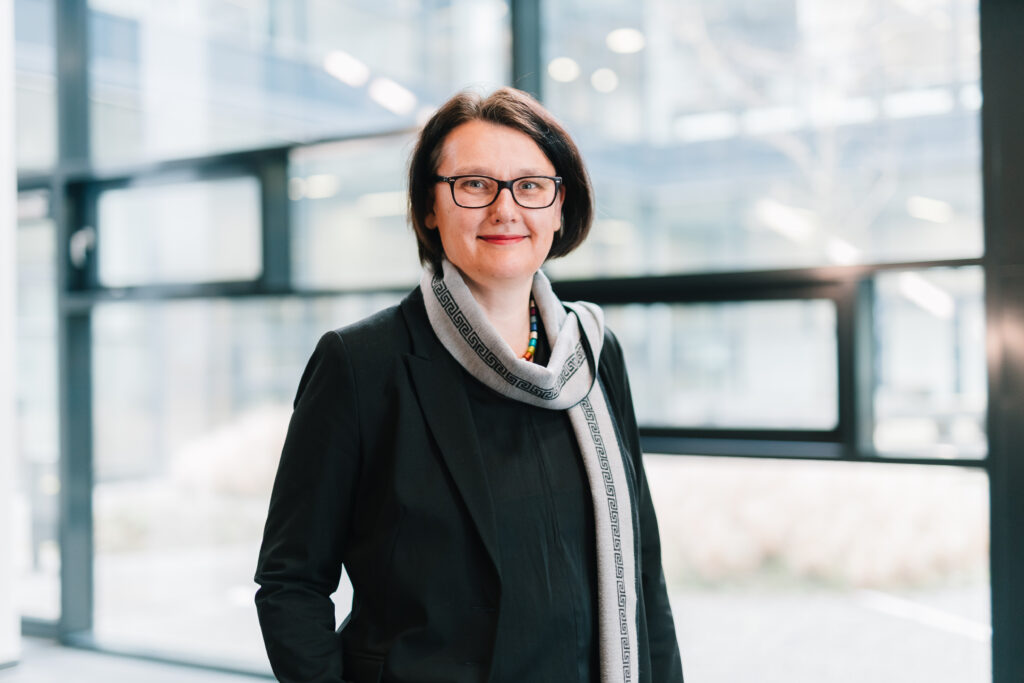
How can artificial intelligence (AI) help people with cognitive impairments navigate the often stressful complexities of everyday healthcare? On the occasion of the European Day of Protest for the Equality of Disabled People on 5 May, the AI*IM focus area at Bielefeld University is worth a closer look. In this research network, experts from the fields of medicine, technology, and the humanities are working together with one clear goal in mind: genuine participation instead of just support. Professors Dr.-Ing. Anna-Lisa Vollmer and Dr.-Ing. Britta Wrede reveal how AI can help make healthcare more accessible for everyone.
What does the name AI*IM stand for?
Anna-Lisa Vollmer: AI*IM stands for ‘Artificial Intelligence and Inclusive Medicine’. We want to use AI-based assistive technology to support people with cognitive impairments in order to improve their participation in medical environments and beyond. Our vision is to compensate for individual functional limitations—for example, in understanding, communicating, or dealing with complex situations.
Britta Wrede: Initially, the target group is people with what are known as intellectual disabilities. However, in the long term, we are thinking beyond that to target all age groups and forms of impairment.

© Patrick Pollmeier
That sounds like a pretty broad approach. How are you addressing it in research?
Vollmer: What makes AI*IM special is its participatory approach. We want to develop AI with people rather than for them. We are involving people with cognitive impairments right from the start: for example, as inclusive teaching assistants, ITAs, who work with us to shape teaching and research. They are participating actively in the FRiMeL project on implementing inclusive teaching in medical study courses led by Tanja Sappok, professor of inclusive medicine at Mara Hospital.
Wrede: We also take an interdisciplinary approach in our work: more than 40 researchers from the fields of medicine, technology, psychology, philosophy, linguistics, health science, educational science, and sociology are contributing their expertise. We are also in contact with Bielefeld University’s Accessibility Services, the ZAB. Sometimes, so many different perspectives slow processes down, but it makes them much more real to life. And it creates a space in which you can simply ask questions if you don’t understand something, and you don’t have to feel shy.
© Michael Adamski
How can you integrate your research findings successfully into people’s everyday lives?
Vollmer: That’s a major topic. Because what comes out of research is usually a prototype and not a market-ready solution. We are currently also investigating how we can make this transfer work. A health sciences team member has conducted more than 50 interviews with stakeholders throughout Germany who contribute to the successful transfer of projects from research to healthcare. We need such third-party partners — that is, start-ups, companies, other university departments, or consultancies — to help us move technology from research into healthcare practice. And, at the same time, we need to build up trust: not everyone in the medical field is tech-savvy. There is a need to accept that technology can really help.
What ethical challenges do you encounter in this process?
Wrede: One example is the issue of consent to participate in studies. Who is considered capable of giving consent? Currently, the law regulates this in quite general terms. But in reality, maturity is context-dependent: in some situations, a person may well be able to make an informed decision; in others, they may not. We are currently developing a research concept to address this together with experts from sociology and philosophy. The aim is to portray reality in more differentiated ways and thus make it fairer.
Doctor anxiety: how technology can help

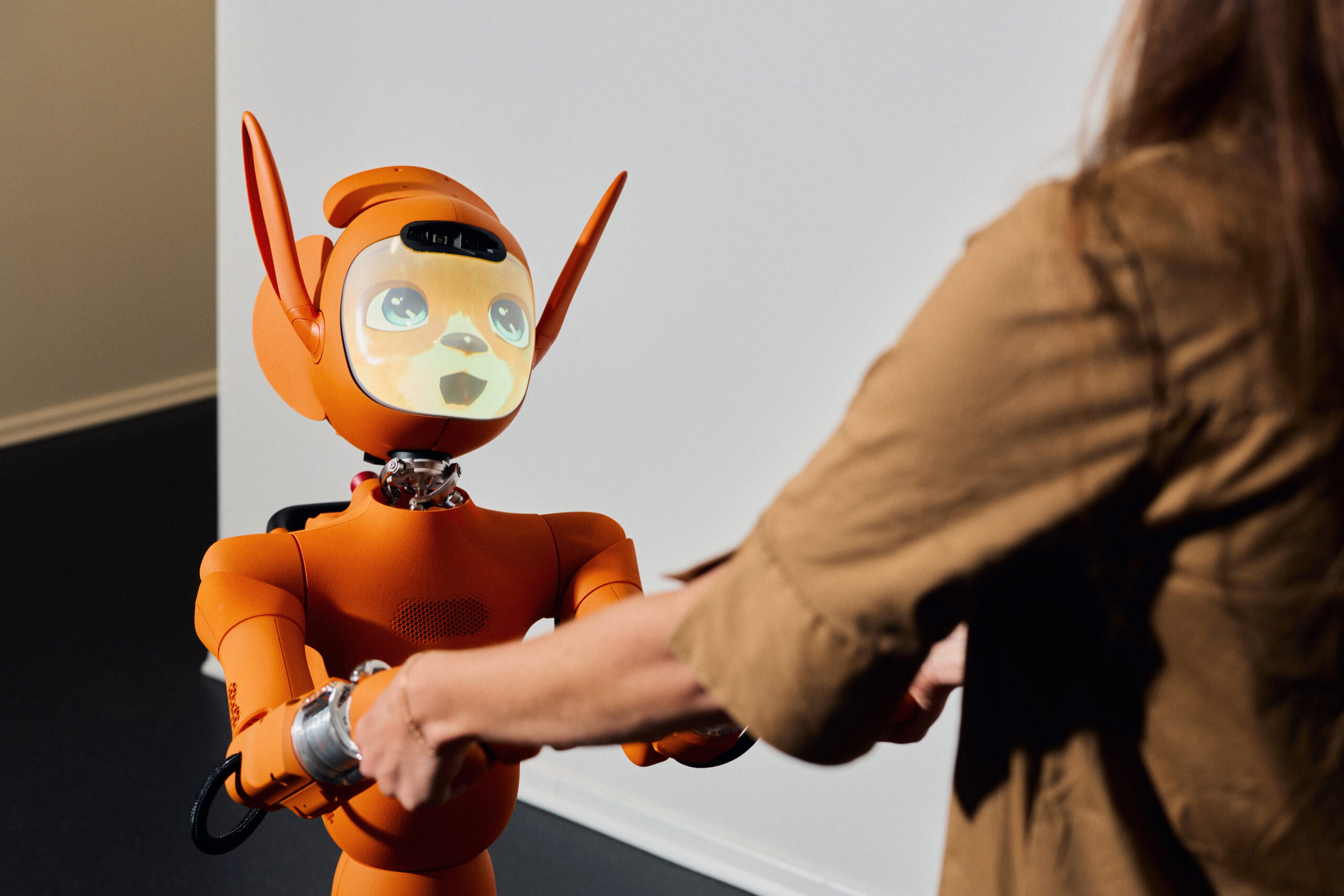
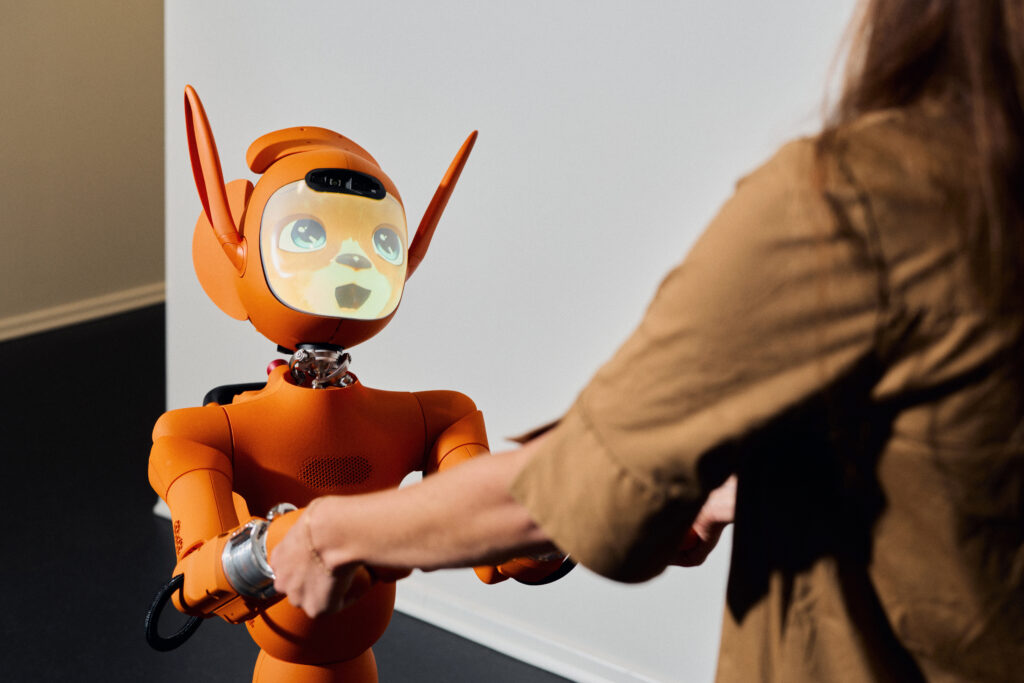
In the VR*IM research project, the AI*IM team is investigating how we can help people who are afraid of visiting the doctor—especially those with cognitive impairments. Having blood taken, for example, can be very threatening for them, and this sometimes leads them to refuse necessary treatment out of fear. This is not only stressful for the patient, but also places a strain on the healthcare system. We can use extended reality to simulate medical situations before they actually take place.
This allows patients to practise, for example, baring their arm. Actively experiencing this creates a sense of security, alleviates fear, and provides information about the procedure and the body’s responses—for example, that any blood taken is naturally replenished.
Do other universities also have a research focus like AI*IM?
Wrede: Not in this form. What makes AI*IM special is the combination of two strong local competencies: CITEC — our Center for Cognitive Interaction Technology — and inclusive medicine with Bethel in a region with a strong focus on people with cognitive impairments. This combination is unique.
© Patrick Pollmeier

© Patrick Pollmeier
How can students participate in AI*IM?
Vollmer: We are currently planning an inclusive medicine curriculum in which assistive technologies also play a role. Students can develop their own ideas, test systems, or contribute concepts for further development in project seminars. The ITAs — people with cognitive impairments — will also be participating as co-lecturers. This not only makes the course more practical, but also changes perspectives. Has there been a special moment for you personally in your work up to now?
Was war für Sie persönlich ein besonderer Moment in der bisherigen Arbeit?
Wrede: Our kick-off day at the beginning of May 2025. More than 35 people from all areas were there—some with cognitive impairments, all highly motivated. What particularly impressed me was everyone’s openness. No one had to pretend to be anyone but themselves. Everyone was able to ask questions, contribute ideas, and help shape the programme.
Vollmer: That’s exactly what we want for the future: to preserve this spirit, and bring about real change.
The Focus Area AI*IM

Focus Area: Interactive Inclusive AI for People with Cognitive Disabilities (AI*IM)
Spokespersons: Professor Dr.-Ing. Britta Wrede, Professor Dr med. Claudia Hornberg, Professor Dr med. Tanja Sappok, Professor Dr.-Ing. Anna-Lisa Vollmer
Coordination: Professor Dr.-Ing. Anna- Lisa Vollmer, Emma Rüther
Faculties: Medical School OWL; Faculty of Technology; Linguistics and Literary Studies; Public Health; Educational Science; Psychology and Sports Science; Sociology; History and Philosophy and Theology; Biology
Institutions: University Medical Center OWL, Mara Hospital, University Clinic for Inclusive Medicine, Center for Cognitive Interaction Technology (CITEC)
Website: uni-bielefeld.de/forschung/profil/ fokusbereiche/aiim
Background: Focus Areas are interdisciplinary research networks at the university. Each of the 13 Focus Areas builds on successful research approaches and externally reviewed research projects – a strong foundation for scientific excellence.