Why do animals behave differently, and what are the consequences of this? A research team from the Collaborative Research Centre NC³ at Bielefeld University and the University of Münster now provides a new explanation: epigenetic processes – chemical markings on DNA – may play a key role. The study links individuality, environmental adaptation, genetics, ecology, and evolution in a novel way.
Key Facts at a Glance
- A 16-member research team from the Collaborative Research Centre NC³ proposes that individual differences in animals are closely linked to epigenetic processes – chemical marks on DNA that regulate which genes are activated.
- The study suggests a new reciprocal relationship: Epigenetic changes can influence how individuals interact with their environment, and the environment, altered by individual choices, can in turn give rise to new epigenetic patterns.
- By jointly considering genetic, epigenetic, and observable differences, the researchers provide a fundamentally expanded understanding of ecological and evolutionary processes, explaining how diversity arises and is maintained in natural populations.
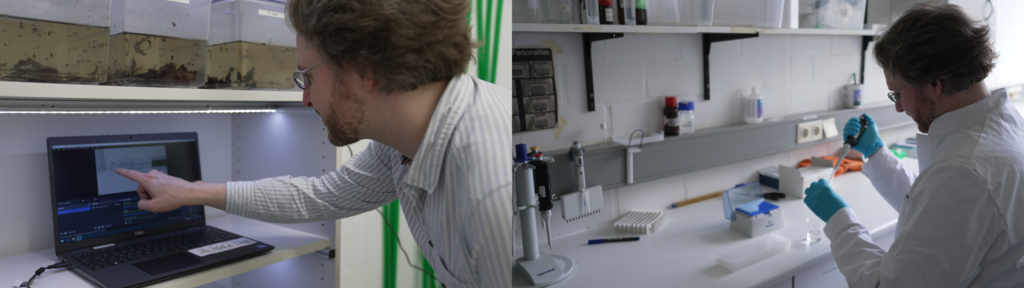
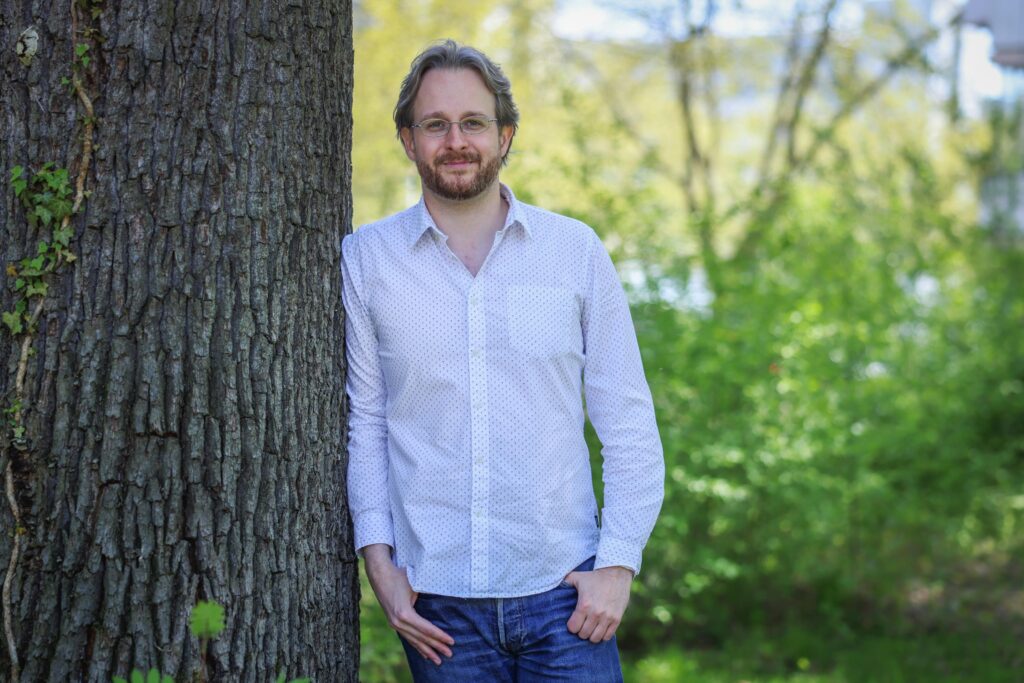
“With our study, we propose that individuality and epigenetic variation influence each other,” explains Dr. Denis Meuthen, an evolutionary biologist at Bielefeld University, who is one of the study’s main authors. “This bidirectionality – this mutual interaction – helps us to better understand ecological and evolutionary processes.”
© Bielefeld University
Epigenetics as a key mechanism
At the center of the study is epigenetics. This refers to chemical modifications of DNA in which small molecules attach to the genetic material. These modifications do not alter the genetic sequence itself, but they regulate how frequently a gene is translated into proteins. Proteins, in turn, shape the observable traits and characteristics of an organism.
Thus, the same genetic blueprint – the same genotype – can give rise to different appearances, known as phenotypes. The researchers propose that epigenetic mechanisms contribute to how animals develop their individual ecological niche. An individual niche is the range of environmental conditions under which a specific individual with a given set of traits could possibly live and reproduce. It is a subset of the species’ niche that arises from the interaction of the individual with its environment.
© Sarah Jonek/ Bielefeld University
Interplay between environment and molecules
The researchers distinguish between epigenetic changes triggered by environmental factors and those that arise independently, such as genetically determined or spontaneously occurring modifications. All forms play different roles in shaping individual differences.
What is particularly noteworthy is the idea that it is not only epigenetic processes that influence an individual’s behaviour and, consequently, their environment, but that, conversely, the environment altered by individual decisions can also give rise to new epigenetic patterns. For example, individuals may seek out a new living environment or alter their surroundings by building a nest, which in turn affects the epigenome – the totality of all epigenetic marks. Even without direct inheritance via the germline, the epigenome can thus be altered in offspring.
This has far-reaching consequences: such processes could buffer natural selection and thereby generate and maintain epigenetic diversity within populations. For understanding ecological and evolutionary processes, this represents a shift in perspective. Rather than examining genetic or phenotypic differences in isolation, researchers should analyse genetic, epigenetic and observable traits of the same individuals together.
This concept helps explain how environmental change is linked to individualization. In times of climate change and biodiversity loss, it provides an important foundation for better assessing the adaptive capacity and resilience of natural populations.
The study is part of research on individualization in changing environments at JICE – Joint Institute for Individualisation in a Changing Environment – and the Collaborative Research Centre NC³ (SFB-TRR 212). At Bielefeld University, research on individualization in changing environments is brought together within the InChangE focus area.
Statement by Dr Denis Meuthen:
“For me, what makes this work special is that we no longer view individuality solely as the result of genetic differences, but as a dynamic process between organisms and their environments. I am convinced that this provides an important foundation for thinking about ecological and evolutionary processes in a more realistic and integrative way.”
Original publication:

Meuthen, D., Hoffman, J.I., Kurtz, J., Berthelsen, A. L., Chakarov, N., Chen, R.S., Coculla, A., Gadau, J.R., Gossmann, T.I., Mühlenhaupt, M., Chavarria-Pizarro, T., Rapp, T. M., Sepers, B., Vellnow, N., Xu, S., Vendrami, D.: Exploring the interplay of epigenetics and individualization. Trends in Ecology and Evolution. DOI: https://doi.org/10.1016/j.tree.2025.12.010. First Published on 24.03.2026.