When a medical breakthrough drastically extends human life expectancy, what does that mean for our society? At first glance, it appears to be a triumph. Yet for insurance providers, pension systems, and individuals alike, such a development presents profound challenges: what happens when we can no longer reliably predict how long people will live? How do unfore – seen events affect business models or actuarial calculations? This is precisely what the interdisciplinary QUAMU Focus Area is addressing.
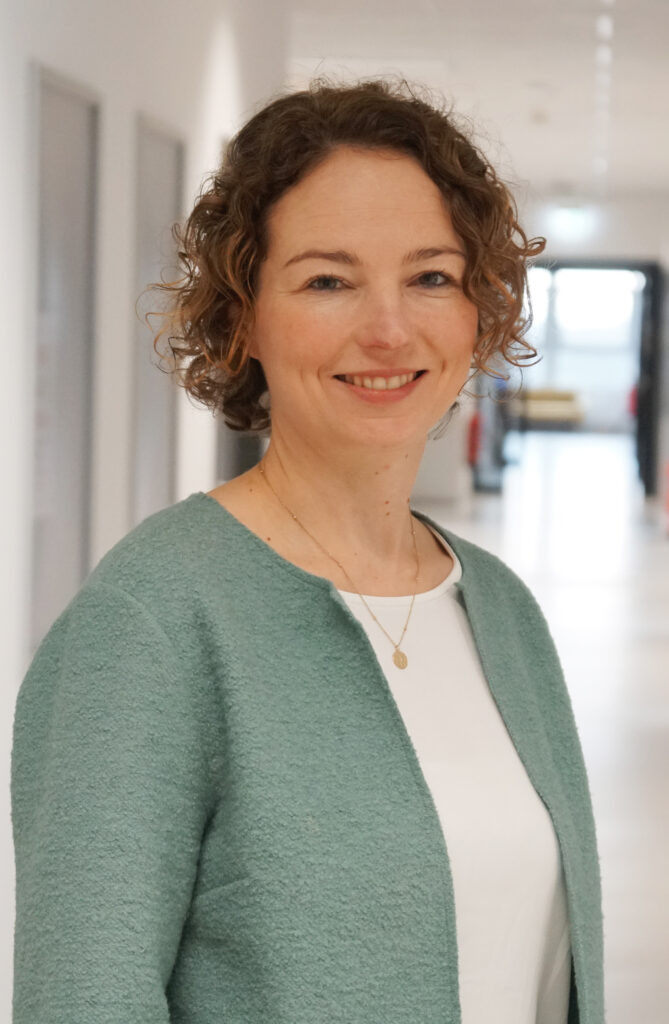
‘Of course, longevity is first and foremost something we value,’ explains Professor Dr Maren Schmeck, one of the spokespersons for the Focus Area. ‘But it also comes with consequences—for example, ensuring financial security in old age.’ Together with Professor Dr Frank Riedel, she heads the network that brings together around 25 researchers from the fields of economics, mathematics, psychology, sports science, biology, and data science.
© Bielefeld University
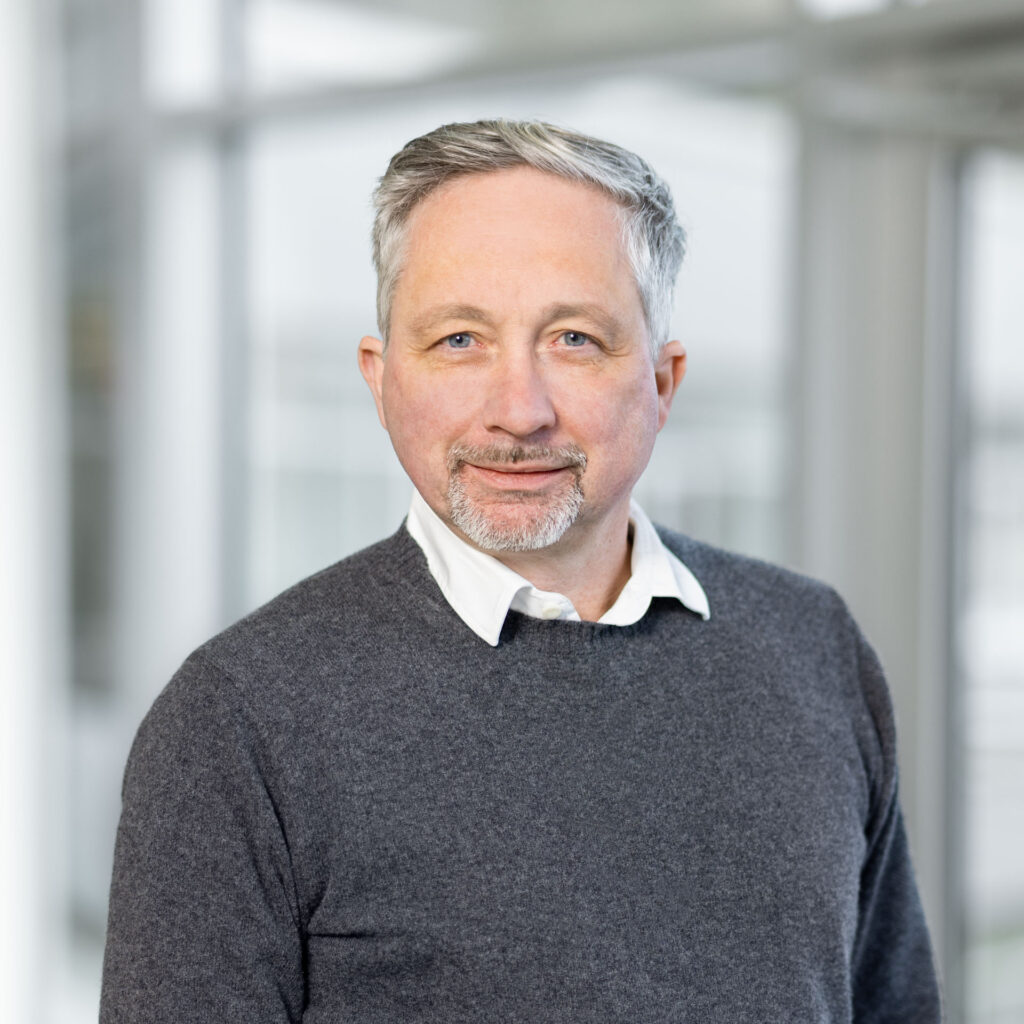
Their shared goal is not just to understand uncertainty in theory, but to make it measurable—and to use this knowledge to develop strategies for socially relevant challenges. ‘Our language is mathematics, but our approach extends far beyond that. We ask what impact this uncertainty has on society’, says Riedel.
QUAMU thrives on collaboration and exchange: fourteen professors, nine postdocs, and several young researchers are working closely together—often across disciplines and national borders. The research is inclusive, interdisciplinary, and international.
Three examples: weather, narratives, football
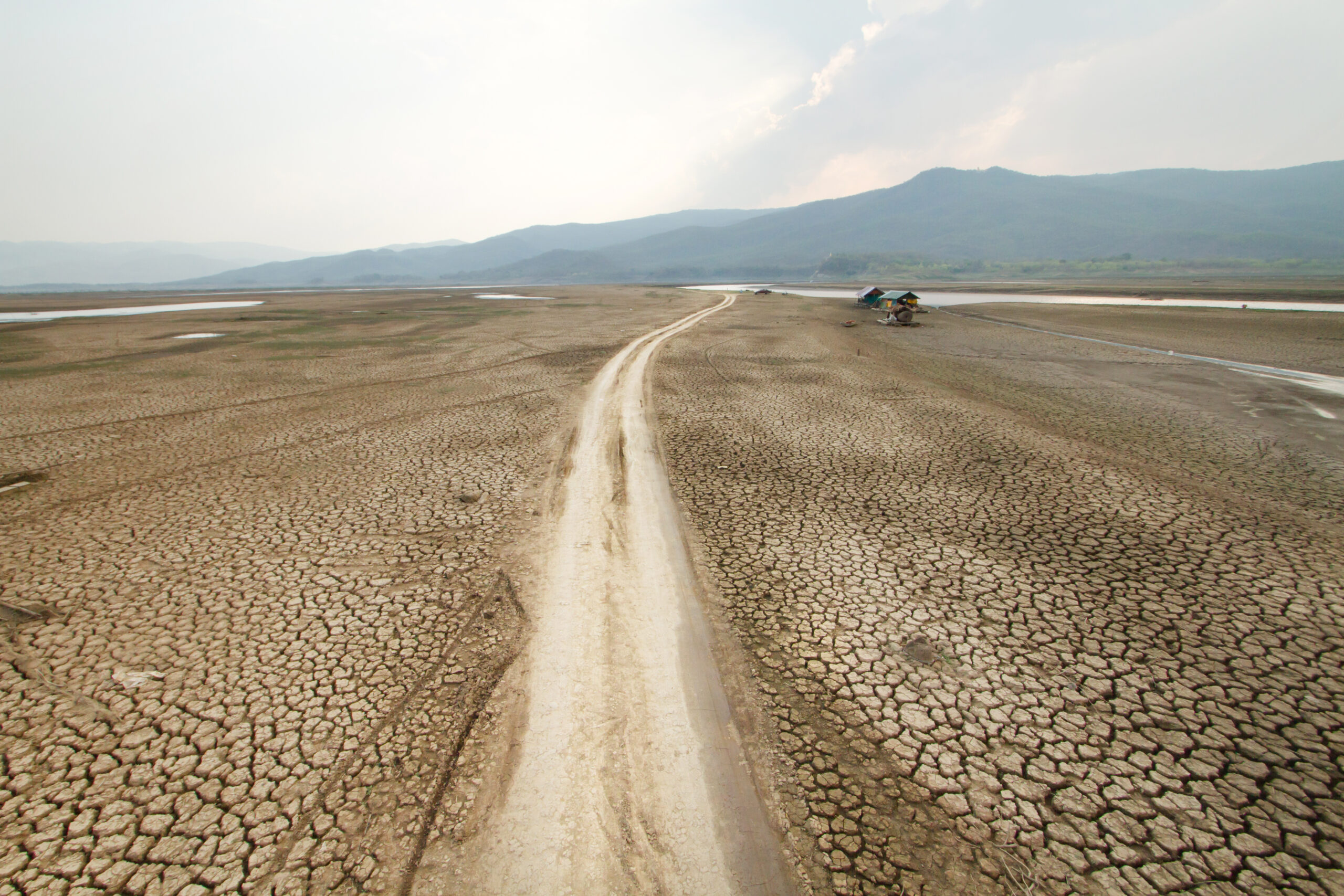
One project is exploring how uncertainty about the occurrence of extreme weather events—considered unlikely but catastrophic when they do happen—affects our economic willingness to pay for measures to prevent or mitigate climate damage.
© Philipp Ottendörfer
Other projects demonstrate just how broad QUAMU’s scope is. For example, the ‘Football Fever’ project, a collaboration between sports science and data science, studied fan reactions during the DFB Cup Final in which Arminia Bielefeld competed for the first time. More than 140 participants wore fitness bands or smartwatches that recorded their heart rates throughout the match. Researchers analysed these data via a digital interface to capture the fans’ physical responses to emotional uncertainty.
This approach made collective tension measurable. Another project is focusing on the strategic communication of narratives. Here, QUAMU researchers are examining how uncertainty in public discourse is structured and amplified through storytelling—and how such narratives can be modelled. The goal, once again, is to use analysis and quantification to help society better navigate uncertainty.
Longevity as a risk

What happens when people suddenly live much longer than previously anticipated? The subproject on longevity risk within the QUAMU research network is investigating how unexpected increases in life expectancy create new challenges for insurance markets, pension systems, and individual retirement planning. Such developments make existing models uncertain—for instance, those used for financial planning or risk assessment. The goal of the project is to develop mathematical and economic tools that allow these uncertainties to be better captured, quantified, and translated into robust decision-making methods. This shows how QUAMU researchers combine interdisciplinary expertise with practical approaches to make socially relevant risks understandable, modellable, and manageable.
Research in networks: interdisciplinary and international
QUAMU is not only an example of interdisciplinary Research at Bielefeld University, but also of how to build up long-term collaborations. The Focus Area is closely linked to the Center for Mathematical Economics (IMW) and benefits from established structures such as the Research Training Group (RTG) 2865 ‘Coping with Uncertainty in Dynamic Economies’ (CUDE), funded by the German Research Foundation (DFG). ‘By establishing Focus Areas, the university has adopted a strategy that allows us to anchor our interdisciplinary work sustainably,’ emphasizes Frank Riedel.
Collaboration extends well beyond the university itself. Partnerships with researchers in Princeton, Paris, or Padua are part of everyday academic life. ‘We rarely write our papers alone,’ says Maren Schmeck. ‘Collaboration and exchange are central to our work.’
Modelling to understand—and to act
What makes QUAMU socially distinctive is the way it consistently links together theory and practice. From theory and model-based analyses, researchers derive robust approaches that are directly relevant for policy, administration, and business. Whether the focus is on demographic trends, climate-related
economic impacts, or personal financial planning, the models developed in this Focus Area provide a solid foundation for decision making.
‘Our task is to make systems more robust,’ Riedel explains. That means letting go of the illusion of exact forecasts. Instead, we need models that are flexible and error-tolerant.
The Focus Area QUAMU

Focus Area:
Quantifying and Managing Uncertainty (QUAMU)
Spokespersons:
Professor Dr Frank Riedel, Professor Dr Maren Schmeck
Coordination:
Dr Gerrit Bauch
Faculties: Business Administration and Economics; Mathematics; Psychology and Sports Science; Biology
Institution: Center for Mathematical
Economics (IMW)
Website: www.uni-bielefeld.de/forschung/profil/
fokusbereiche/quamu
Background: Focus Areas are interdisciplinary research networks at the university. Each of the 13 Focus Areas builds on successful research approaches and externally reviewed research projects – a strong foundation for scientific excellence.