How can humans and machines be brought together in ways that benefit both? This question drives the new competence network Humation – Human-Centred Automation, founded jointly by Bielefeld University and the Fraunhofer IOSB-INA in Lemgo. The aim is to shape interactions between people, artificial intelligence (AI), and automation so that work processes become safer, more flexible, and more efficient—while keeping humans at the centre.
“We want to develop technologies that enhance human abilities rather than replace them,” says Dr.-Ing. Marc Hesse, Head of the Cognitronics Team at Bielefeld University and member of the scientific advisory board of the Center for Cognitive Interaction Technology (CITEC). “When humans and machines work together as partners, they form a hybrid team that is more creative, adaptive, and sustainable.”
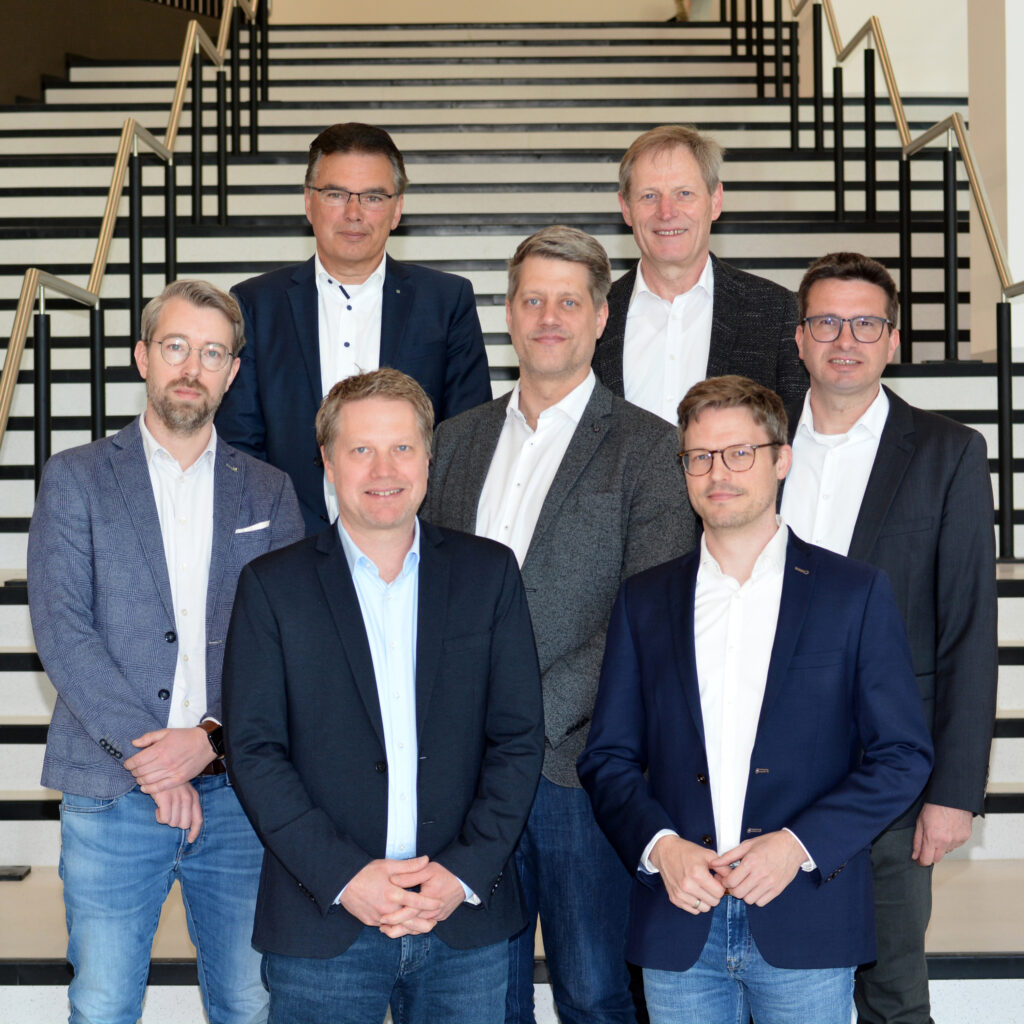
© Bielefeld University / Norma Langohr
A shared platform for research and practice
The alliance brings together the University’s fundamental research with the application-oriented expertise of Fraunhofer IOSB-INA. This combination enables practical solutions in fields such as collaborative robotics—robots working closely with humans—and the integration of AI into automated processes.
One example is the joint project “Humation Collaboratory.OWL”, a research lab digitally connecting two locations: the Research Institute for Cognition and Robotics (CoR-Lab) in Bielefeld and the Fraunhofer Institute with the SmartFactoryOWL in Lemgo. There, humans and robots work side by side, for instance in the production of heat pumps. Intelligent robots take over subtasks and support skilled workers during assembly, helping to reduce bottlenecks and make workflows more efficient.
“Many companies are under pressure today: too few skilled workers and too much complexity. With Humation, we combine modern technology with human expertise—and thanks to digital twins, processes become simpler and faster,” says Prof. Dr.-Ing. Jürgen Jasperneite, Director of Fraunhofer IOSB-INA in Lemgo.
The project “EXPLORE” also shines a light on how research and industry are growing together. It is developing the first research platform for digital twins in the Ostwestfalen-Lippe region. Digital twins are dynamic, virtual representations of real machines or production lines. They help companies simulate, optimise, and make processes more sustainable before they are implemented in reality.
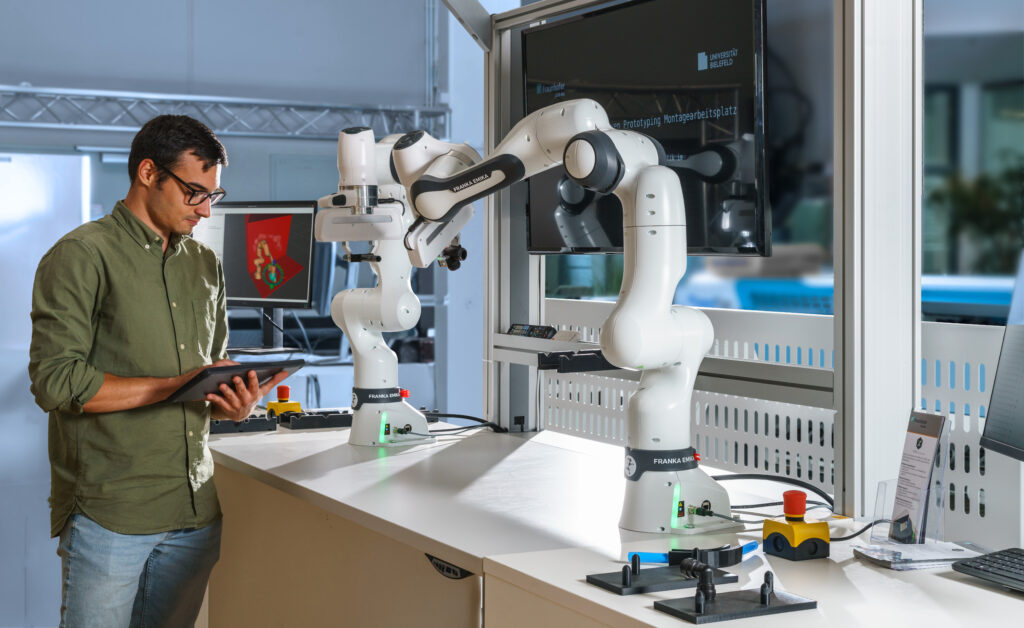
© Bielefeld University/ indigo(c)2023
Technology designed around people
At the heart of human-centred automation is the human being as an active shaper of technical systems. The goal is not to fully automate work but to design workplaces that are suitable for people—focusing on safety, well-being, and the expansion of skills. Ethical, legal, and social considerations are integrated into the research from the outset. This “integrated research approach” ensures that new technologies are developed responsibly and with societal needs in mind.
For small and medium-sized enterprises (SMEs), Humation offers hands-on support—from lab tours and expert communities to consulting and implementation projects. This ensures that scientific knowledge flows directly into the regional economy, while industry experience feeds back into research.
Impulses for the industry of the future

Humation’s approach aligns with the European “Industry 5.0” strategy, which places humans at the core of a sustainable and resilient industrial landscape. With this new competence network, the Ostwestfalen-Lippe region strengthens Europe’s position as a pioneer in human-centred automation.