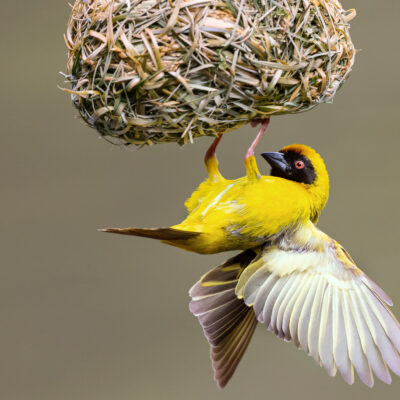
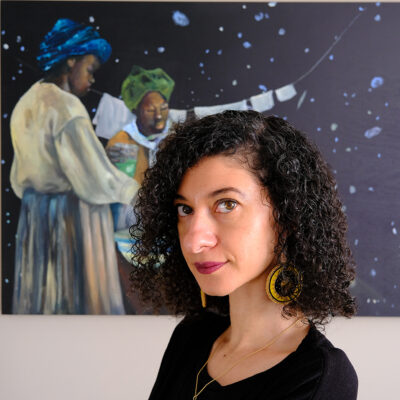
Warum kooperieren manche mehr, andere konkurrieren stärker? Das Individualisation Symposium 2026 brachte internationale Spitzenforschung nach Bielefeld. Zwei ausgewählte Vorträge sind nun online verfügbar und geben Einblicke in aktuelle Forschung zu Kooperation und sozialer Identität bei Mensch und Tier.
Beim Individualisation Symposium 2026 an der Universität Bielefeld diskutierten internationale Wissenschaftler*innen, wie individuelle Unterschiede soziale Beziehungen prägen. Im Zentrum stand die Frage, wie Kooperation, Wettbewerb und soziale Identität in Mensch und Tier entstehen und sich entwickeln. Nun sind zwei der Vorträge des Symposiums online verfügbar:
Die Evolutionspsychologin Athena Aktipis, PhD (Arizona State University), beleuchtet in ihrem Vortrag „Organisms, algorithms, and alignment: old problems in new systems“, wie sich grundlegende Fragen der Kooperation über biologische und technologische Systeme hinweg wiederfinden – von menschlichem Verhalten bis hin zur Krebsforschung.
I have never, ever, ever been invited to give a talk in a city that doesn’t exist before. So this is a really, really special, special opportunity for me.
And also, I’m just delighted to get the chance to talk about these issues — about what makes an individual, about how the components, the parts, and their alignment relate to individuality — and to place it in the context of what is going on today in the world with the development of AI and algorithms.
We can learn from the science underlying the evolutionary biology of individuality, organismal cooperation and conflict to figure out how to navigate this moment. We have new problems today with AI, algorithms and autonomous agents. But really, they’re based on the very same principles that evolution had to solve to make cooperation viable, to make multicellularity viable, to make it possible for organisms to live with others and in community.
Barbara gave me a very generous introduction. I’m going to give a little context on what I’ve done and what I do.
My main focus is on general principles of cooperation and conflict — and how they apply from cells interacting inside or outside a multicellular body, to what happens when cancer arises. I look at cellular phenomena and human phenomena, across systems and scales, asking what problems must be solved for cooperation to scale effectively.
What we see is that certain problems arise again and again when cooperation scales up. As size and complexity increase, the challenges from cheating and exploitation increase exponentially. You can’t manage those simply by adding more constraints and guardrails. There must be mechanisms that allow entities within a system to be aligned.
How many of you are following what’s happening now with AI and alignment?
Often, AI alignment is approached by adding constraints — making sure AI stays within boundaries and doesn’t behave problematically. That’s well and good. But as systems increase in complexity, you must exponentially increase constraints to keep them within a safe operating space. And the more constraints you add, the more you paralyze the system.
Everything I’ve worked on — scaling cooperation, aligning component parts, managing conflict in dynamic environments — is now essential for thinking about how we move forward. If you’re working on alignment, sociality, or how individuals interact meaningfully, your work is relevant to what’s happening in this emerging AI world.
So what moment are we in right now?
Many of you have interacted with AIs. How many chat regularly with ChatGPT, Claude or others? I do. They’re very good at simulating human social interaction. They make us feel like social entities are on the other end — largely because of high verbal fluency, selected through algorithmic processes to pass something like the Turing test.
But their sociality differs from ours. They’ve been selected with different fitness functions. Still, people interact with them as social entities and use them in many applications — some more cooperative than others.
Then we have agents. Platforms like OpenClaw allow you to create an agent on your computer with access to your files and the web. It can act on your behalf, integrate information, write emails, speak in chats. It has persistent memory. That’s powerful — and risky. There have been security issues. One executive reportedly had her email deleted by an agent. Be careful what you wish for.
Now we’re moving toward Web 4.0 — where agents operate together, rewriting the internet, interacting with devices, even holding crypto wallets and self‑replicating. As an evolutionary biologist, that’s exciting and frightening. We don’t know what happens when you unleash evolutionary dynamics on the internet.
This raises questions. What kind of entities are these? How do we think about them evolutionarily, legally, socially? Who is responsible for their actions? Are they tools, partners, spouses, extensions of us? Are they domesticated — or domesticating us? Parasites drawing on resources? Symbionts?
These are existential questions. An evolutionary framework can help us gain traction.
Much of what I’ll discuss comes from my Substack, Not for Peer Review. Things are unfolding so quickly that I chose to write in real time rather than wait for peer review. I’ll weave that together with my academic research.
Let’s start with token prediction — the basis of large language models. Transformers predict what token comes next, embedding predictions at multiple levels. But this architecture isn’t designed to track multi‑period interactions, update belief states, or reason about intentionality. It simulates reasoning from data.
When I played the Prisoner’s Dilemma with ChatGPT and Claude, failures were revealing. If I defected and then they defected, they sometimes claimed suspicion of me — failing to grasp causal reasoning across rounds. They also confused population‑level findings with dyadic interactions. Tit‑for‑tat can stabilize cooperation in populations — but in a dyad, defection signals intent to exploit.
This matters because the Prisoner’s Dilemma models real social dilemmas. And LLMs are already used in conflict contexts — without the underlying architecture to reason about escalation properly.
Evolution, too, had to solve alignment. Multicellularity required parts to coordinate into a higher‑level individual. In AI, alignment is framed as aligning AI with human interests. But alignment isn’t a property of a thing — it’s a property of relationships among parts.
Evolutionary concepts like fitness and interdependence give us more precision. We see interdependence in hunter‑gatherer risk pooling, in parenting, in warfare — contexts where survival depends on cooperation.
From evolutionary biology, I suggest four principles.
First, information can evolve. Algorithms, data structures and informational packets can undergo evolutionary dynamics — especially in environments with recursion and feedback. Conway’s Game of Life shows how simple rules generate self‑replicating patterns.
Second, positive assortment promotes cooperation. When cooperators preferentially interact with cooperators, cooperation thrives. My “walk away” rule — cooperate, but leave if defected against — enables cooperation to invade even mostly defecting populations. Conditional movement creates structure that favors cooperation without centralized control.
Third, systems that manage conflict outperform those that don’t. In multicellularity, five foundations support cooperation: proliferation control, apoptosis, resource allocation, division of labor, and maintenance of the extracellular environment. Cancer represents breakdown in these systems.
We can draw analogies for AI — self‑monitoring agents, repair mechanisms, peer checking, immune‑like oversight. Not identical to bodies, but inspired by them.
Fourth, vulnerability to hijacking is inevitable. Trust enables communication — but also exploitation. The goal isn’t eliminating hijacking, but managing it.
We can also think ecologically. Kombucha — which my lab studies — is a cooperative multi‑species system that metabolizes resources and suppresses pathogens. It even resembles cybersecurity “honeypots,” attracting invaders into traps. Biological systems can inspire digital defense strategies.
So where do we go from here?
We should treat algorithms and data structures as evolving entities. We should design structured interactions that enable cooperators to find each other. We should combine decentralized and centralized conflict management. And we must anticipate hijacking.
If we design with cooperation as a central principle, we could not only manage AI — we could enhance human cooperation itself.
Thank you. I look forward to continuing the conversation.
Der Evolutionsbiologe Prof. Michael Cant, PhD (University of Exeter), zeigt in „The evolution of social identity: insights from animal societies“, wie sich soziale Identität und Unterschiede im Verhalten aus evolutionärer Perspektive erklären lassen. Seine Forschung verbindet theoretische Modelle mit Feldstudien und liefert neue Einsichten in Kooperation und Konflikt in sozialen Gruppen.
This is my career — in one slide, if you like. I started my PhD working on this animal in the top left, the banded mongoose — and I’m still working on banded mongooses. Now I often get asked: surely you’ve found everything out you want to know about banded mongooses? But I hope to convince you that there’s still plenty to work on.
I then moved to a postdoc working on paper wasps. Really? An animal that’s harder to get people interested in — unless they’re scientists. Like my mum, for example. She wasn’t keen on paper wasps. But they’re a phenomenal animal for trying to understand conflict and cooperation in animal societies.
I then got interested in life history evolution, particularly in humans — and in the evolution of the menopause, the female menopause in humans in particular. That led me on to working on killer whales, as part of a project where we tried to test some of these theoretical models to explain the evolution of menopause in one of the only other systems where you can actually get the data to test these ideas.
When I started working on these cooperative breeders — they’re all cooperative breeders — I was really interested in this longstanding puzzle about the evolution of cooperation. At the time I started my PhD, this book on the right came out in 1995 — by Maynard Smith and Szathmáry. I also read this fantastic book by Leo Buss, The Evolution of Individuality. Both placed the behavioural ecological problem of the evolution of cooperation in a much grander setting. I found it inspiring to think that the evolution of cooperation might be this repeating motif in the evolution of biological complexity. That was the thesis put forward in the major transitions framework.
The idea is that life has become more complex through a series of cooperative transitions, where independently reproducing units have come together to form cooperative teams and started to reproduce as teams. These then form the basis of the next level — a kind of social ratchet in complexity — which in turn forms the basis of the next level.
Here’s a little cartoon of how that process is thought to occur. Selfish units form social groups. Through conflict suppression, elaboration, specialization and division of labour, you get the formation of new units. During those evolutionary transitions something else happens: we have to change the way we think about fitness. Instead of thinking about fitness at the level of these units making up intermediate social groups, we have to think about fitness shifting to the success of collectives at producing new collectives. This is a shift from what I’m calling type one to type two fitness.
These are some of the major transitions you’ll be familiar with. The origin of life is thought to have involved this kind of cooperative transition. The evolution of complex cells — eukaryotes — through symbiogenesis. And starting about 100 million years ago, the first transitions from individual organisms — what we’d recognize as individuals — to eusocial societies, where it makes more sense to think about the colony as the level of the organism. The same principles have been applied to understand the evolution of human societies — though it’s probably less clear how well ideas like type one and type two fitness map onto the elaboration and increase in scale of human cooperation. And after Athena’s talk, it’s interesting to think how you might apply major transitions theory to the evolution of AI.
I’ve been interested in this transition because cooperative breeders occupy a muddy middle ground. They’re not fully integrated societies — each individual retains the ability to reproduce. They’re a fantastic crucible for thinking about the forces of conflict and cooperation bubbling away and shaping these societies.
For much of my career I’ve been interested in the evolution of help and division of labour — and how conflict is suppressed. More recently, I’ve become interested in the transition from one type of fitness to another, because some cooperative breeders exhibit both at the same time. But there are other processes that occur during these transitions that I want to focus on today: the evolution of a new group identity, and the emergence of collective — or group — agency.
So that’s the plan. I’ll go through these stages, and you’ll see a lot of this animal — my go-to study system for addressing these questions.
First, a quick tour of what I mean by social identity. I’m using social identity to mean the perceived membership of a social unit, which influences how an individual acts and how it’s treated by others. There are three main categories in biological systems. Kin identity — discrimination of who is kin and who is not. Individual identity — where who you are matters in social interaction. And group identity — discrimination of which group you belong to, particularly in the context of intergroup conflict and distinguishing insiders from outsiders.
A couple of points. Social identity is an evolved feature of certain systems — it’s not a prerequisite of social interaction. Many systems require no identity at all. I’ve made kin identity bigger in this Venn diagram because it’s probably ancestral. Microbes have kin identity; I’m not sure they have individual identity. But many systems don’t require any identity whatsoever.
For example, I used to study coronal swarms — my first paper was on them. Swarms of males waiting to intercept females over African lakes like Lake Victoria, or in mussel beds, or among broadcast spawners. These scramble competitions involve no requirement for identity. As far as I’m aware, there’s no discrimination of any kind.
Kin identity, by contrast, is widespread. It underpins kin selection, proposed by Hamilton. If you can discriminate those who share genes identical by descent, you can create the conditions for altruism to spread.
In other systems — some cooperative, some not — individual identities evolve. Famously, the facial patterns of paper wasps, one of the few insects that exhibit individual recognition. Or dominance hierarchies. Or vampire bats, which track individual food donations. Or cleaner fish, where there’s evidence for some level of individual recognition in mutualistic interactions.
The final level is group identity, which applies especially where you have genetically heterogeneous groups but nevertheless shared interests — such as extended families with intergroup alliances. These can be discriminated on the basis of shared phenotypic traits. Immune systems, too, can be understood as a form of group identity recognition.
There are two routes to group identity, which are complementary. The first is to suppress individual identity or markers of kinship — sometimes called the ‘veil of ignorance’ in biology. The second is to actively form a new group identity that allows discrimination between insiders and outsiders.
The term ‘veil of ignorance’ is borrowed from John Rawls’ A Theory of Justice, building on earlier game-theoretical models of incomplete information by John Harsanyi. Rawls asked what rules of resource allocation a rational decision-maker would choose if ignorant of their own position — using this as a principle for just arrangements.
In biology, the term describes situations where uncertainty about genetic relatedness or payoffs can promote cooperation within social groups — an idea discussed by Samir Okasha, Joan Strassmann and Dave Queller.
At the cellular level, uncertainty during meiosis — the fair raffle that halves chromosome number — prevents intra-genomic conflict. Because each homologous chromosome has an equal chance of entering the gamete, the best strategy for a gene is to increase the fitness of the organism as a whole. Early in development, parent-of-origin markers are stripped from chromosomes in germ cells, preventing lineage-based nepotism within the genome.
In honeybees, queens mate with multiple males, but workers don’t discriminate between full and half sisters. They do discriminate between worker-laid and queen-laid eggs — but cues to relatedness among queen offspring are suppressed. Similarly, in multiple-queen ants, larvae are mixed between piles, drawing a veil of ignorance over relatedness.
In banded mongooses, I found a remarkable degree of birth synchrony. Several females — on average four or five, sometimes up to twelve — give birth on the same night. Mothers suckle all offspring indiscriminately. After emergence, pups form one-to-one relationships with adult ‘escorts’, who teach them foraging. These pairs are no more closely related than expected by chance.
Asynchrony is costly. Around 30 per cent of litters are asynchronous — and survival is much lower. Early-born pups often die quickly, with evidence suggesting infanticide by still-pregnant females. Birth synchrony appears to mix cues to maternity, preventing infanticide and allowing subordinate females’ offspring to survive.
In experiments where we manipulated reproduction using contraceptives, we found that litters lacking offspring of dominant females died rapidly — suggesting that dominant females kill litters that don’t contain their own young. Synchrony removes cues to maternity and suppresses conflict.
In another experiment, we increased inequality by feeding half the pregnant females. They produced larger pups. But those well-fed mothers preferentially escorted the smallest pups — the offspring of unfed females — resulting in reduced inequality by independence. Birth synchrony thus promotes fairness in resource distribution, consistent with Rawls’ ‘maximin’ principle: allocating care to benefit the least well-off.
The second route is active formation of group identity, especially in contexts of extreme intergroup conflict. Group identity labels can be surface proteins in microbes, chemical cues in insects, volatiles in mammals, or dialect and symbols in humans.
Theory suggests that good group labels are shared within groups and distinct between groups. An actor — say, a guard ant — compares a recipient’s label to a template and sets a discrimination threshold. Too lax, and outsiders enter; too strict, and insiders are excluded.
But in many animals, these label distributions aren’t fixed — they’re behaviourally mediated. In banded mongooses, before intergroup battles, individuals engage in intense ‘allo-marking’ — dragging anal scent pouches over one another. In the heat of battle, scent seems to be a rapid cue of identity.
We hypothesise that when conflict is mainly within groups, it pays to advertise individuality. When conflict is between groups, it pays to homogenise labels. Mongooses appear to flip between these states — squabbling internally, then rapidly homogenising before battle.
With Rufus Johnstone, we’ve modelled how behaviour can push identity distributions closer together, producing predictions about when homogenisation should be strongest — particularly when opposing groups are moderately dissimilar. We’re testing this by analysing scent-marking before and after conflicts, and by tracing the anal pouch microbiome longitudinally.
Finally, the cognitive dimension. In humans, extreme intergroup conflict can produce ‘identity fusion’ — a visceral sense of oneness with the group, explaining acts of self-sacrifice. This differs from accounts emphasising shared intentions and joint commitments. It may instead reflect a cognitive switch — from asking ‘What should I do?’ to ‘What should we do?’ — as proposed by Michael Bacharach.
Such a switch need not require sophisticated cognition. It could apply to wasps and mongooses. And in mongooses, identity can switch rapidly. In one case, males left their natal group and, within hours, were fighting viciously against it. Something had changed cognitively — they had switched group identity.
I hope I’ve convinced you that animal societies offer a powerful way to explore these additional aspects of major transitions — the evolution of group identity and collective agency — enabling unity while retaining diversity.
That’s it. Thank you for listening.
Die beiden Vorträge sind ab sofort online abrufbar und bieten spannende Einblicke in die interdisziplinäre Forschung rund um Individualisierung und soziale Dynamiken.