©
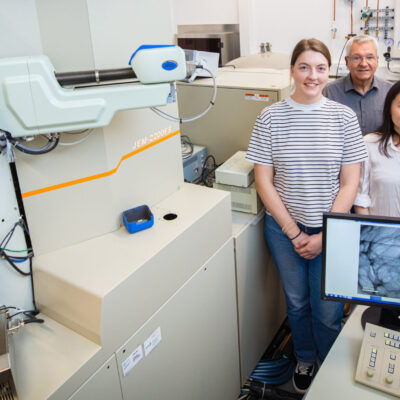
Enzymes break the 100-degree heat barrier
Enzymes can speed up chemical reactions in a targeted way. Among other uses, they help make chemicals more sustainably. Yet some substances can only be processed at high temperatures — […]
Read more »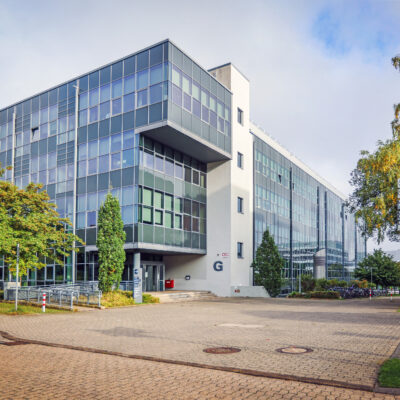
© Universität Bielefeld/S. Jonek
CeBiTec develops antibody production using microalgae
As part of the EU project “Heniprotect,” CeBiTec at Bielefeld University is developing a new platform for producing therapeutic antibodies in microalgae.
Read more »
© Bielefeld University
Fewer Unnecessary Tasks – Still Exhausted?
Ahead of World Mental Health Day on October 10, attention is turning to the question of what causes psychological strain at work. A study by Bielefeld University shows that inappropriate tasks are not the only factor associated with exhaustion.
Read more »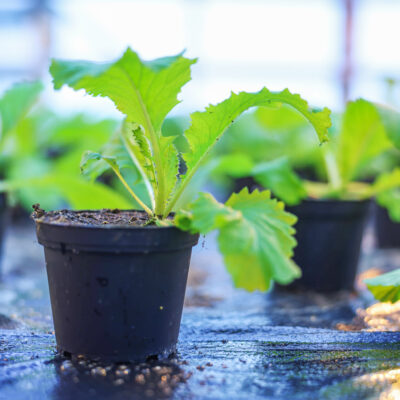
© Universität Bielefeld
Same Plant Species, Different Chemistry
Plants of the same species can differ considerably in their chemical composition, affecting their smell, taste, and even toxicity. A new study shows that the term “chemotype” has so far not been used consistently.
Read more »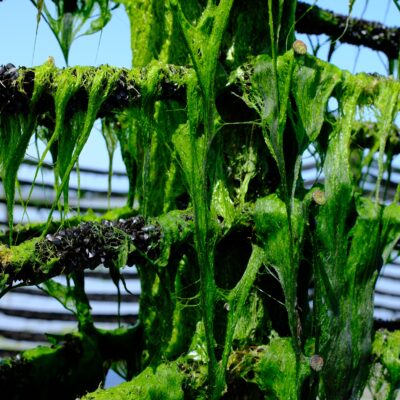
© Kate Scardifield
Turn of the Green Tides
Algal blooms are intensifying worldwide, posing growing challenges for ecosystems and coastal communities. The ZiF workshop “Turn of the Green Tides” explores new ways of working with algal biomass to foster coastal resilience and climate adaptation.
Read more »
© blacksalmon/stock.adobe.com
Bielefeld becomes venue for global linguistic research
Two international conferences in Bielefeld are currently highlighting the diversity of linguistic creativity.
Read more »
© Jochen Kopp
Breakthrough in understanding ice formation in clouds
How the mineral microcline triggers cloud freezing: A research team including the University of Bielefeld is investigating this effect for the first time at the molecular level.
Read more »
© Bielefeld University
Study examines diverging life paths among young men
Why do young men from disadvantaged neighbourhoods, despite similar starting conditions, go on to follow different life paths? A new research project at Bielefeld University and Fulda University of Applied Sciences is exploring this question.
Read more »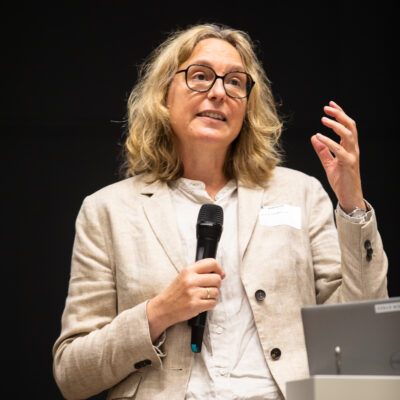
© Bielefeld University/ Stefan Sättele
Gender, Diversity and Social Change
Achievements in gender equality are increasingly being debated.
Sociologist Diana Lengersdorf explains the social dynamics behind these developments.
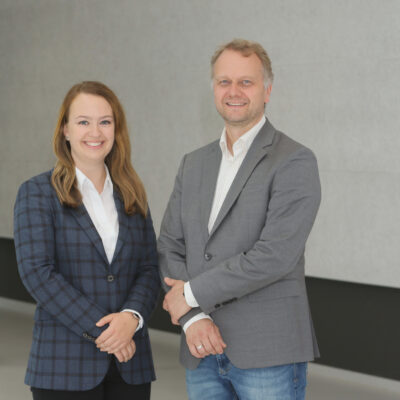
© Paul Bielefeld, Bielefeld University
When digitalization and sustainability go hand in hand
How can digitalization and sustainability drive transformation together? In this interview, the organizers of the workshop “Global Responsibility for Twin Transition” explain what matters most in achieving the twin transition.
Read more »
© Jana Haver
Compact microscope makes the previously invisible visible
The Lightweaver microscope fits on a laboratory bench. It delivers high-resolution images of living cells and could help advance personalised medicine, among other applications.
Read more »
© Bielefeld University
Plants switch immediately under high light
Plants adjust protein production within minutes to protect themselves from intense light. A newly discovered signaling pathway enables ultra-fast stress responses and opens new avenues for climate-resilient crops.
Read more »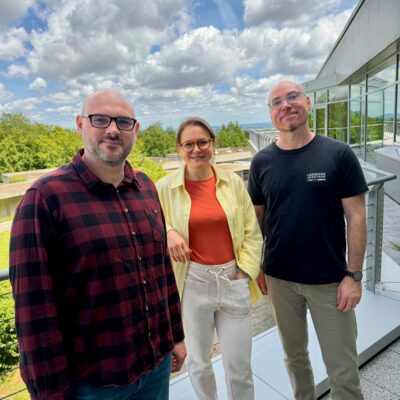
© Rebecca Moltmann
Postsocialist & Postcolonial Legacies Across Borders
The postsocialist legacy continues to shape power relations and conflicts to this day. An international workshop at the ZiF – Center for Interdisciplinary Research at Bielefeld University explores how these interconnections can be better understood.
Read more »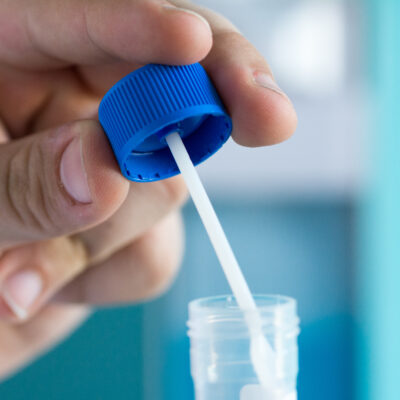
© Kunstzeug/adobe.stock.com
Using AI to harness the gut microbiome for therapies
Consortium uses microbiome data for personalised treatment. Bielefeld researchers contribute bioinformatics expertise.
Read more »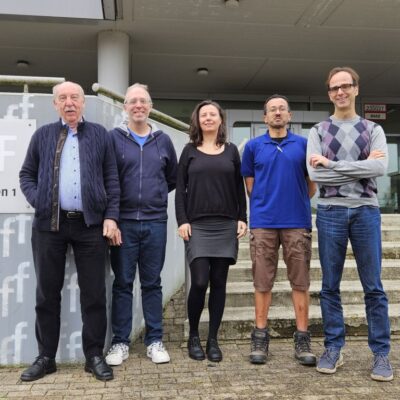
© Bielefeld University/ ZiF
Robust Decisions for Humans and AI
In the latest episode of the ZiF podcast ‘Interspaces’, the leaders of the Long-term Research Group discuss their research and the key challenges facing their interdisciplinary project.
Read more »
© Maximilian Hanusch
Invisible Chemical Landscapes Shape Life
Plants, animals and microorganisms are constantly communicating via chemical signals. A research team has now shown that these signals merge in the environment to form complex ‘chemical landscapes’ that have a far greater impact than their individual components.
Read more »
© Marga van den Meydenberg
The nexus of drugs and violence
A new international research group at the Centre for Interdisciplinary Research is investigating how the boundaries between legality and illegality influence economic life, political power and social relations.
Read more »
© Sarah Jonek
In Search of Shared Patterns
Dr Annika Burmester has been awarded a Klaus Tschira Boost Grant, which will fund her interdisciplinary research in mathematics. In this interview, the postdoctoral researcher discusses international influences and new opportunities for her work.
Read more »
© Bielefeld University
Deconstructing ‚Displacement‘, Reconstructing Housing
An international research group at Bielefeld University’s Centre for Interdisciplinary Research (ZiF) is exploring what good housing solutions might look like.
Read more »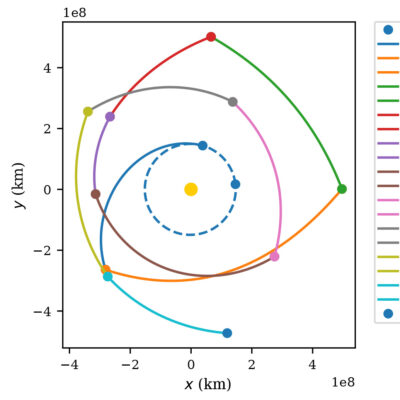
© Isaac Rudich
Space logistics on the right track
How does one plan a space mission that involves visiting multiple celestial bodies which are constantly moving? Researchers at Bielefeld University have, for the first time, developed a precise mathematical approach to this problem.
Read more »
© Patrick Pollmeier
‘We want to develop AI with people rather than for them’
Artificial intelligence meets inclusion: Interview on new approaches to medical participation in the AI*IM Focus Area.
Read more »
© Philipp Ottendörfer
Three questions on post-socialism and coloniality
Can post-socialism be colonial? Research group leader Professor Dr Anna Amelina explains how this question is being explored from an interdisciplinary perspective at the ZiF in Bielefeld.
Read more »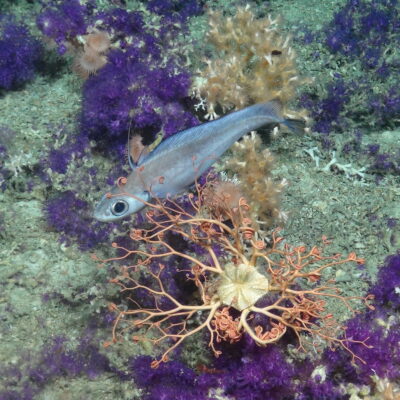
© NERC funded Deep Links project, University of Plymouth, UK
Project advances protection of Atlantic corals
Researchers in Bielefeld are using AI-based image analysis to lay the groundwork for new marine protected areas. As part of the “Coral Cartography” project, cold-water corals in the Atlantic are being comprehensively mapped for the first time.
Read more »
© Bielefeld University
The Power of the Individual – Talks Now Online
The Individualisation Symposium 2026 brought leading researchers to Bielefeld. Two of the talks are now available online, offering insights into cooperation and social identity in humans and animals.
Read more »