When digitalization and sustainability go hand in hand, the term ‘Twin Transition’—or dual transformation—is often used. Digital technologies are intended to help steer the economy and society toward sustainability and to contribute to achieving the global sustainability goals set by the United Nations in the 2030 Agenda: combating poverty and hunger, reducing energy and resource consumption, protecting biodiversity, and much more. The workshop ‘Global Responsibility for Twin Transition,’ which takes place at ZiF from August 10 to 12, will focus on how these goals are being implemented across different legal systems and market structures. The workshop leaders, economist Dr Melina Schleef and legal scholar Professor Dr Paul T. Schrader, both from Bielefeld University, explain their agenda.
Digitalization could contribute to a sustainable economy, but it usually has the opposite effect: even greater resource consumption. What is the reason for this?
Melina Schleef: Digital technologies can make processes more efficient and reduce energy and material consumption. That said, at the same time, they often lead to increased consumption of digital services, shorter product life cycles, and a growing demand for data centers, energy, and raw materials. As a result, efficiency gains are often offset by so-called rebound effects. Sustainability therefore does not bring about digitalization by default but requires appropriate legal and economic parameters.
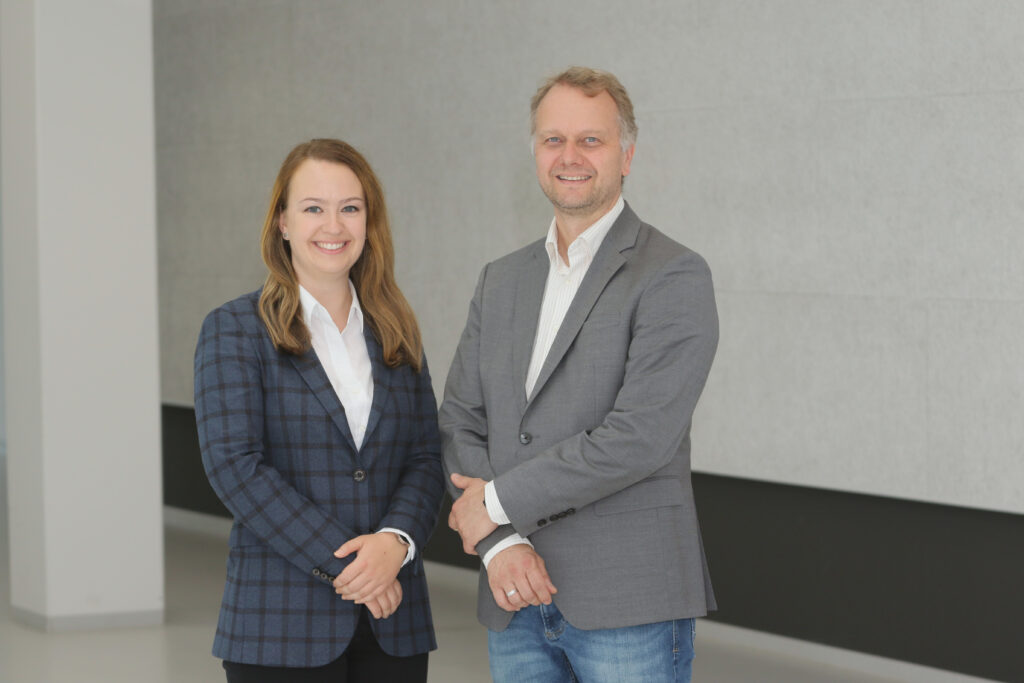
© Paul Bielefeld, Bielefeld University
How can the Twin Transition yield better results?
Paul T. Schrader: Twin Transition can yield better results if both digitalization and sustainability are conceptualised and constructed together from the very beginning. In order to achieve this, legal requirements, economic incentives, and technological innovations must be better aligned. At the same time, international cooperation is needed, as value chains and environmental problems transcend national borders. Only through a coordinated approach can digital innovations be harnessed for sustainable development in a targeted manner.
What does the workshop aim to contribute to this?
Melina Schleef: The workshop brings together researchers from the fields of law and economics to analyze the interplay between digitalization and sustainability from various perspectives. The focus is on international comparisons and the question of how legal and economic instruments can effectively support the Twin Transition. The goal is to gain new scientific insights and strengthen international exchange. In the long term, the workshop aims to provide ideas for further research, policies, and the development of suitable policy instruments.