
© Patrick Pollmeier, image montage: deteringdesign
In times of crisis, we need spaces for creativity
How do good ideas emerge—and what allows them to grow? This is the topic in Focus Area PINC.
Read more »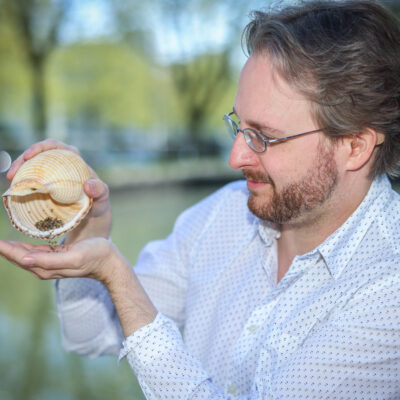
© Sarah Jonek/ Bielefeld University
Why No Individual Is Like Another
Why do animals behave differently, and what are the consequences of this? A research team from the Collaborative Research Centre NC³ now provides a new explanation: epigenetic processes may play a key role.
Read more »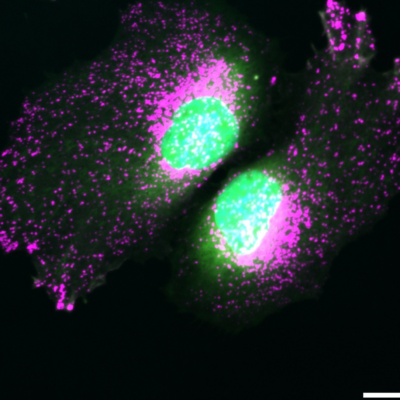
© Klaudia Kosieradzka, FMP, Berlin
Control mechanism against cellular stress identified
A discovery by a research team from Bielefeld University and the Leibniz-Forschungsinstitut für Molekulare Pharmakologie (FMP) offers new avenues for the treatment of dementia and cancer.
Read more »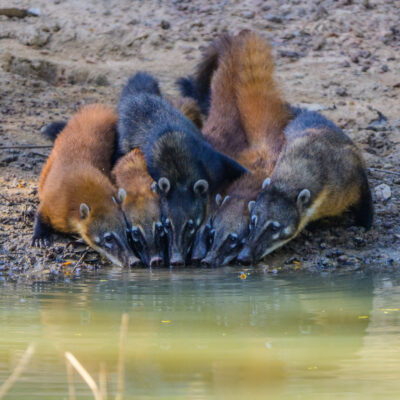
© Oliver Krüger
The Power of the Individual
At the Individualisation Symposium 2026, leading international researchers will gather at Bielefeld University to explore how individual differences shape social relationships in humans and animals.
Read more »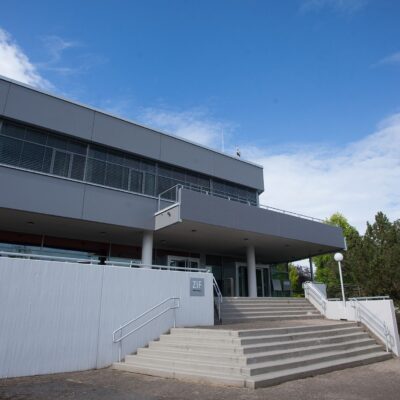
©
Measuring and Managing Uncertainty
An international series of workshops in March will bring together researchers from mathematics, economics, computer science, psychology, and sports science to develop new methods for dealing with uncertainty.
Read more »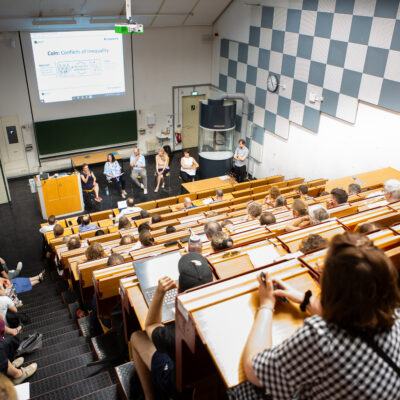
© Stefan Sättele
Researching inequality, understanding conflicts
Inequality triggers conflict. The CoIn Focus Area is creating a framework to explore these tensions in an interdisciplinary manner and to decipher their causes.
Read more »
© Mike-Dennis Müller/Bielefeld University
Rare Does Not Mean Insignificant
On Rare Disease Day, February 28, the spotlight turns to conditions that are individually rare but together affect many families. At Bielefeld University, research into lysosomal storage disorders is opening up new perspectives — also for Parkinson’s and dementia.
Read more »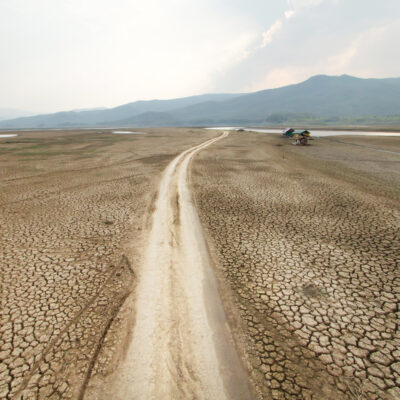
© piyaset/stock.adobe.com
From climate risks to football fever
Systematically quantifying and managing uncertainty is the core of the QUAMU Focus Area.
Read more »
© Amilciar/stock.adobe.com
Overlooked resilience in Venezuelan society
What does science say about Venezuela’s crisis? In the latest update of this ongoing article collection, two researchers point out that international debates focus too narrowly on political conflict.
Read more »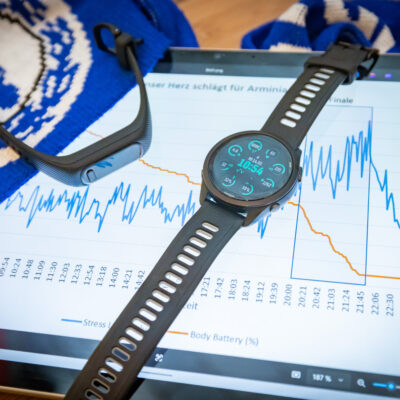
© Wissenswerkstadt Bielefeld/Sarah Jonek
Stadium fever measured—why live football raises the pulse
Fans of DSC Arminia Bielefeld experience matchday excitement far more intensely in the stadium than in front of the television when watching football (soccer). A study from Bielefeld University demonstrates clear differences in heart rate and stress levels during the 2025 cup final of the German Football Association (DFB).
Read more »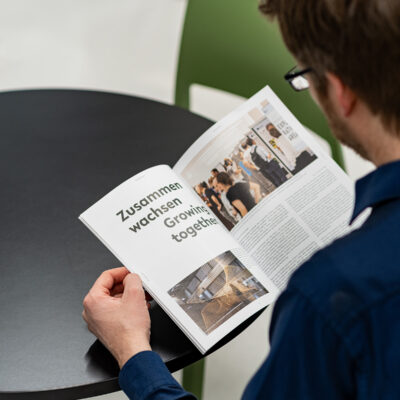
© deteringdesign
New BI.research: Growing together
13 Focus Areas are bringing together academics from different disciplines to advance outstanding topics. They demonstrate how the university is growing together. The new BI.research magazine presents them all.
Read more »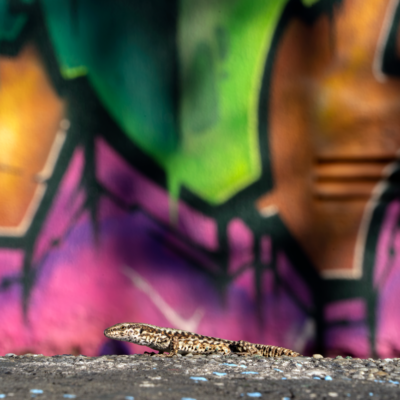
© Sergio Luna
How cities are changing social behaviour in urban animals
Cities profoundly shape how animals interact with one another. A new comprehensive review by researchers at Bielefeld University shows that urbanisation alters animal social behaviour – from mate choice to group living.
Read more »
© Robert/stock.adobe.com
WhatsApp data show: We often deceive ourselves
How active are we really in chats and how accurate is our self-perception? A new study using anonymized WhatsApp metadata shows how data-driven feedback can improve our understanding of communication and digital well-being.
Read more »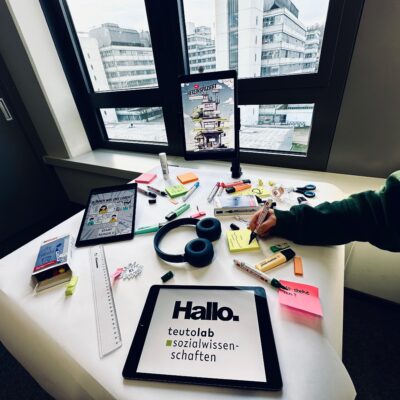
© Tim Schubert
Live Ideas: New teutolab for Social Sciences launches
Bielefeld University is establishing a new extracurricular learning space with the teutolab for social sciences. Combining politics, economics and sociology, it invites young people to critically explore everyday life, social conflicts and future challenges.
Read more »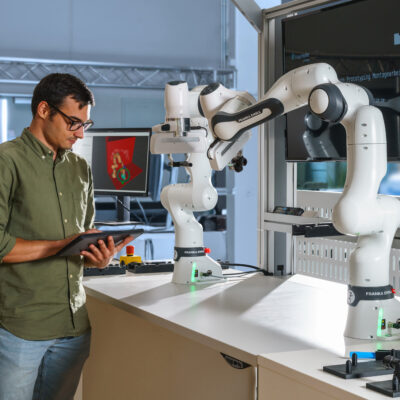
© indigo(c)2023
Humans and Machines as a Team: New “Humation” Alliance
How can humans and machines be brought together in ways that benefit both? This question drives the new competence network Humation – Human-Centred Automation, founded jointly by Bielefeld University and the Fraunhofer IOSB-INA in Lemgo.
Read more »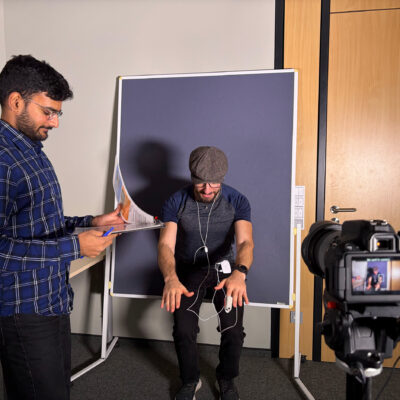
© Drimalla
Contactless Pulse Measurement Falters at High Heart Rates
Researchers at Bielefeld University have analyzed how reliably AI methods can detect pulse rates from simple video recordings.
Read more »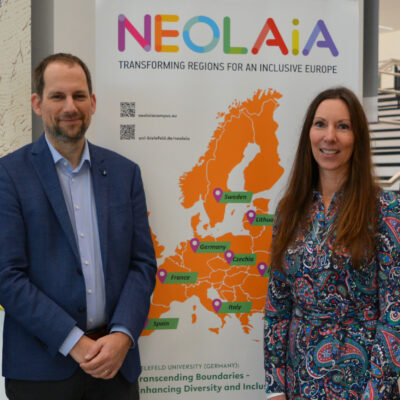
© Norma Langohr/ Bielefeld University
Europe meets in Bielefeld
The NEOLAiA Focus Academy celebrated its premiere at Bielefeld University, bringing together students from across Europe to explore digital transformation and entrepreneurship.
Read more »
© ZiF
Robust Decisions in Natural and Artificial Intelligence
People, animals and AI make decisions every day under conditions of uncertainty. A new international research group at ZiF Bielefeld is investigating robust decision-making strategies for this purpose. For the first time in a workshop from 8 to 19 December.
Read more »
© Elena Berz
Make foams recyclable via break points
Chemists at Bielefeld University receive funding to apply research on recyclable plastics.
Read more »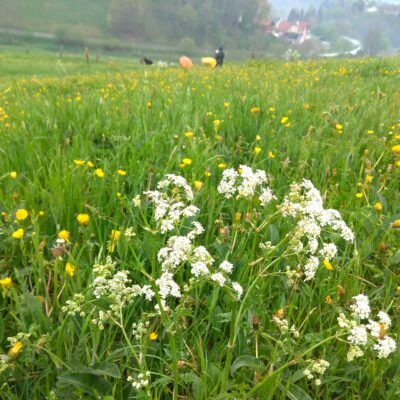
© Neuenkamp
What Our Meadows Reveal About the Future
Meadows are quietly losing their diversity – often before we even notice. A research team led by Prof. Dr Lena Neuenkamp has now demonstrated in Nature Ecology & Evolution that spatial data can predict changes in species diversity over time with astonishing accuracy.
Read more »
© Vreni Jäckle
Thinking Takes Energy
A new study shows how our brain metabolism sets the limits of thinking. Researchers explain why cognitive models remain incomplete without considering biological resources.
Read more »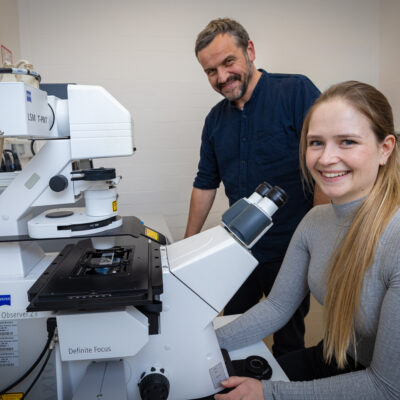
© Bielefeld University/ Mike-Dennis Müller
Cells Pull the Emergency Brake When Oxygen Runs Low
When cells face a lack of oxygen, they switch to energy-saving mode:
A team at Bielefeld University shows how they deliberately slow down their secretory transport pathway to do so.
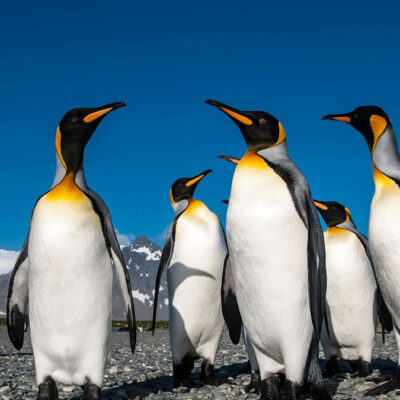
© Oliver Krüger
Focusing on the individual: how diversity advances research
What makes individuals unique—and why is that important? The new focus area InChangE delivers insights.
Read more »
© privat
Our Solar System Is Moving Faster Than Expected
Our solar system is racing through space faster than current models predict – as shown by a new study from Bielefeld University. The surprising findings challenge fundamental assumptions of cosmology.
Read more »