
Abstract:
It is a well-known paradox in current theorising about creativity that successful creative forms may at some point become routine and are consequently no longer perceived of as creative (Fleissner 2025). In order to solve this puzzle, we need a model of creativity that encompasses both the creation of new forms and the establishment of new schemas (as generalisations over these new forms). In this talk, I propose a model of creativity in word formation that expands on Sampson’s (2016) distinction between F(ixed)- and E(nlarged)-creavity. Trousdale & Norde (2025) argue that there are two kinds of F-creativity: F1, for regular and productive word formation (e.g. English [X-ness]), and F2-creativity, which refers to a mismatch with F1-creative forms, e.g. thugcracy. This word is similar to neoclassical compounds (democracy, theocracy) but only partially so, because it has a non-classical base (thug). Once several of such F2-creative forms emerge, speakers may establish a generalisation across these forms: [X-cracy]. In the proposed model, E-creativity is the process that results in this new schema, but the [X-cracy] forms themselves are now F1-creative. E-creativity is thus a crucial link between F2- and F1-creativity, as it accounts for the transition from creativity to routine. To illustrate this typology of creativity and how it can be operationalised, I present data from two case studies: pseudoparticiples in Dutch (Norde & Trousdale 2025) and evaluative collocations of wannabe in English and languages wannabe was borrowed into (Norde et al. 2025).
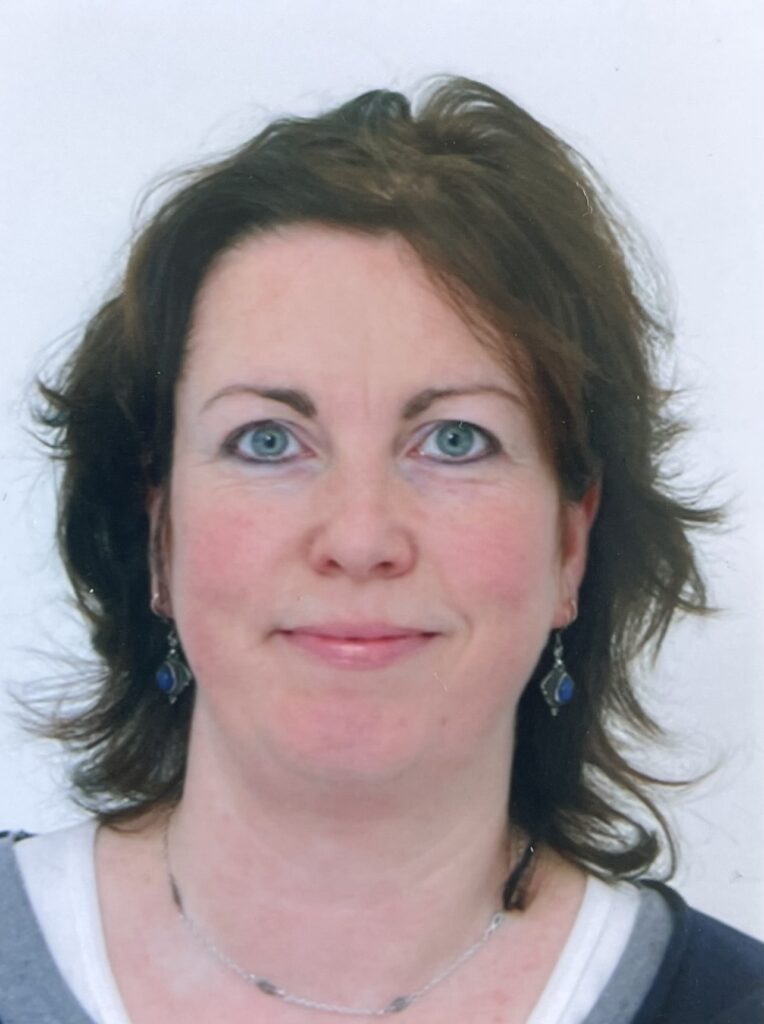
Muriel Norde ist Professorin für Skandinavistische Sprachwissenschaft am Nordeuropa-Institut der Humboldt-Universität zu Berlin. Ihre Forschungsschwerpunkte liegen im Bereich der Morphologie und des Sprachwandels. Besonders interessieren sie diesbezüglich Fragen von Variation und Wandel morphologischer und grammatischer Phänomene in den germanischen Sprachen (z.B. Dänisch, Schwedisch, Niederländisch und Englisch).