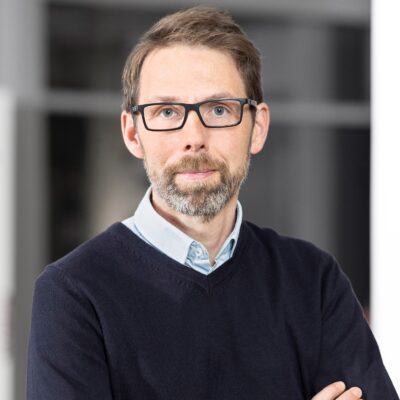
© Bielefeld University/ P. Ottendörfer
Using trust to counter uncertainty
Professor Dr Martin Kroh is studying social cohesion in uncertain times.
Read more »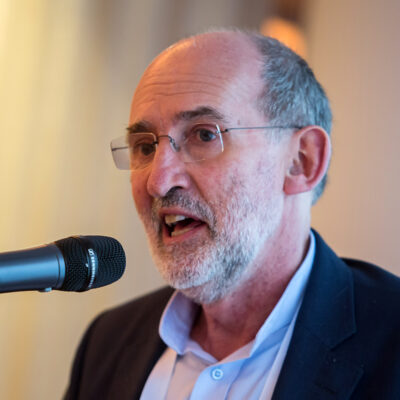
© Bielefeld University
How people make decisions in the face of radical uncertainty
The economist and psychologist Professor Dr Tuckett will visit Bielefeld to deliver an ‘Uncertainty Talk.’ He sees narratives as essential tools for making consequential decisions.
Read more »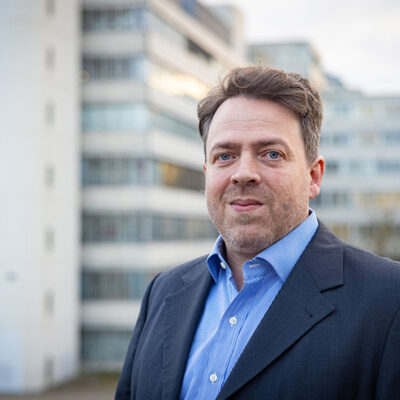
© Bielefeld University/M.-D. Müller
‘The EU has responded to crises with deeper integration’
Dr Andreas Vasilache, political scientist and professor of European Studies, explains the role of the EU in the campaign against the Russian invasion
Read more »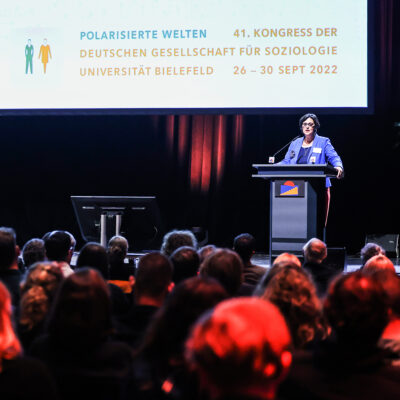
© Sarah Jonek
Sociology congress: five days of discussion on polarization
Some 2500 researchers convening at Bielefeld University to discuss current societal challenges at the 41st Congress of the German Sociological Association.
Read more »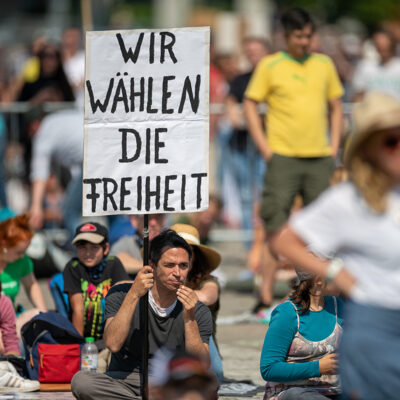
© picture alliance /Eibner-Pressefoto/Sascha Walther
Uncertainty as a tool to engage people
How do social groups use and instrumentalize uncertainty in conflicts? Researchers in Bielefeld are concerned about this.
Read more »
© Chinnapong/stock.adobe.com
What gender identity means for everyday life
During Pride Month June, the focus is on issues facing the LGBTQI* community. The university studies these issues all year round.
Read more »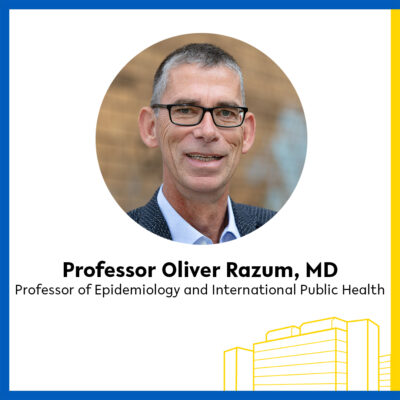
© Bielefeld University
‘Making healthcare more equitable for refugees’
Millions of people have fled because of the war in Ukraine. Interview with health scientist Professor Oliver Razum, MD, on medical care for refugees.
Read more »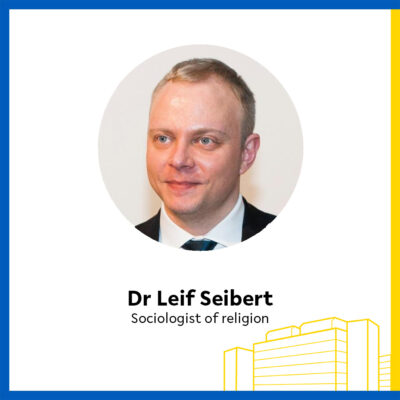
© Bielefeld University
‘Putin and Kirill benefit from mutual legitimation’
Interview with Dr Leif Seibert on the role of religions in the Ukraine war
Read more »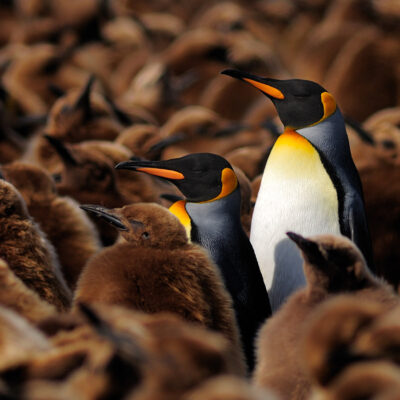
© Oliver Krüger
How it happens that humans and animals individualize
The JICE Institute and the InChangE network focus on the role of individualization in changing environments. Four academics report on their research.
Read more »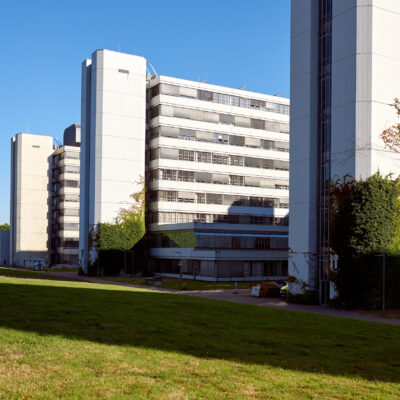
© Bielefeld University
Research Centre ‘Practices of Comparing’ extended
German Research Foundation (DFG) supports network with 11.9 million euros in funding
Read more »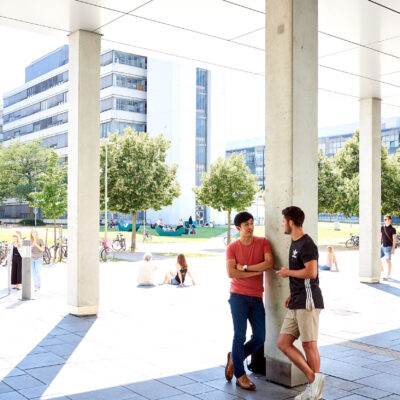
© Bielefeld University
Bielefeld and Paderborn Universities found joint institute
The Joint Artificial Intelligence Institute (JAII) will conduct research into human-centred technology suitable for everyday use.
Read more »
© Bielefeld University
Hard work and East Westphalian frugality
She is one of Europe’s best young academics and has been awarded a research grant of 1.5 million euros. Nonetheless, anthropologist Minh Nguyen is a humble person.
Read more »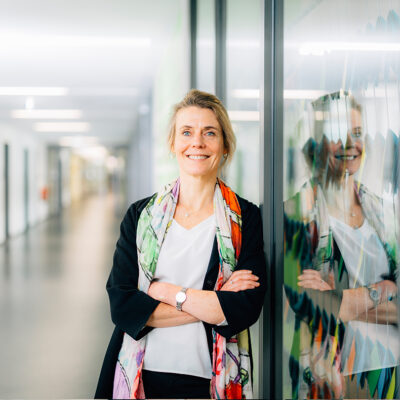
©
What happens when algorithms predict the future?
Sociology professor Dr Elena Esposito is studying the effects of algorhitmic predictions on society with an ERC Advanced Grant.
Read more »