
© Jana Haver
Compact microscope makes the previously invisible visible
The Lightweaver microscope fits on a laboratory bench. It delivers high-resolution images of living cells and could help advance personalised medicine, among other applications.
Read more »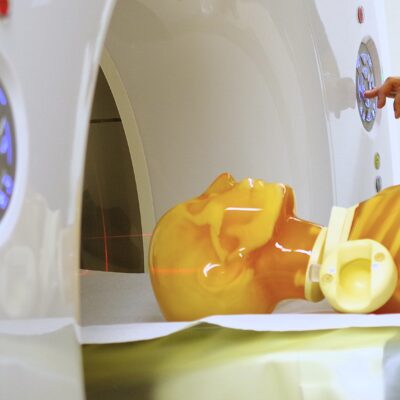
© Elena Berz
Saving lives with physics
Bielefeld University and Evangelisches Klinikum Bethel collaborate in medical physics research and teaching.
Read more »
© Kunstzeug/adobe.stock.com
Using AI to harness the gut microbiome for therapies
Consortium uses microbiome data for personalised treatment. Bielefeld researchers contribute bioinformatics expertise.
Read more »
© Patrick Pollmeier
‘We want to develop AI with people rather than for them’
Artificial intelligence meets inclusion: Interview on new approaches to medical participation in the AI*IM Focus Area.
Read more »
© Patrick Pollmeier, image montage: deteringdesign
In times of crisis, we need spaces for creativity
How do good ideas emerge—and what allows them to grow? This is the topic in Focus Area PINC.
Read more »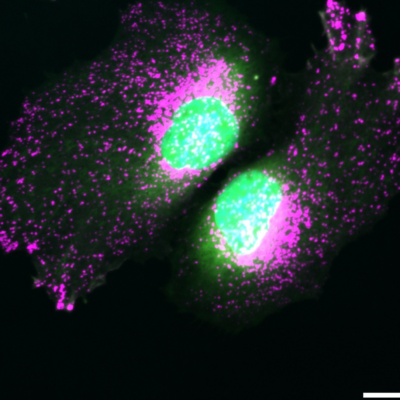
© Klaudia Kosieradzka, FMP, Berlin
Control mechanism against cellular stress identified
A discovery by a research team from Bielefeld University and the Leibniz-Forschungsinstitut für Molekulare Pharmakologie (FMP) offers new avenues for the treatment of dementia and cancer.
Read more »
© Mike-Dennis Müller/Bielefeld University
Rare Does Not Mean Insignificant
On Rare Disease Day, February 28, the spotlight turns to conditions that are individually rare but together affect many families. At Bielefeld University, research into lysosomal storage disorders is opening up new perspectives — also for Parkinson’s and dementia.
Read more »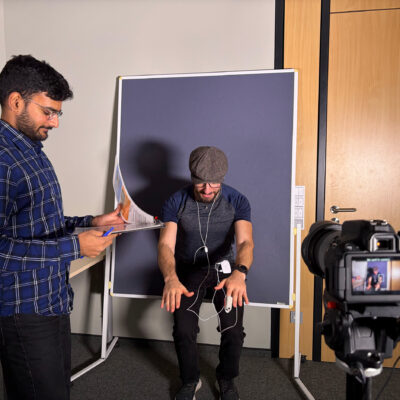
© Drimalla
Contactless Pulse Measurement Falters at High Heart Rates
Researchers at Bielefeld University have analyzed how reliably AI methods can detect pulse rates from simple video recordings.
Read more »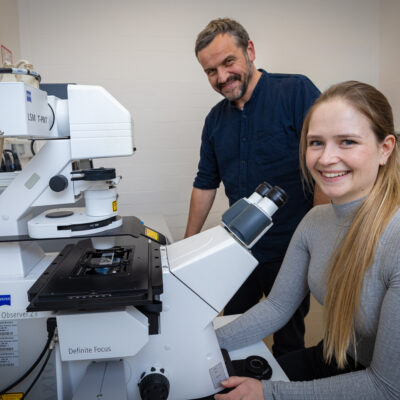
© Bielefeld University/ Mike-Dennis Müller
Cells Pull the Emergency Brake When Oxygen Runs Low
When cells face a lack of oxygen, they switch to energy-saving mode:
A team at Bielefeld University shows how they deliberately slow down their secretory transport pathway to do so.
© Alex Photo/stock.adobe.com
Polio Vaccination Remains Essential
A new study shows: The polio vaccine remains essential. Prof. Dr. Oliver Razum emphasizes: Eradication is unlikely, vaccination protection remains indispensable.
Read more »
© Bielefeld University/Mike-Dennis Müller
Clinical Guidelines as a lever for more equitable healthcare
How can clinical guidelines be designed to enable equitable and inclusive healthcare – and at the same time promote research and innovation? Professor Dr Sabine Oertelt-Prigione and her colleagues discuss these questions in their contribution to the current special edition of the British Medical Journal.
Read more »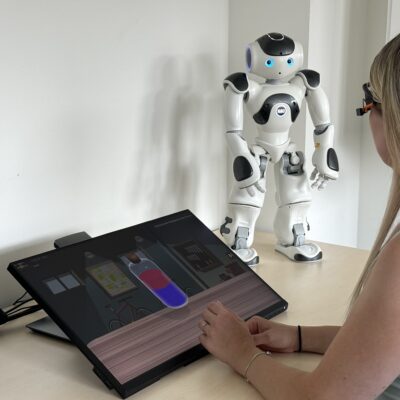
© TRR 318
Robot Nao as an Attentive Explainer
How can a robot best support us linguistically in solving tasks? Researchers from TRR 318 Constructing Explainability have investigated this question.
Read more »
© © Andreas Zobe
Making Better, More Explainable Medical Diagnoses with AI
Can artificial intelligence work side by side with doctors to help them make better diagnoses? A research team at Bielefeld University is dedicated to answering this question.
Read more »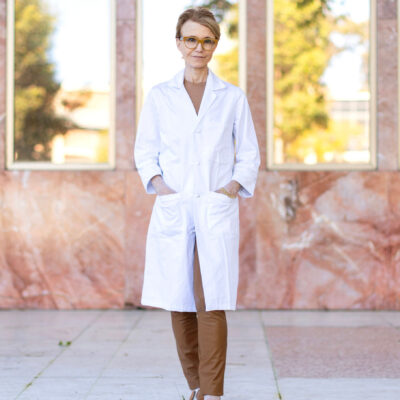
© Alisha Jucevic
Individualisation in Change
How do humans and animals navigate life transitions? The Individualisation Symposium 2025 explores biological, psychological, and social turning points – on March 25 at ZiF Bielefeld.
Read more »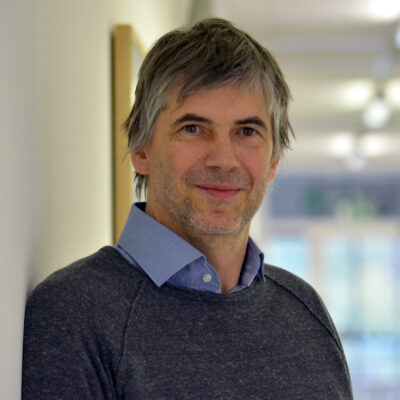
© Bielefeld University
‘We translate chemical reactions into maths’
Combined with biology and chemistry, mathematics offers new ways of modelling the microbiome and thus better understanding obesity: a key to targeted therapy.
Read more »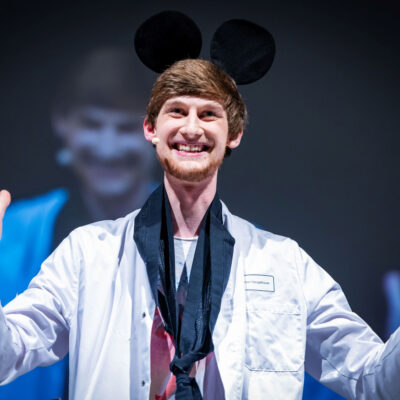
© Evangelisches Klinikum Bethel/S. Jonek
Bielefeld doctoral student competes in FameLab world final
Fingers crossed for Julian Neugebauer on Friday. He is competing in the world final of FameLab, the championship in explaining scientific questions in an understandable way.
Read more »
© Bielefeld University
Philosophical Engagement with Biology and Medicine
In an interview, philosopher of science Alkistis Elliott-Graves describes the special features and challenges of the ZiF workshop “Philosophical engagement on biology and medicine”.
Read more »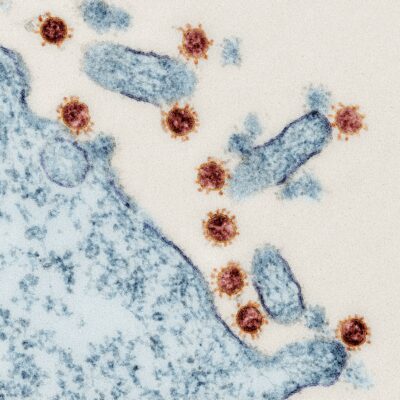
© Tobias Hoffmann, Carina Jahnke (colouring), Robert Koch Institute
Covid-19: migrants globally at higher risk
Study led by Bielefeld University shows 84 per cent higher risk of infection among migrants compared to the general population based on data from over 53 million people.
Read more »
© Bielefeld University
DataNinja presents innovations for trustworthy AI
The Research Training Group takes stock after three years of research, during which the team of doctoral students and established scientists worked on trustworthy AI systems and their embedding.
Read more »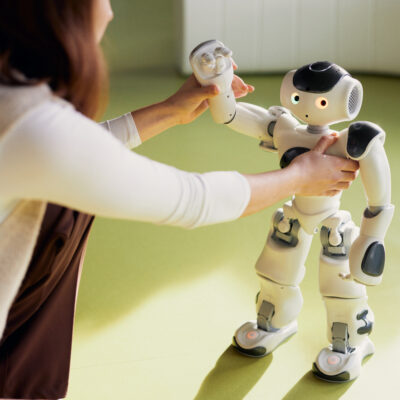
© Bielefeld University/P. Pollmeier
A showroom for the future of therapy and medical care
The OWL Medical School’s showroom features high-tech assistance systems that make work easier for nursing staff, therapists, and doctors.
Read more »
© michaelheim/stock.adobe.com
‘Our epidemiological research still reveals gaps’
Four years ago, Germany went into lockdown. Health scientist Professor Alexander Krämer on learnings from the pandemic.
Read more »
© Bielefeld University
How healthcare systems withstand uncertainty
A new graduate school at Bielefeld University is dedicated to studying the effects of uncertainty on health policy and healthcare.
Read more »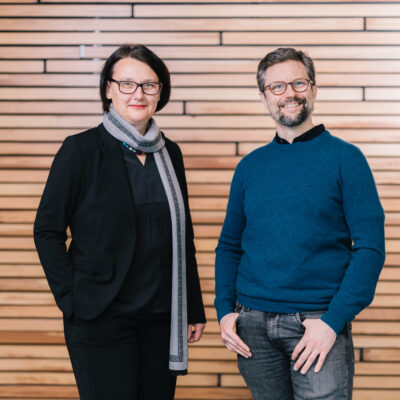
© Universität Bielefeld/M. Adamski
Understandable insights into AI research
In a new research podcast, the researchers of the Collaborative Research Centre TRR 318 give an insight into their work and explain why explainable AI is an important step into the future of AI research.
Read more »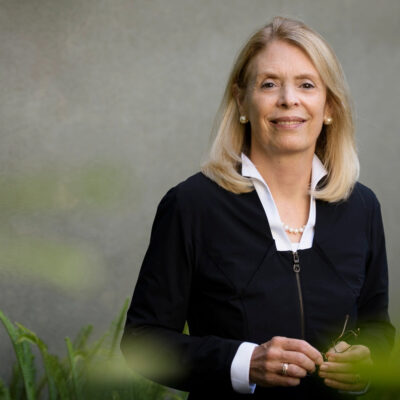
© L.A. Cicero
Research for the whole of society
Londa Schiebinger has been researching the role of women and different categories of gender in science.
Read more »