
© Patrick Pollmeier
In Search of New Data Storage Elements
Dysprosium holds great potential for quantum information technology. International researchers will discuss how its unique magnetic properties can be harnessed at a workshop held at the ZiF at Bielefeld University from November 17 to 19.
Read more »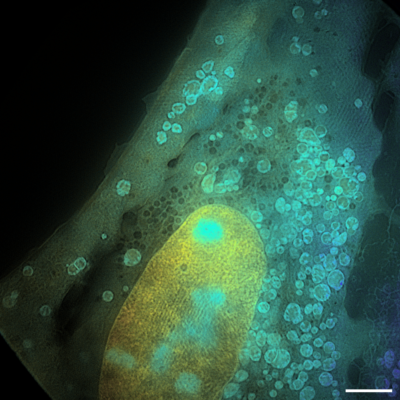
© Optica
New method shows cells in unprecedented detail
How do cells respond to drugs? A new microscopy technique could provide more precise answers to this question in the future. Researchers from Bielefeld University and the University of Vienna have developed a method that makes the smallest cellular structures visible.
Read more »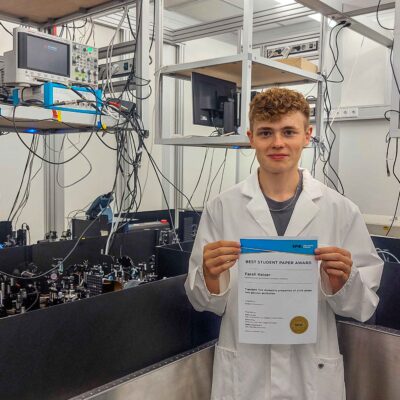
© Nicolas S. Beermann/Bielefeld University
Still at school—and already first author
Farell Keiser is conducting research at Bielefeld University whilst still at school. He has now published his first academic paper as lead author in Professor Dr Dmitry Turchinovich’s research group.
Read more »
© Mike-Dennis Müller
Enzymes break the 100-degree heat barrier
A study by Bielefeld University shows how enzymes remain functional at high temperatures thanks to a protective structure.
Read more »
© Jana Haver
Compact microscope makes the previously invisible visible
The Lightweaver microscope fits on a laboratory bench. It delivers high-resolution images of living cells and could help advance personalised medicine, among other applications.
Read more »
© Bielefeld University
1.58 million euros in funding for physicist Gert Aarts
The researcher is moving to Bielefeld University with support from Wübben Stiftung Wissenschaft. He is known for his work on strongly interacting matter in connection with machine learning.
Read more »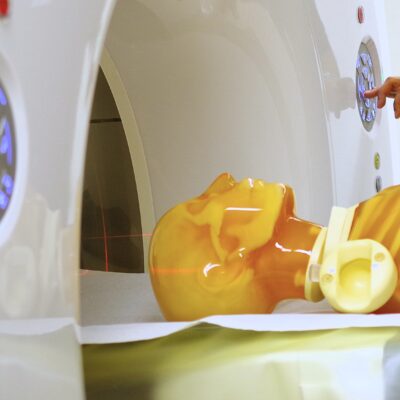
© Elena Berz
Saving lives with physics
Bielefeld University and Evangelisches Klinikum Bethel collaborate in medical physics research and teaching.
Read more »
© Bielefeld University
Extreme-matter research secures renewal
The German Research Foundation (DFG) is funding the transregional Collaborative Research Centre (CRC/TRR) 211 ‘Strong-Interaction Matter under Extreme Conditions’ for another 3.5 years. The DFG announced the decision today (21 […]
Read more »
© privat
Our Solar System Is Moving Faster Than Expected
Our solar system is racing through space faster than current models predict – as shown by a new study from Bielefeld University. The surprising findings challenge fundamental assumptions of cosmology.
Read more »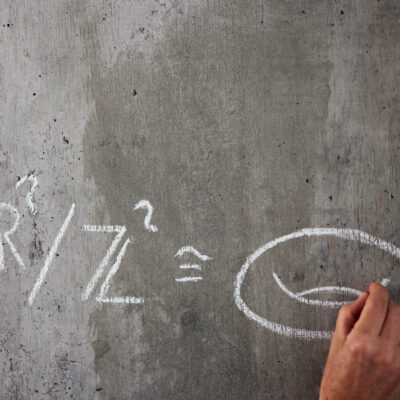
© Bielefeld University/ Patrick Pollmeier
New paths in mathematics
The ESyMath focus area aims to bring together different areas of mathematics and related sciences in order to exploit and further develop synergies.
Read more »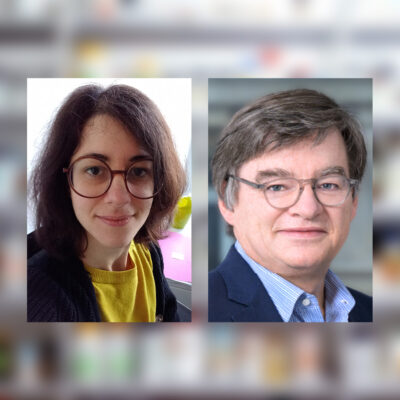
© privat
How to Understand Complex Systems
An international research group on the theory of random matrices is being launched at the ZiF in Bielefeld. It is investigating how new methods can be used to better understand complex systems ranging from ecology to AI.
Read more »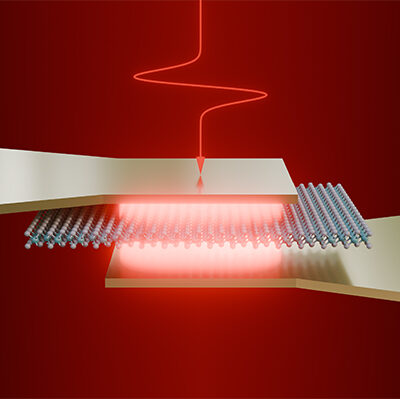
© Universität Bielefeld
Terahertz light controls atomically thin semiconductors
A research team from Bielefeld and Dresden uses pulses of terahertz light
to control nanomaterials – opening up new possibilities for ultrafast
nanoelectronics.
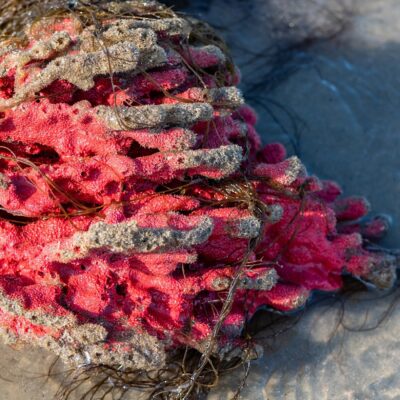
© James M. Davidson/stock.adobe.com
‘Basic principles of nature preserved in marine sponges’
Bielefeld physicists and international colleagues discover ‘evolutionary toolbox’.
Read more »
© Bielefeld University
New development: flexible but ultra-strong films
Until now, two-dimensional materials were considered brittle. An international research team, including physicists from Bielefeld, has now developed extremely thin structures that could be used for foldable computers, for example.
Read more »
© Ludmila/adobe.com
Substitutes for the cooling miracle
How shall we cool things down in the future? Physicist Jürgen Schnack seeks materials to reach super-low temperatures.
Read more »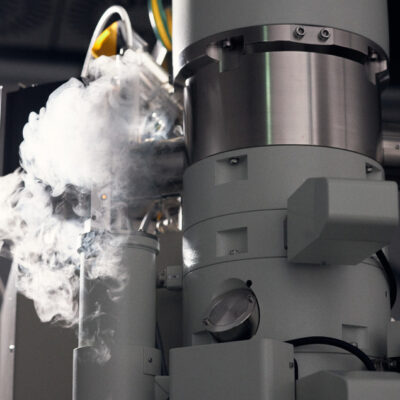
© Patrick Pollmeier/HSBI
Using atomic analyses to recycle plastics efficiently
In the InCamS@BI transfer project, physicists are using high-resolution microscopes to look into the atomic lattice of plastics. Their findings should contribute to boosting circular economy.
Read more »
© Mike-Dennis Müller
Billions of galaxies beyond the average
Cosmologist Professor Dr Cora Uhlemann receives ERC Starting Grant to research how galaxies are distributed in space.
Read more »
© Gentileza Instituto de Música
The Sounds of Science
A workshop at the university’s Center for Interdisciplinary Research (ZiF) is working on sonification as a new way of presenting data.
Read more »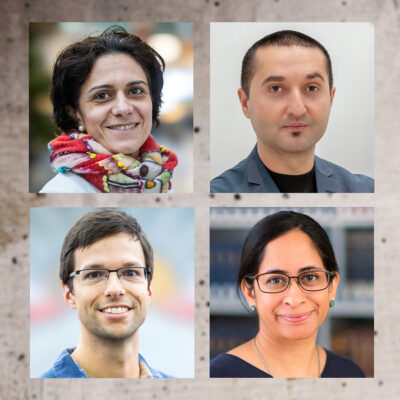
© top left Sarah Jonek, right Britta Kirst, bottom left Sarah Jonek, right Kat Hackenberg
Top ERC funding in the millions for four researchers
The European Research Council has announced the awardees of the new Consolidator Grants. In Germany, Bielefeld University is one of the most successful in acquiring grants this time.
Read more »
© Universität Bielefeld/S. Jonek
Bielefeld researchers using European supercomputers
Physicist at Bielefeld University have landed computing time on European supercomputers LUMI-G and Leonardo.
Read more »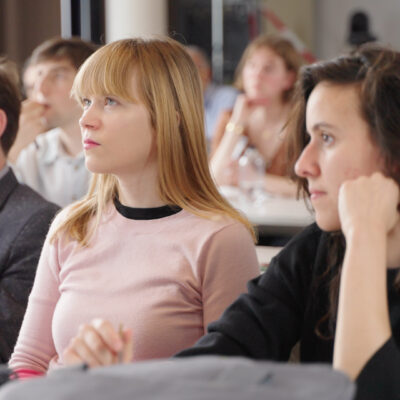
© Ernest Films, Paris
Making economic policy decisions in uncertain times
Doctoral researchers from EPOC Network working on economic modelling coming together at a conference in Barcelona.
Read more »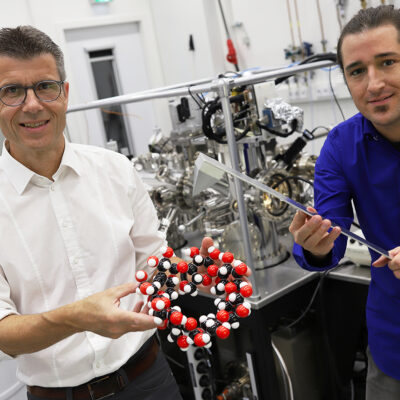
© Bielefeld University/C. Pelargus
Nanomembranes with pore molecules for efficient filtration
An international research collaboration with physicists from Bielefeld presents a new method for producing ultrathin nanomembranes in the Nature journal.
Read more »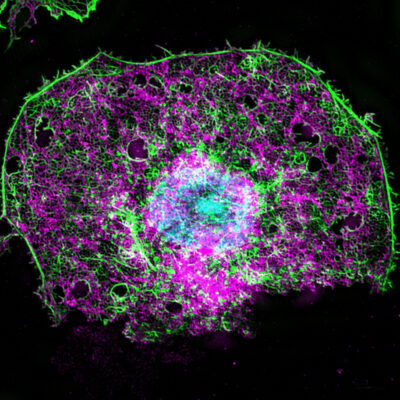
© Universität Bielefeld/V. Mönkemöller, W. Hübner
Making drug interactions in the liver visible
New EU project seeks to develop a microscopy system for liver cultures and accompanying imaging methods. It is headed by Prof. Dr. Thomas Huser from the Faculty of Physics.
Read more »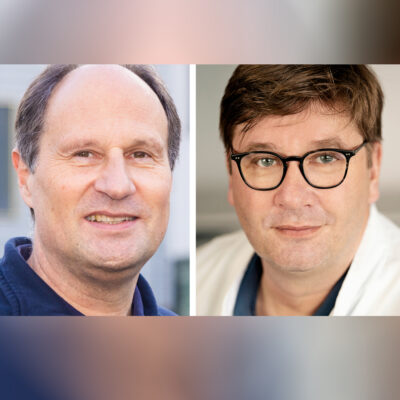
© Photo l.: Bielefeld University/M.-D. Müller, Photo r.: Bielefeld Hospital/S. Behrmann
Seeing through blood with a microscope
Research network develops technology to fight bacterial contamination
Read more »