Why do some individuals cooperate more, while others compete more strongly—and what does this mean for our society? At the Individualisation Symposium 2026, leading international researchers will gather at Bielefeld University to explore how individual differences shape social relationships in humans and animals.
The Joint Institute for Individualisation in a Changing Environment (JICE) invites participants to the fifth Individualisation Symposium at Bielefeld University on Tuesday, 24 March 2026. The event will focus on how individual differences shape social interaction.
© Oliver Krüger
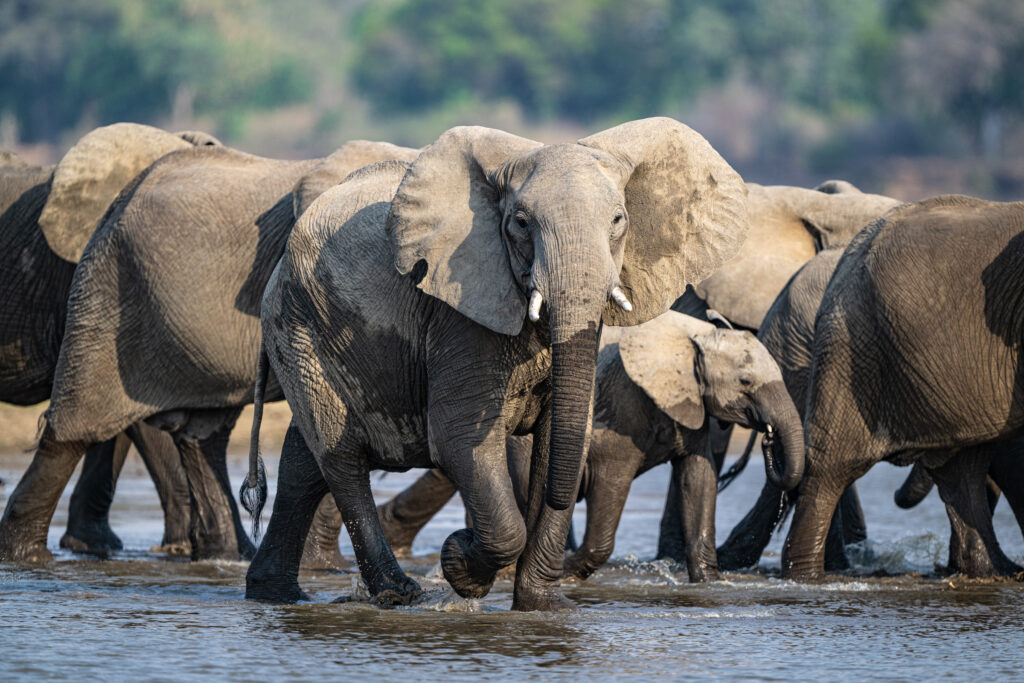
In animal groups as well as human societies, individuals show stable behavioral differences—for example, in cooperation or competition. These differences influence relationships, trust, and conflict resolution. Researchers refer to this as “individualisation”: the development of unique traits through interaction with the environment and social partners.
“Individuality never emerges in a vacuum,” says Professor Dr. Barbara Caspers, behavioral biologist at Bielefeld University and Director of JICE. “We understand ourselves only in interaction with others. We are bringing international expertise to Bielefeld to discuss how individual differences shape social systems and how this knowledge can help address current societal challenges.”
International leading research
Guests include evolutionary psychologist Athena Aktipis (Arizona State University), who studies cooperation from human sharing to cancer biology; evolutionary biologist Michael Cant (University of Exeter), who researches cooperation and conflict in evolution; neuroscientist Gerd Kempermann (TU Dresden), who examines the formation of new neurons in the adult brain; and behavioral biologist Jens Krause, who studies collective behavior and social networks in animals, with applications ranging from medicine to crisis management.
The symposium connects the natural sciences, social sciences, and humanities, and provides new impulses for cooperation, resilience, and individual development. At Bielefeld University, research on individualisation in changing environments is bundled in the InChangE research focus area.
Participation in the symposium is free of charge. Registration is requested.

© Oliver Krüger