Critical thinking is coming under increasing pressure – due to information overload, AI and digital routines. A new project at Bielefeld University aims to show how it can be strengthened as a future skill. It is being funded with 100,000 euros from the Stifterverband and the Heinz Nixdorf Foundation as part of the ‘Futureversities’ programme.
The Critical Thinkers project is aimed at teacher training students and focuses on them as future multipliers. They should learn not only to practise critical thinking themselves, but also to systematically encourage it in the classroom and embed it in their pupils.
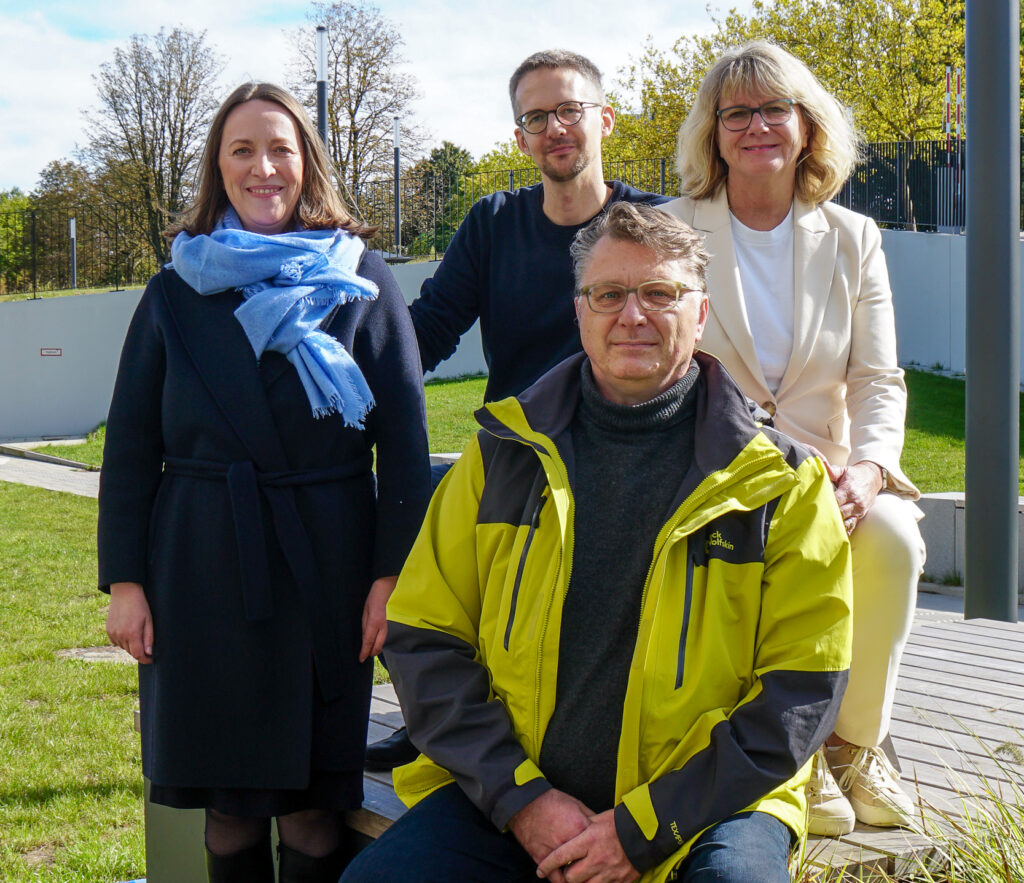
The programme therefore combines skills with attitude. The focus is on the ability to examine arguments, change perspectives and evaluate information. This includes the willingness to make this effort again and again. ‘We want to empower prospective teachers to practise critical thinking under pressure and to show their pupils that thinking is not a chore, but a core democratic skill,’ says project leader Professor Dr Kirsten Berthold from the Department of Psychology and the Bielefeld School of Education (BiSEd). She developed the concept together with Bielefeld professors Dr. Susanne Miller (educational science), Dr. Matthias Wilde (biology) and Dr. Fabian Wolff (psychology).
© Universität Bielefeld
In terms of content, the project ties in with the REFLECT Focus Area at Bielefeld University. The research network promotes studies and practical measures on how children and young people can check information, weigh up arguments and change perspectives. To this end, REFLECT works with a framework model that shows the conditions under which critical thinking can develop and be promoted in school, family and leisure time.
Students test new teaching formats
The experiences gained from REFLECT are now being incorporated into the ‘Critical Thinkers’ project. In seminars and school projects, teacher training students are testing specific teaching formats that involve working with fake news, AI-generated texts or controversial online debates. The aim is to develop practical concepts that can be used in different subjects and strengthen pupils’ judgement in the long term.
Example of institutional transformation
A total of five higher education institutions have been recognised in the ‘Futureversities – Scaling, Anchoring, Shaping the Future’ competition (press release, in German). They were selected from among 144 applications. ‘The award-winning universities demonstrate how institutional transformation can succeed – with courage, adaptability, and a vision that reaches beyond their own campuses,’ says Volker Meyer-Guckel, Secretary General of the Stifterverband. Horst Nasko, Member of the Board of the Heinz Nixdorf Foundation, adds: ‘With this funding, we are creating space for bold change – and above all, for collective action. Sustainable university development emerges through collaboration among higher education institutions and with partners from business and civil society.’
This translation was created with machine assistance and subsequently edited.