What makes beings individual, and how do they influence their environment? The focus area ‘InChangE – Individualisation in Changing Environments’ is dedicated to examining these questions from an interdisciplinary perspective. Researchers in biology, philosophy, psychology, sociology, and other disciplines are integrating data and theory to understand the causes and consequences of individual differences. Their goal is to develop a new science of individualisation—one that encompasses both humans and animals.
Why do animals of the same species behave differently? How do individual differences arise in humans and animals? And what implications do these differences have for their environment? Bielefeld University’s focus area InChangE (‘Individualisation in Changing Environments’) is exploring these questions. Researchers aim to investigate—across disciplinary boundaries—what makes individuals unique and how this affects ecosystems, societies, and health.
The roots of this research field go back more than 15 years: an initial collaborative group from Bielefeld and Münster Universities was already studying how and why individual animals of the same species differ in their behaviour. Their work later gave rise to the Collaborative Research Centre TRR 212 (NC³) that redefined the idea of a biological niche—not as something average for a species, but as something that arises from the interactions of one individual with its environment.
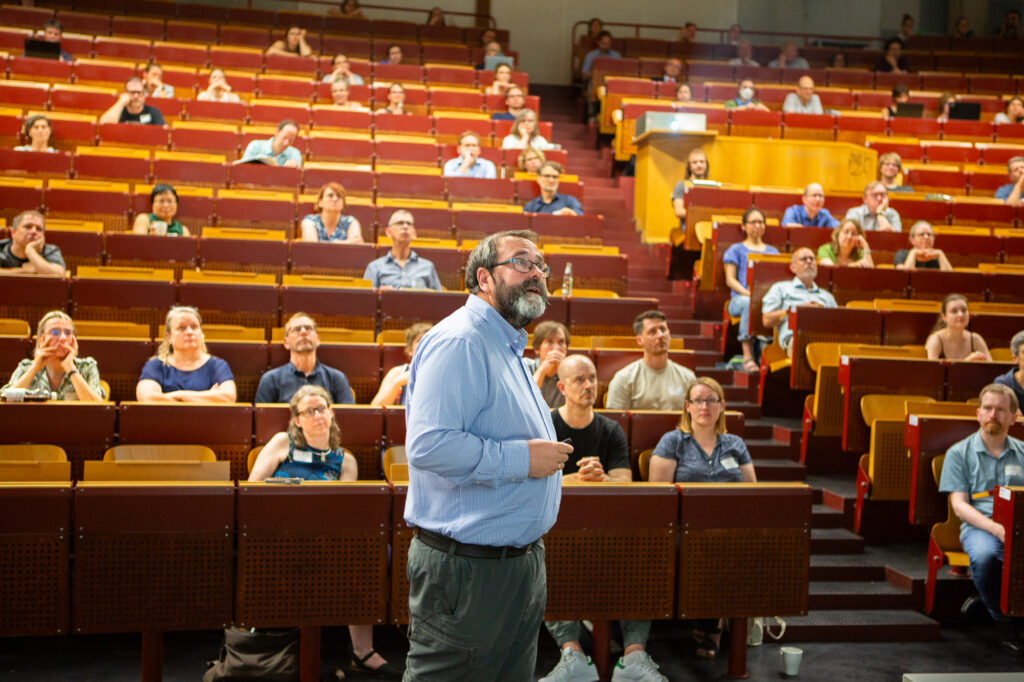
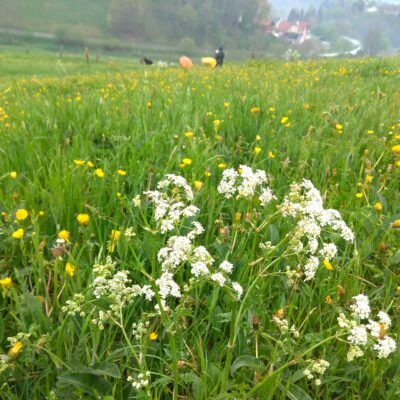
© Stefan Sättele
Individual differences and their implications
These findings are feeding into the new InChangE research area established jointly with the University of Münster. Ten disciplines are working together: biology, psychology, sociology, medicine, philosophy, economics, geoinformatics, history, linguistics, and environmental science. ‘The environment is changing faster than any of us would like,’ says Professor Dr Barbara Caspers, spokesperson for InChangE. ‘We want to better understand how individuals respond to such changes—and what role individualisation plays in this process.’
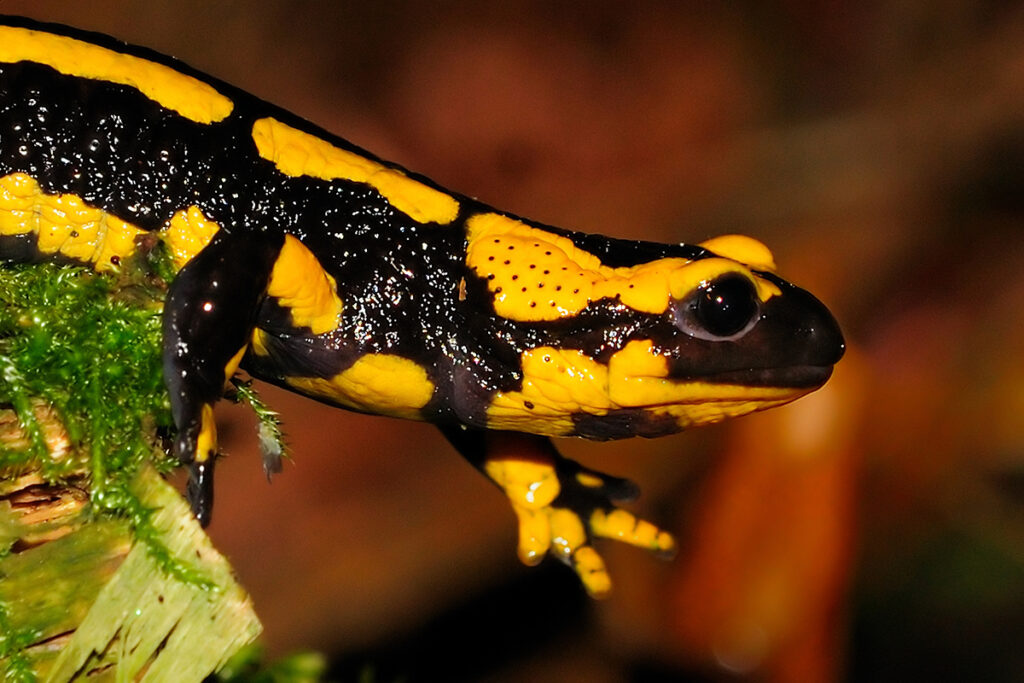
Examples from research illustrate just how far animals differ and what consequences these differences have: in Galápagos sea lions, for instance, birth weight affects not only the risk of disease later in life but also the onset of reproduction. Among fire salamanders, some are early risers that begin foraging right after dark, whereas others don’t become active until the latter half of the night. ‘To protect them, we need to understand these differences,’ says Caspers.
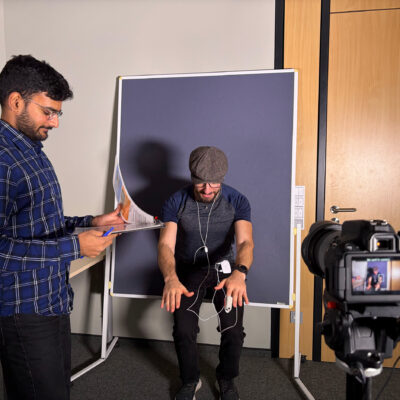
© Bielefeld University/ O. Krüger
Investigating the general in detail
The key questions of the initiative are: how do individual differences arise? How are they inherited or learned? And what implications does this have for social life within not only animal groups and ecosystems but also human societies? ‘We want to explore the general principle in detail,’ says Professor Dr Oliver Krüger, also a coordinator for InChangE. ‘How do other individuals influence our personality? By what criteria do we choose whom we spend our time with? And what insights, for example, from the behaviour of fire salamanders can be generalized to humans?’
This is where additional disciplines—such as psychology—come into play. ‘Of course, these are complex questions,’ says Krüger. ‘But we’re not starting from scratch.’ Behavioural biology already offers many basic principles regarding, for example, whether animals have personalities. ‘Even insects have been shown to exhibit stable behavioural patterns,’ says Krüger. The next step is to link these findings with psychological concepts such as attachment and social behaviour.
Linked Lives
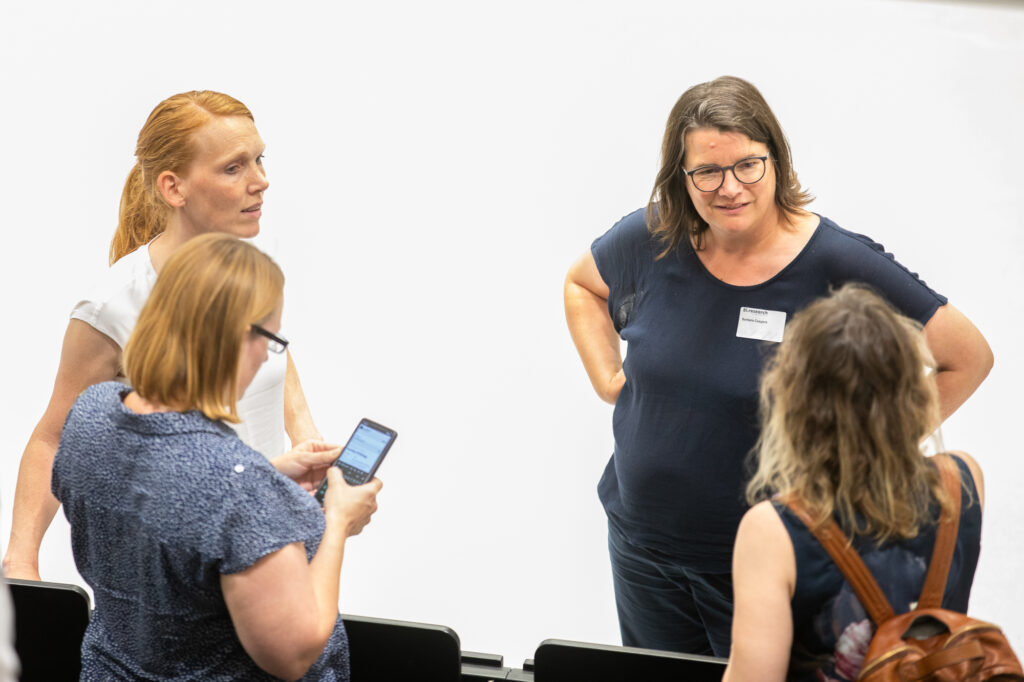
‘Concepts and methods for studying individualisation are to be found in many academic disciplines,’ says Professor Dr Marie Kaiser, also one of the coordinators of InChangE. ‘However, the approaches are often so different that philosophical and conceptual work is needed to enable comparisons.’ An article entitled ‘An Interdisciplinary Linked Lives Approach to Individuality in Social Behaviour’—co-authored by Caspers, Krüger, and Kaiser—was published in the journal Nature Human Behaviour. ‘In it, we developed interdisciplinary approaches to better understand the characteristics and consequences of individual differences in social behaviour, particularly in human–animal comparisons.’
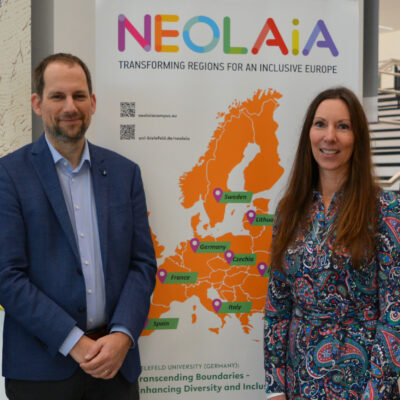
© Stefan Sättele
Finding a common language
Philosophical questions also play a role: what defines a personality? What standardized terms do we need to compare humans and animals? Which individuals have a particularly strong influence on societies—and why? ‘In politics, we’re currently seeing how strongly individuals can shape developments,’ says Krüger. ‘When an individual changes, it can transform an entire system—whether in nature or in society.’
Parallels can even be drawn in medicine: there is evidence not only in sea lions but also in humans that birth weight influences the risk of certain diseases. And salmon whose movement is restricted exhibit behavioural patterns and metabolic traits that resemble those seen in people with depression. ‘Our aim is to find a common language,’ says Krüger. ‘We want to break down barriers between disciplines, compare methods, and learn from one another in order to gain a more comprehensive understanding of the individual.’
Focus area InChangE—Individualisation in Changing Environments

Together with the University of Münster, the Joint Institute for Individualisation in a Changing Environment (JICE), and a large number of external partners, InChangE is creating a platform for cutting-edge interdisciplinary research. Some meetings are held in Twin Rooms—digital spaces designed to enable more physical interaction than traditional video conferences.
Coordinators: Professor Dr Oliver Krüger, Professor Dr Barbara Caspers, Professor Dr Marie Kaiser
Participating faculties: Biology, Philosophy, Sociology, etc.
Website: https://www.uni-bielefeld.de/forschung/profil/fokusbereiche/inchange/