
Linguists will be attending two international conferences in Bielefeld in late summer. Both conferences are closely tied to the Collaborative Research Centre (CRC) 1646 ‘Linguistic Creativity in Communication.’ Linguist Dr Katja Politt and phonetician Dr Farhat Jabeen from Bielefeld University illustrate the various ways in which linguistic creativity can be studied.
Ms Politt, Ms Jabeen, linguistic creativity plays an important part in both of the conferences. What makes language creative to begin with?
Katja Politt: As people, we constantly categorise things, establish connections and make up analogies. We also make use of such general cognitive abilities when we use language. At the same time, our world is constantly changing. We have to assign names to new phenomena and talk about things that may still lack a linguistic routine. These processes make us creative as we broaden our linguistic patterns through new information.
Farhat Jabeen: Having said that, creativity is not limited speakers. Our project A03, which is part of the CRC 1646, is also concerned with the creativity of listeners. There may be instances where people listen to utterances and the word order, intonation or context does not particularly align with what they expected the utterance to sound like. However, they will most likely still be able to understand what was said and the communication keeps working out. What we are interested in is the way in which listeners deal with these kinds of deviations and how they creatively interpret them.
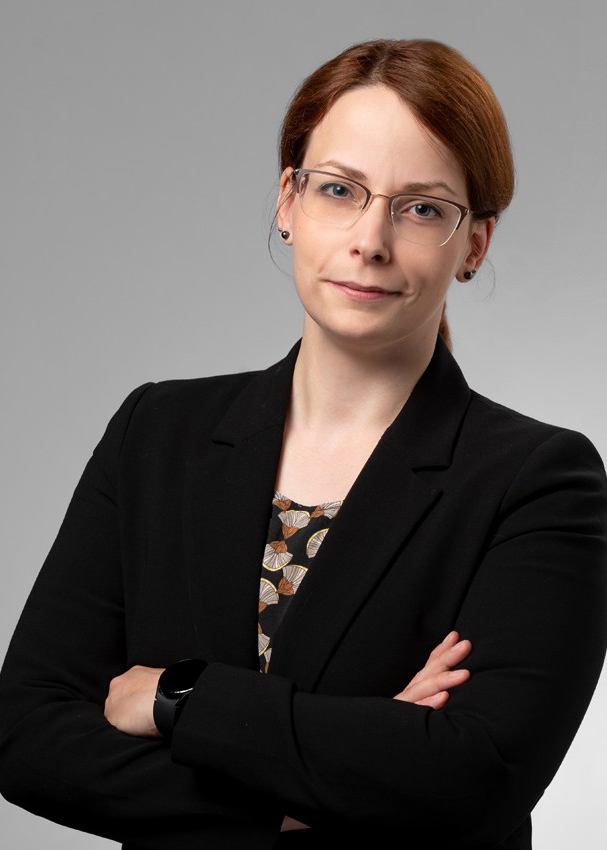
© fotostudio 54, Hannover
How are these perspectives addressed throughout both of the conferences?
Politt: The annual conference of the German Cognitive Linguistics Association, also known as DGKL in German, is unrelated to the CRC, but instead takes place at a different location every 2 years. This time around, our team is hosting the conference in Bielefeld. The submitted presentations will be evaluated independently. We were, however, able to incorporate current topics and key research areas that are related to our location. Due to this, creativity definitely plays a significant role there. Joana Cholin, for instance, deals with creative language production and individual differences; Pia Bergmann looks at the interplay of routine and creativity while speaking, whilst Mark Turner explores creative construction grammar. That said, overall, the scope of topics is certainly broader. This is reflected throughout the keynotes of Marieke Woensdregt, which talk about the theory building of cognitive science, as well as through the work of Jenny Audring which talks about the role of connections in linguistic representations.
Jabeen: We chose to centre the 40th South Asian Languages Analysis Roundtable, also known as SALA-40, around the topic ‘Creative Interpretation of Variability’. This directly ties into our research at the CRC. At the same time, we are specifically directing our attention at South Asian languages. Although there still is an overall lack of research regarding South Asian languages, some languages, such as Hindi and Bengali, are already more well researched. With this conference, we therefore want to make research on these underexplored languages more visible.
Linguistics to play with

The annual conference of the German Cognitive Linguistics Association newly features a game session: Here, participants are able to present games that deal with language and linguistics – from board and card games to digital gaming. Some of these games are used within research, while others convey linguistic knowledge or simply were created out of a delight for languages and games. Participants are able to directly check out the games at the conference.
Why is it important to include these specific languages and the researchers who are looking into them?
Jabeen: If we want to fundamentally understand how language works, we are not allowed to only look at well researched West European languages. At the same time, it is important to us that we are not only talking about South Asian languages but that researchers from the South Asian community are also visible themselves. It certainly happens that people from certain regions are underrepresented at conferences. Because of that, we were deliberately considering to include different perspectives from the community. Additionally, we would like to strengthen the research areas in which South Asian languages are underrepresented. This includes experimental studies and investigations from the perspective of the listener, for example.
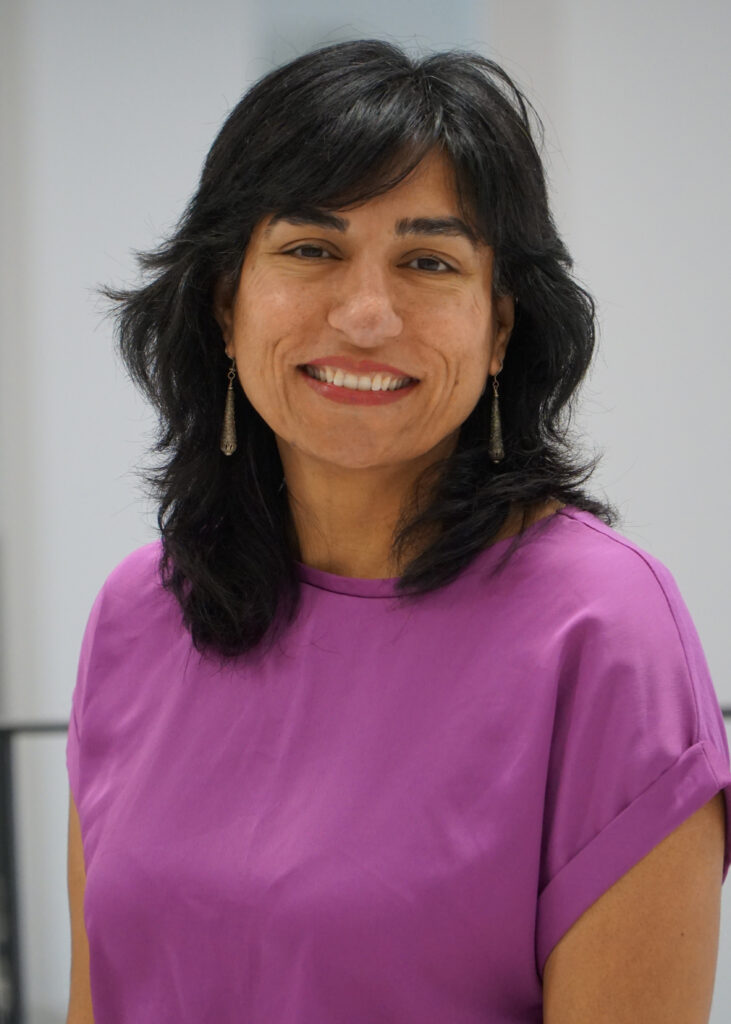
© Sascha Hermannski
What do these kinds of international conferences offer to the CRC 1646?
Politt: The DGKL is a big platform for the CRC which allows us to present our findings from the current funding period to an international expert audience. Obviously, researchers are attending conferences and in communication with each other, anyway. An annual conference, such as this one, however, brings many important people from the research field together. Plus, Bielefeld University is well equipped with many experts from the linguistics department and the CRC.
Jabeen: This largely also applies to SALA-40. South Asian languages are primarily analysed as part of our project A03. Therefore, the conference offers us the chance to present our findings to a specialised community whose research focuses on these very languages. At the same time, we are able to establish new connections and to learn from each other. Furthermore, this strengthens the linguistic profile of the CRC and makes it visible that Bielefeld University is conducting research on South Asian languages.
Ideas for one’s own research

For two weeks, linguistic research became the focal point of Bielefeld University: From August 10 to August 21, 120 master students, PHD students and postdocs from over 30 countries explored syntax, semantics, pragmatics, linguistic creativity and methodical questions within 32 classes offered by the summer school of the Linguistic Society of Germany (DGfS). They also presented their own research in the form of poster sessions. The summer school was organised by the CRC 1646 ‘Linguistic Creativity in Communication.’ Opemipo Olagunju, PHD student at the University of Lagos and scholar of the DGfS, displayed particular excitement: ‘The classes awakened my interest in linguistic creativity – I’m now wondering how this works in my language.’
What are your wishes for when the guests leave Bielefeld and the conferences are over?
Politt: Of course, we hope that they leave with new connections and inspiration for their research. This sounds like a typical answer, but this is precisely what makes these conferences actually so valuable. Not only the presentations but the conversations that take place afterwards, during coffee breaks or joint events are substantial. Plus, we hope that the guests leave with a good impression of how well-equipped Bielefeld University’s linguistic department and the CRC is.
Jabeen: For me, this experience is also about building bridges. We are able to present our own research but, simultaneously, also learn from each other methodically and linguistically. Especially if we move beyond the scope of languages that we work with ourselves, we are able to gain new perspectives.