Dysprosium, a rare-earth element, is not only one of the most magnetic substances but also a promising candidate for applications in quantum information technology, including high-density data storage. An international workshop at Bielefeld University’s Center for Interdisciplinary Research (ZiF), from 17 to 19 November, will explore how to better understand and harness its potential.
So far, dysprosium has mainly been used in specialist magnets, such as those found in wind turbine generators. However, its unique properties also make the element interesting for applications in quantum information technology, including high-density data storage.

© Patrick Pollmeier
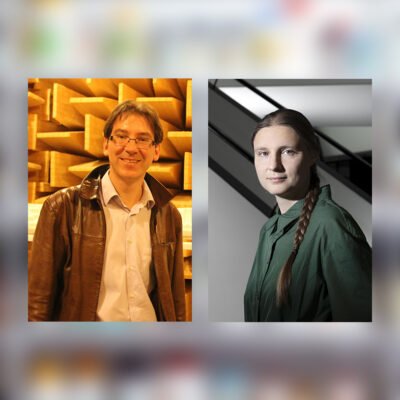
“Research on this topic is being conducted worldwide, and it has already been demonstrated that data can be stored magnetically in individual dysprosium atoms,” says Jürgen Schnack, Professor of Physics at Bielefeld University. “The next step is to deliberately develop dysprosium-based molecules with specific properties.” Schnack is organising the workshop together with Professor Lucie Norel, a chemist from Rennes Cedex; Professor Alessandro Lunghi, a physicist from Dublin; and Professor Mauro Perfetti, a chemist from Florence.

© Mauro Perfetti
At ZiF, researchers from various fields of physics and chemistry will discuss ways to simulate and theoretically describe the properties and behaviour of dysprosium-based materials, modify them experimentally, and identify new design paradigms and potential applications.
“The rich and complex behaviour of dysprosium-based magnetic materials can only be explored through interdisciplinary research,” says Jürgen Schnack. “The field has long since moved beyond conventional quantum magnetism. We will also be discussing, for example, the potential of these materials for use in future quantum technologies.”