How much chemical knowledge can be found in centuries-old alchemical recipes? A research team led by Dr Guillermo Restrepo, researcher at the Institute for Studies of Science (ISoS) at Bielefeld University, uses artificial intelligence to decipher historical texts and verify forgotten chemical findings in the laboratory. Because of this project, the team received a three-year funding from the non-profit scientific organisation Schmidt Sciences in the US.
Alchemists once searched for new substances and reactions and left behind a valuable historical legacy. But what do these kinds of frequently enigmatic recipes reveal about the origins of chemistry? The research project ‘(Al-)Chemical Space In Silico’ (AXIS), which is funded by Schmidt Sciences with 400,000 euros over three years, deals with this question. Guillermo Restrepo runs the research project alongside Dr Sarah Lang from the Max Planck Institute for the History of Science.
‘We believe that the combination of digitalised historical information, artificial intelligence, quantum chemistry and lab experiments will play a crucial part in gaining a better understanding of alchemical knowledge,’ says Restrepo.
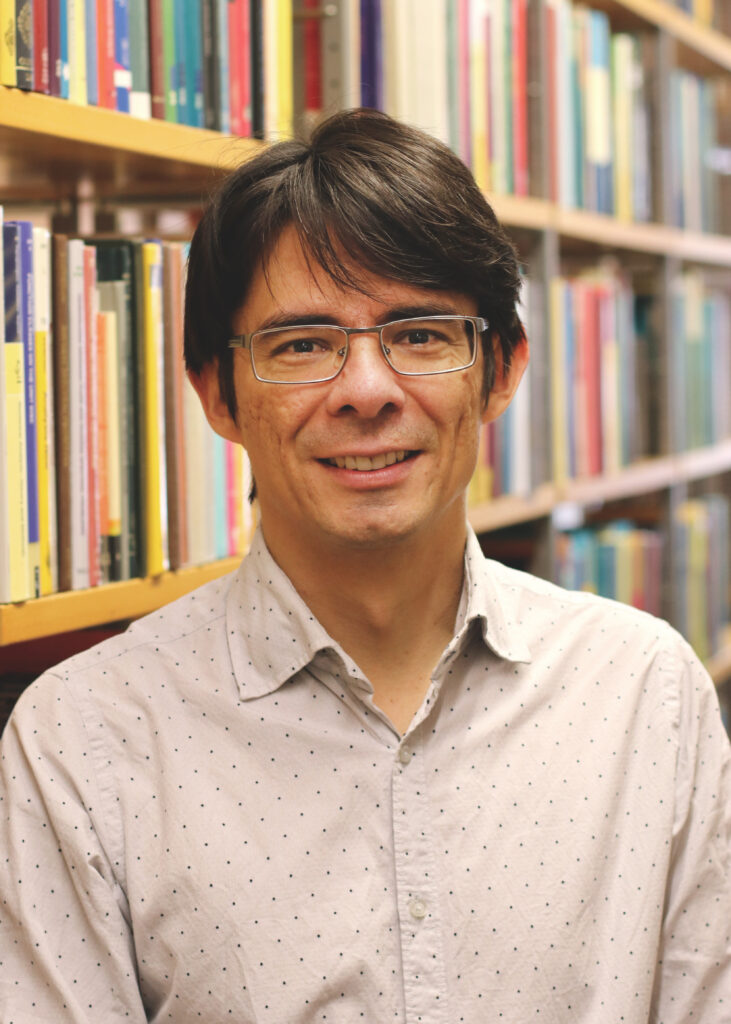
© private
AI deciphers historical texts
Many chemical databases only document information beginning at around 1800 onwards. Older knowledge, however, can be found in alchemical recipes that are now available in digital format. Their language is often coded, allegorical or esoteric.
The AXIS team uses large language models (LLMs) in order to distinguish potential chemical contents from symbolic descriptions. Subsequently, the researchers use quantum physics – or, computerised methods – in order to examine chemical properties and conclude which recipes seem scientifically promising.
From the recipe into the lab
The most promising recipes are recreated in the laboratory and tested with chemical compounds. Through this process, we gain new data about substances and reactions which date back to a time before 1800. This, then, improves our understanding of the way in which chemistry develops over time.
The project bridges the fields of history, computer science and chemistry in order to demonstrate how AI can make historical sources accessible for research. The tools and data developed will be made openly accessible to allow other researchers to utilise and further refine them.
There were over 500 submissions in total from 42 countries. Dr Guillermo Restrepo’s research project is one of 19 initiatives selected for this year’s awards from the ‘Humanities and AI Virtual Institute’ (HAVI) – a group that also includes projects from universities in Oxford, Boston, Berkeley and New York. Schmidt Sciences is an initiative established by Eric and Wendy Schmidt, who fund a range of philanthropic projects. Eric Schmidt is the former CEO of Google.