Democracy, gender equality and pluralism are no longer society’s identifiable central ideas. They have turned into contested issues and are quite often at the center of anti-democratic agendas. The focus group ‘Contestations of Gender & Democracy: Konzepte, theoretische Perspektiven und empirische Felder‘ is investigating how this came to be. The group has already conducted research at the Center for Interdisciplinary Research (ZiF: Zentrum für interdisziplinäre Forschung) this past March and is now getting together for another workshop in August. We have posed three questions to Professor Dr Diana Lengersdorf who is in charge of the focus group alongside sociology Professor Heidemarie Winkel. The group also aims to strengthen the interdisciplinary profile of the university’s ConGeD focus area.
For years, gender equality and gender rights have been important issues. More recently, they have come under considerable pressure. What is happening there?
Diana Lengersdorf: Our scholarly interest rests precisely upon this very moment – one that leaves us rubbing our eyes in astonishment – and on the incredibly rapid unfolding of a dynamic in which hard-won achievements are being called into question and, in some places, such as the USA, even rolled back by state authorities. The common consensus that we must take action so that people can live their lives as they like – this also includes issues relating to gender – is crumbling. This development has taken us by surprise. That said, there are many places in the world where gender equality has never been considered an issue to begin with, while gender equality in other countries, such as Hungary, used to be a heavily contested issue.
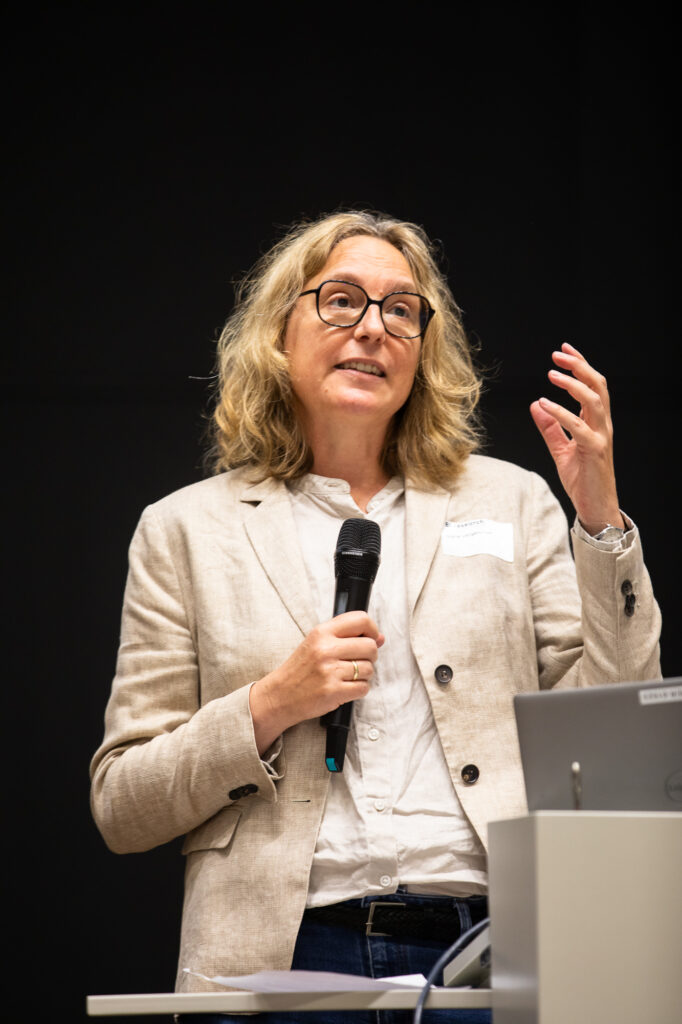
© Bielefeld University/ Stefan Sättele
Can you come up with any possible explanations for this?
Diana Lengersdorf: It is important to recognise that societies are constantly shifting. The way in which we create justice or gender plurality is subject to constant negotiation; nothing is set in stone. What we are currently witnessing is the comparatively rapid resurgence of certain positions that have always existed in Germany – even if they were less audible in the past. This is largely due to the fact that right-wing authoritarian populism has eagerly seized upon this issue as it is incredibly well suited to mobilise emotions. These authoritarian movements step in to offer easy explanations for the questions surrounding gender which keep coming up and can be unsettling for a large amount of people. Nevertheless the kind of ‘normal’ that these populists seek to go back to simply does not exist because gender diversity and diverse ways of life have always existed, even in Germany, where they will also continue to exist regardless. As a society, we simply ignored them, pretended they did not actually exist or made it impossible for people to live their lives as they wished, although diversity is actually well worth celebrating.
What is the objective of the focus group?
Diana Lengersdorf: Traditionally speaking, gender studies is an extremely interdisciplinary field. But despite the fact that we are based in different fields, we share a common language. At the same time, we also bring many different perspectives to the subject which makes for a very fruitful collaboration. We adopt an intersectional approach which means that we strive to understand how various dimensions interact since it is, of course, not only aspects of gender that determine one’s place in society. Instead, aspects such as age, class and race also play into that. The concept of intersectionality allows for a better understanding of the ways in which these social inequalities interact, amplify or mitigate each other.