Beds, sofas, armchairs – mattresses and upholstery are ubiquitous, but their end is usually problematic: as a rule, they are incinerated because it is currently uneconomical or impossible to recycle them, often both. A team of researchers at Bielefeld University led by chemist Dr Kubilay Ceyhan did not want to settle for this and has developed recyclable foams. In order to make the step from the laboratory to the market, the start-up company they are aiming for will receive 1.5 million euros in funding from the Federal Ministry for Economic Affairs and Energy’s exist research transfer programme from December.
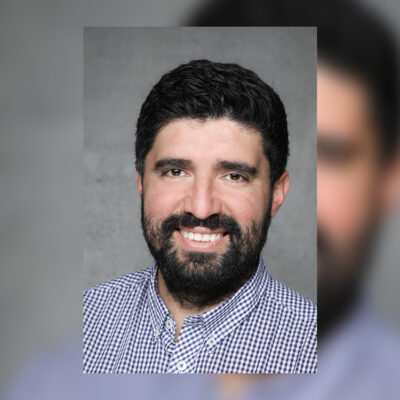
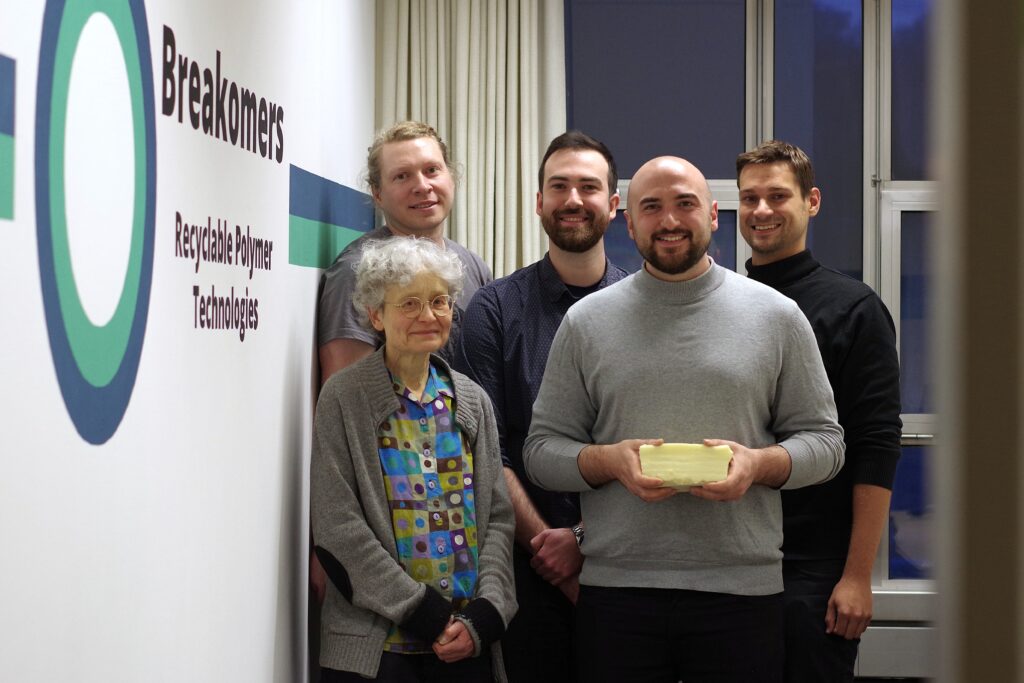
Plastics are made from small building blocks known as monomers. In the development of recyclable foams, chemists Kubilay Ceyhan, Christian Fabek, Paulo Wohlfahrt and industrial engineer Willy Zubert are pursuing the approach of incorporating predetermined breaking points into these monomers, hence the name ‘Breakomers’ of their research project group. ‘If a plastic is produced from such a breakomer building block, the material already contains predetermined breaking points that enable chemical recycling under mild conditions,’ explains Paulo Wohlfahrt.
© Elena Berz
Technology applied to foams for the first time
‘The concept of incorporating predetermined breaking points into plastics is currently experiencing a lot of hype,’ says Willy Zubert. ‘However, it has not yet been possible to apply this technology to foams.’ Only the Bielefeld scientists have managed to do this: the team has developed breakomer building blocks that are suitable for the manufacture of foams for mattress and upholstery production. The advantage over conventional products: Once they have reached the end of their useful life, the building blocks can be recovered and used to produce new mattresses and upholstery. A recycling loop is created.
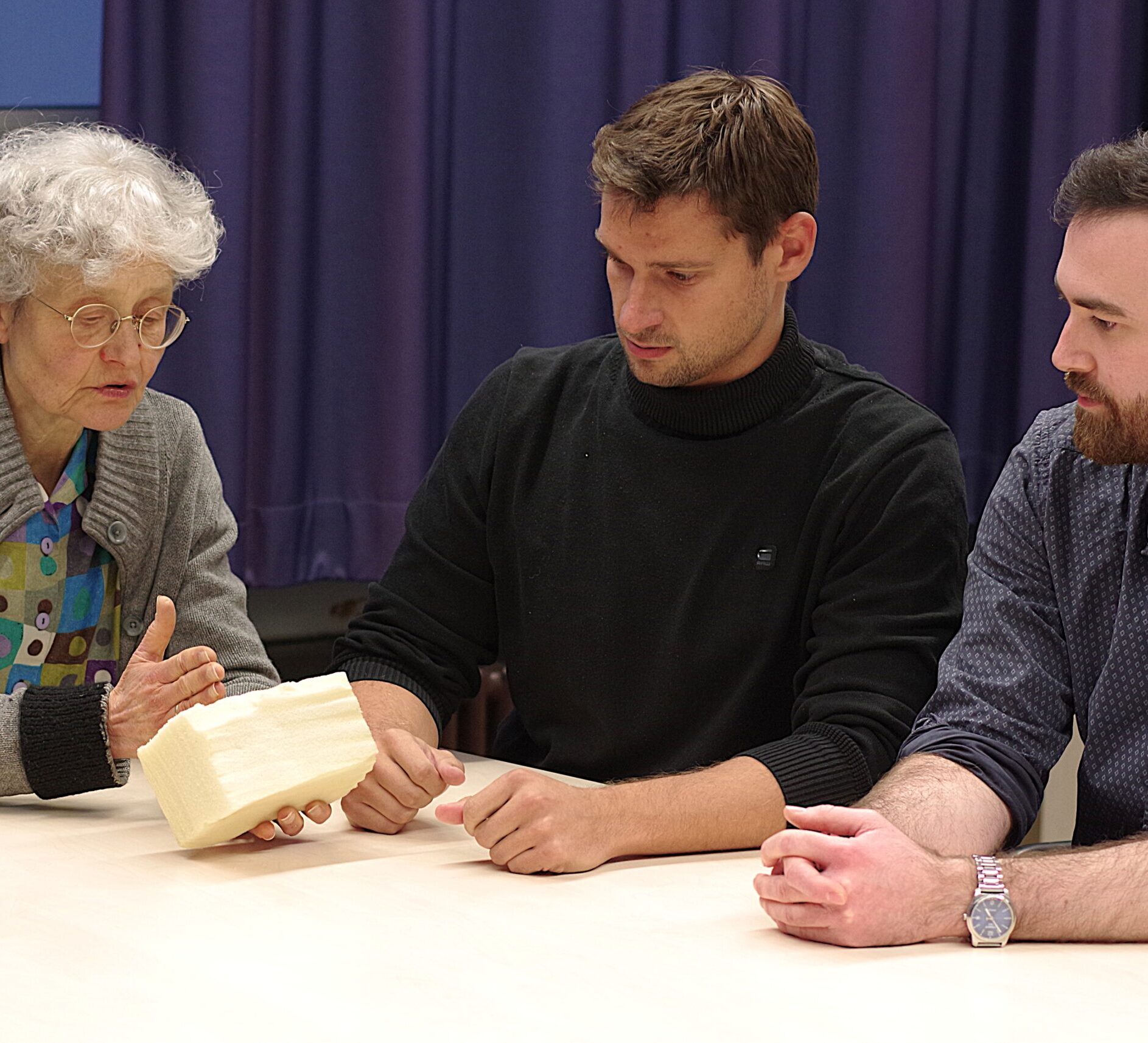
The principle is as follows: Firstly, the breakomer building blocks are produced by chemical synthesis and then mixed with another component. This mixture is then reacted. This produces a foam block that can be cut to any shape. By incorporating predetermined breaking points, the foam can be broken down back into its original components during recycling. This process can be repeated as often as required. The same starting materials and the same foam are always produced. Important for consumers to know: The foam block does not degrade under everyday conditions.
During his doctorate under Professor Dr Harald Gröger, Kubilay Ceyhan came across a molecule that is suitable for the production of degradable plastics rather by chance. ‘We immediately applied for a patent for this discovery,’ says Ceyhan. ‘In the further course of my doctorate, I developed a construction kit of other molecules that also contained predetermined breaking points. One in particular fascinated me because I realised early on that it was ideal for recyclable plastics.’
Start-up idea develops from research
The idea of founding a start-up specialising in this material quickly emerged. Ceyhan and his colleagues received a wide range of support on their journey from research to spin-off. ‘Professor Dr Adelheid Godt in particular was a great support from the very beginning and played a key role in making the funding application that has now been approved a success,’ says Paulo Wohlfahrt. First, however, Professor Gröger recommended that they take part in the Chemstars competition. There, the scientists made their first contacts with the start-up scene. They also received support in developing their business model and submitting an application for the exist research transfer programme. The programme will fund Breakomers with 1.52 million euros over the next two years. During this time, Professor Godt from the University’s Faculty of Chemistry will provide the Breakomers team with laboratory space and will also advise the group as a chemist.
‘Developing the business plan has been the biggest challenge so far,’ says Christian Fabek, ‘because we had to position ourselves clearly and define what kind of company Breakomers should be.’ The Centre for Business Creation (ZUg) at Bielefeld University supported them in this. It has also assisted the chemists with all patent applications to date.
© Elena Berz
Spin-off planned for autumn 2026
Breakomers recently conducted a feasibility study to verify and prove that the developed technology can be implemented and used in reality. ‘In the first phase of exist funding, our focus will be on upscaling the process and developing prototypes,’ explains Ceyhan. ‘We will analyse these comprehensively in terms of their mechanical properties.’ The team is working with partners from industry to do this. The spin-off of the start-up is planned for autumn 2026. ‘Once this first phase has been successfully completed, we will focus on finding investors, selecting a location and securing further funding in order to establish Breakomers on the market as a manufacturer and supplier of recyclable foams.’
This translation was created with machine assistance and subsequently edited.