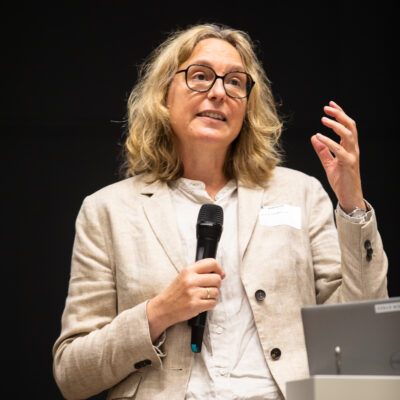
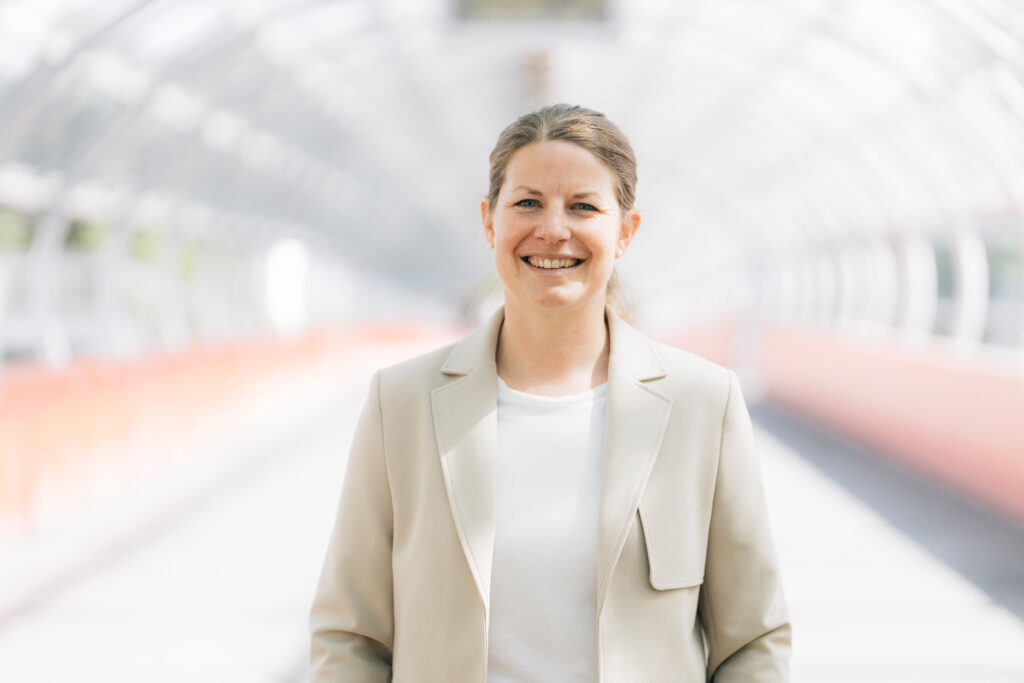
ESyMath stands for ‘Emergent Synergies in Mathematics.’ The new focus area aims to promote collaboration between mathematicians from different fields as well as the related sciences of physics, data science, and economics, and to open up new perspectives for the further development of modern mathematics. ‘There are many questions in mathematics, as well as technological and economic challenges, that we will only be able solve by exploiting synergies,’ emphasizes spokesperson Claudia Alfes.
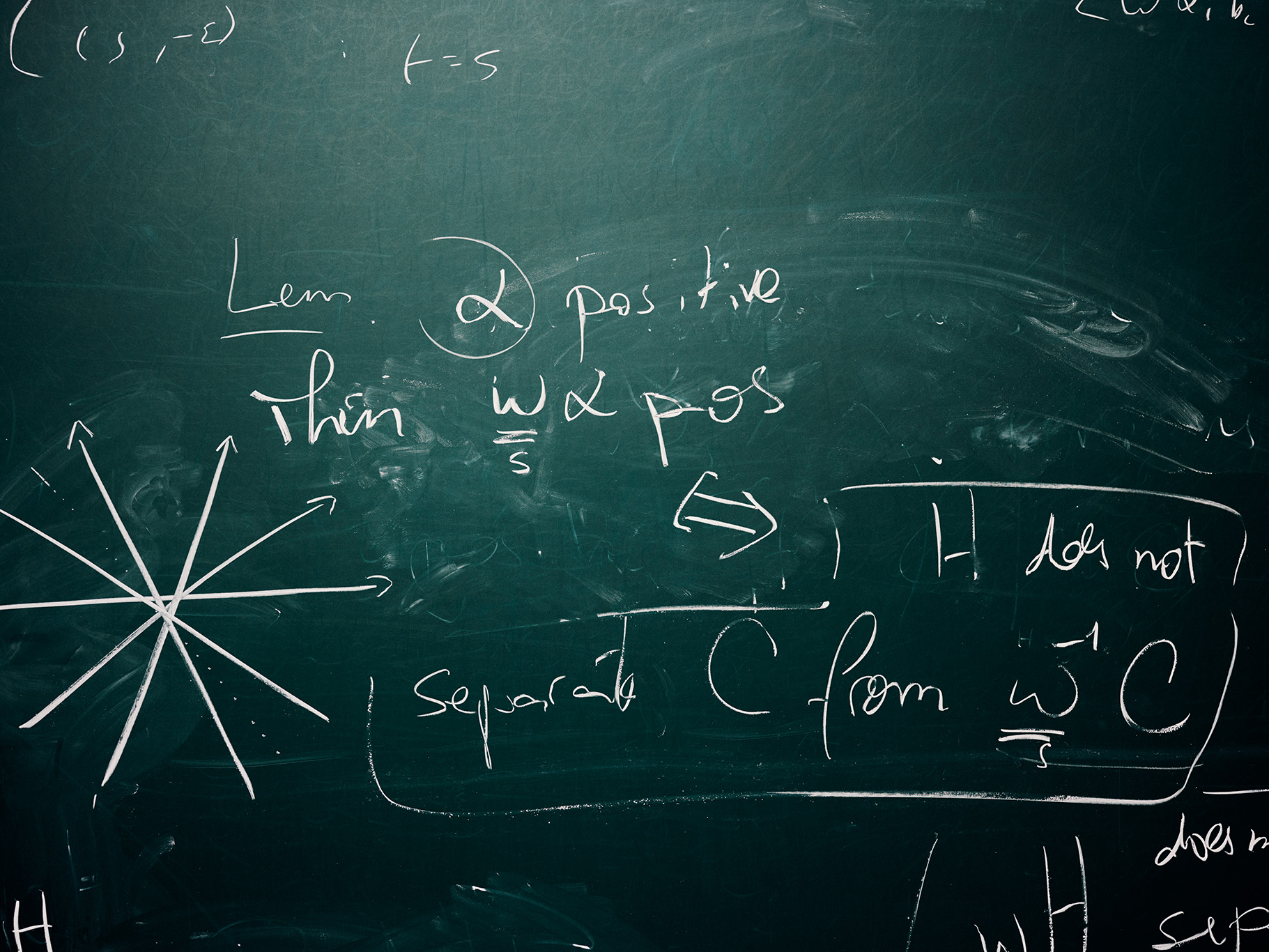
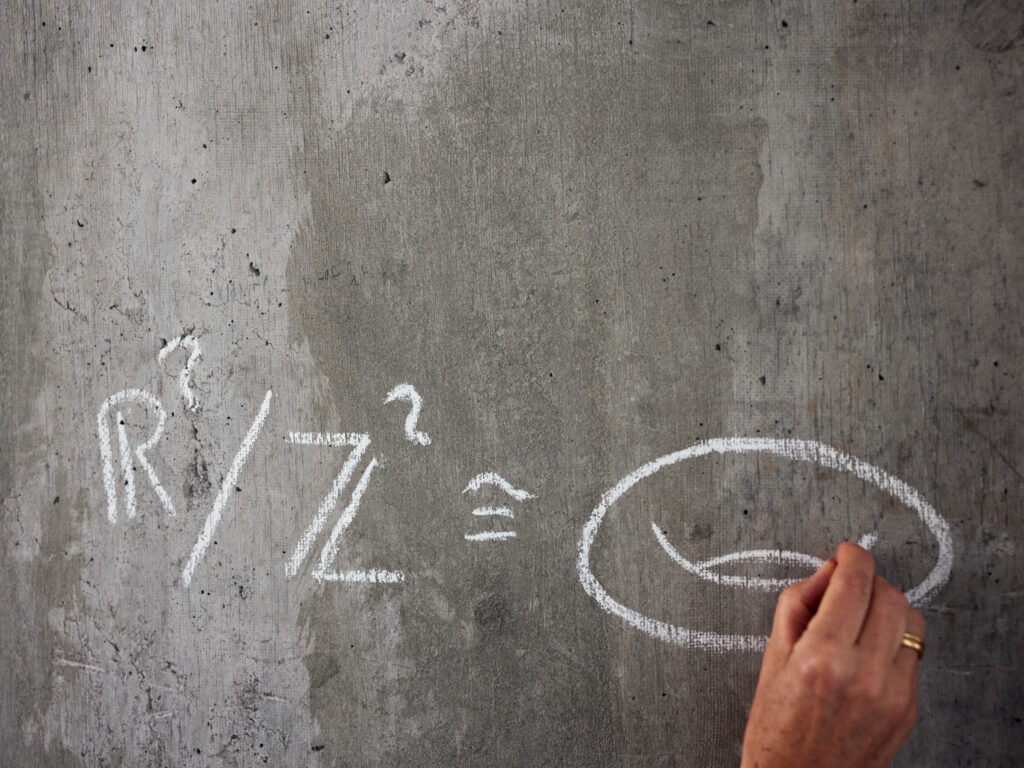
Algebra, analysis, geometry, number theory, stochastics, and statistics—mathematics comprises various subdisciplines, each of them highly specialized and a world of its own.. ‘However, mathematical problems do not necessarily restrict themselves to one area,’ says Professor Dr Claudia Alfes. A prime example is the Birch and Swinnerton-Dyer conjecture. Known to experts as a ‘millennium problem’, it is one of the great unsolved problems in mathematics. Claudia Alfes illustrates this by drawing an elliptic curve on a sheet of paper and writing numbers and equations beneath it. What, for most people, is more likely to lead to confusion, is highly exciting for the number theorist, because it reveals connections between different mathematical disciplines. The professor wants to use this to emphasize how important it is to look beyond one’s own field of expertise and risk trying new approaches. ‘Progress on this conjecture only became possible through combining methods from different areas such as algebra, geometry, and analysis.’
© Bielefeld University/Michael Adamski
Mathematics as a driving force for other sciences
Artificial intelligence, climate research, or economic crises: in light of today’s technological developments and societal challenges, Alfes emphasizes that it is also important to overcome the traditional division between applied and pure mathematics and to work in more interdisciplinary ways. As an example, she mentions AI language models such as ChatGPT that deliver answers and texts in a matter of seconds. ‘Large language models also raise many mathematical questions. Mathematicians are excited to get to the bottom of precisely these processes and structures. The insights gained can, in turn, enrich and advance work in data science.’
A platform for interdisciplinary exchange
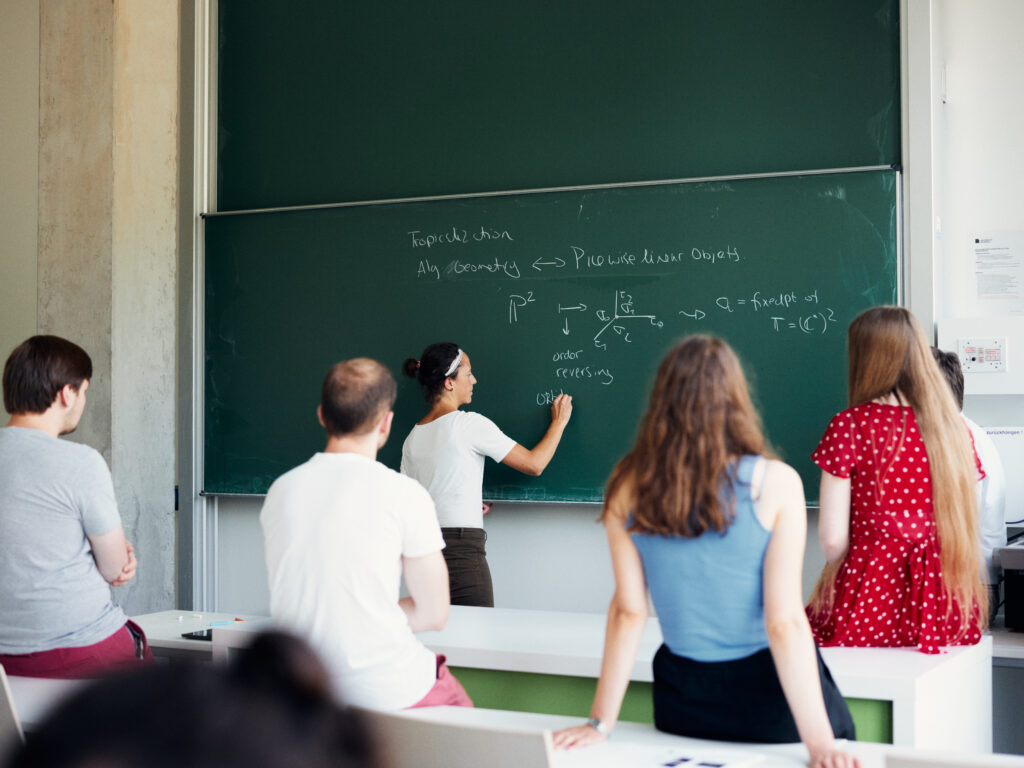
One of ESyMath’s goals is to develop a fundamental approach to mathematics in the sciences by identifying new mathematical structures in applied fields, and then transferring methods and insights back to the mathematical core. Professor Sebastian Herr, spokesperson of the Collaborative Research Centre (SFB) 1283, also sees great advantages in combining different perspectives and ways of working. ‘Many problems in mathematics are inspired by physics or economics.’ Researchers in related fields then benefit from pure research in mathematics. ‘The mathematical use of symmetries in relativity theory, for example, leads to a deeper understanding of the associated differential equations.’ This allows a model in physics to be better understood. ‘The focus area is intended to provide a platform for greater exchange in this area,’ says Herr. Likewise, pure mathematical research can increase the accuracy of climate models based on probabilistic methods.
© Bielefeld University/ Patrick Pollmeier
Blackboard, chalk, and lots of coffee
The planned ‘Synergy Hub’ plays a central role in this: a space with blackboards, chalk, and a coffee machine where researchers can meet, discuss, and develop ideas together. What sounds as if it is a matter of course is actually a small cultural shift in mathematics away from the cliché of lonely researchers and towards a more collaborative mindset across disciplines. Professor Dr Kai-Uwe Bux, spokesperson of the CRC/Transregio 358, is convinced that more cooperation brings added value. He emphasizes this with the story of a doctoral student in algebraic number theory who struck up a conversation with a postdoctoral researcher in arithmetic geometry during a TRR retreat. This exchange resulted in an article that took her research findings in a completely new direction.
Productive contacts in the global mathematics community
For mathematicians at Bielefeld University, cross-discipline collaboration is nothing unusual. Over the past 20 years, more than 100 doctoral students have been trained in joint graduate schools with the Chinese Academy of Sciences and Seoul National University. This has resulted in numerous works that have not only enriched the research landscape but also promoted intercultural exchange and understanding within the global mathematics community. For example, Sebastian Herr and Korean doctoral student Beomjong Kwak solved a 30-year-old problem involving a nonlinear differential equation known as the Schrödinger equation by using combinatorics to develop a completely new approach.
‘Such examples show that shared spaces such as the Synergy Hub are an important building block for our successful collaboration,’ says Bux. ‘We have found that the best ideas often arise when people with different perspectives sit down together and inspire each other.’ Another result of the TRR relationships, which was even unexpected for Bux himself, was a joint article with Valentin Blomer, a principal investigator in TRR 358 at the University of Bonn, on the time complexity of algorithms for cyclic permutations. ‘I had traced a problem back to the sum of the residues in the Euclidean algorithm, which is actually a number theory question, and Valentin was able to determine the decisive constant. That would never have happened without our TRR connection.’ Such surprising and productive cross-connections are exactly what ESyMath hopes to achieve with the Synergy Hub.
ESyMath focus area

Coordinator: Claudia Alfes
Participating faculties: Mathematics, Physics, Technology, and Business Administration and Economics together with the Center for Mathematical Economics and the Research Centre for Mathematical Modelling
Website: www.uni-bielefeld.de/forschung/profil/fokusbereiche/esymath/
© Bielefeld University/ Patrick Pollmeier