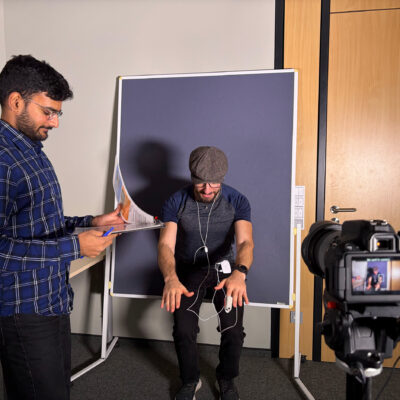
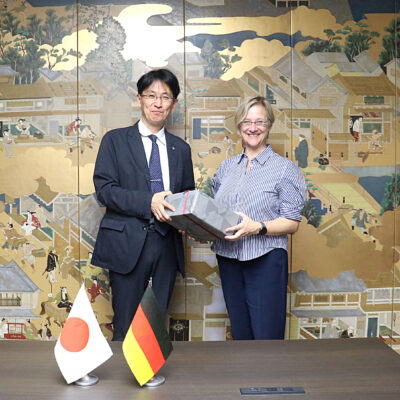
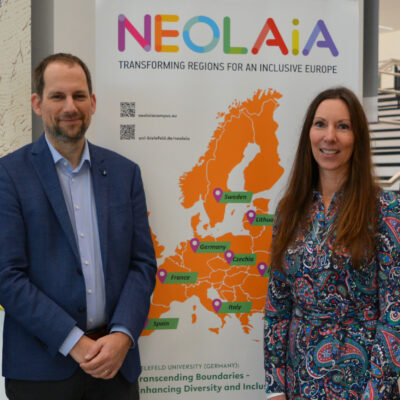
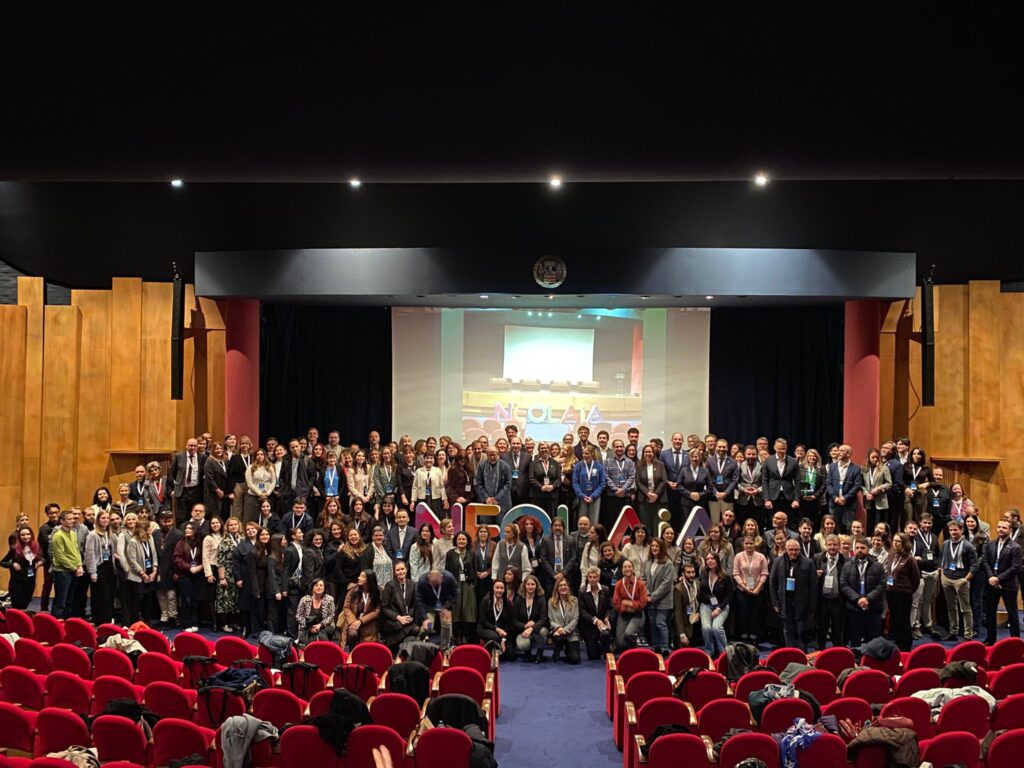
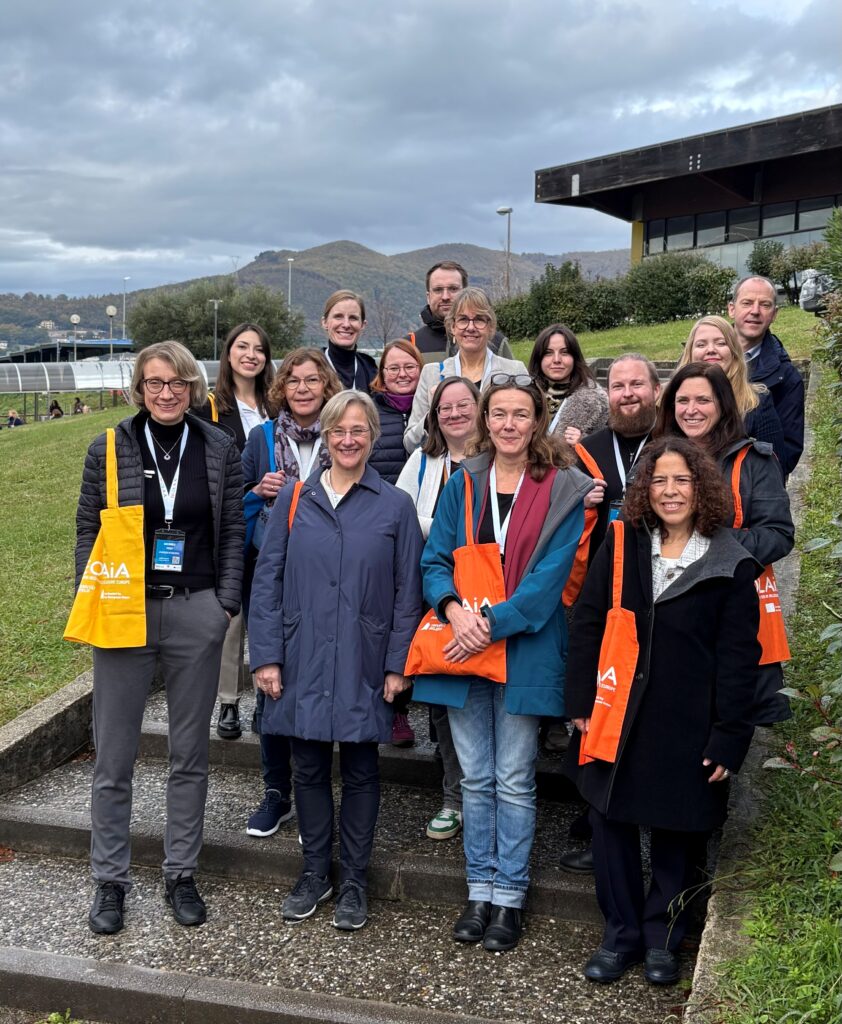
In the first week of December, the University of Salerno (Italy) invited around 150 representatives from the nine NEOLAiA universities to the global meeting of the European University Alliance. The 16-strong delegation from Bielefeld University led by Rector Professor Dr Angelika Epple and Professor Dr Michaela Vogt, Vice Rector for International Affairs, Diversity and Society, was also present. The purpose of the meeting was to reflect together at the halfway point of the first funding phase on where NEOLAiA stands in the development of the networked European university alliance, which milestones have already been successfully achieved and which lie ahead for the European partners.
The European higher education landscape is changing with new opportunities, for example through digitalisation and challenges such as demographic change. Since the last global NEOLAiA meeting in Brussels in February 2024, the Alliance has driven forward initial initiatives to develop European innovations in study, teaching, research and cooperation between the partners at administrative level, to promote diversity and inclusion as fundamental principles of the Alliance and to deepen relations between the partner universities and the regions. In Salerno, the main focus was on future goals and cooperation in joint teaching and mobility initiatives, research endeavours and social commitment on the part of the partners.
© NEOLAiA
© NEOLAiA
© NEOLAiA
© NEOLAiA
“The meeting in Salerno shows us that we are on track with the development of our ambitious university alliance and, as Bielefeld University, are helping to shape the changing European higher education landscape – these are good signs,” says Rector Professor Dr Angelika Epple, Rector of Bielefeld University. “We are contributing our Bielefeld strengths to NEOLAiA – for example in the areas of diversity and inclusion. And together with our European partners, we want to continue to try out new ways of promoting mobility for students, researchers, teaching staff and employees.”
Formats for European exchange
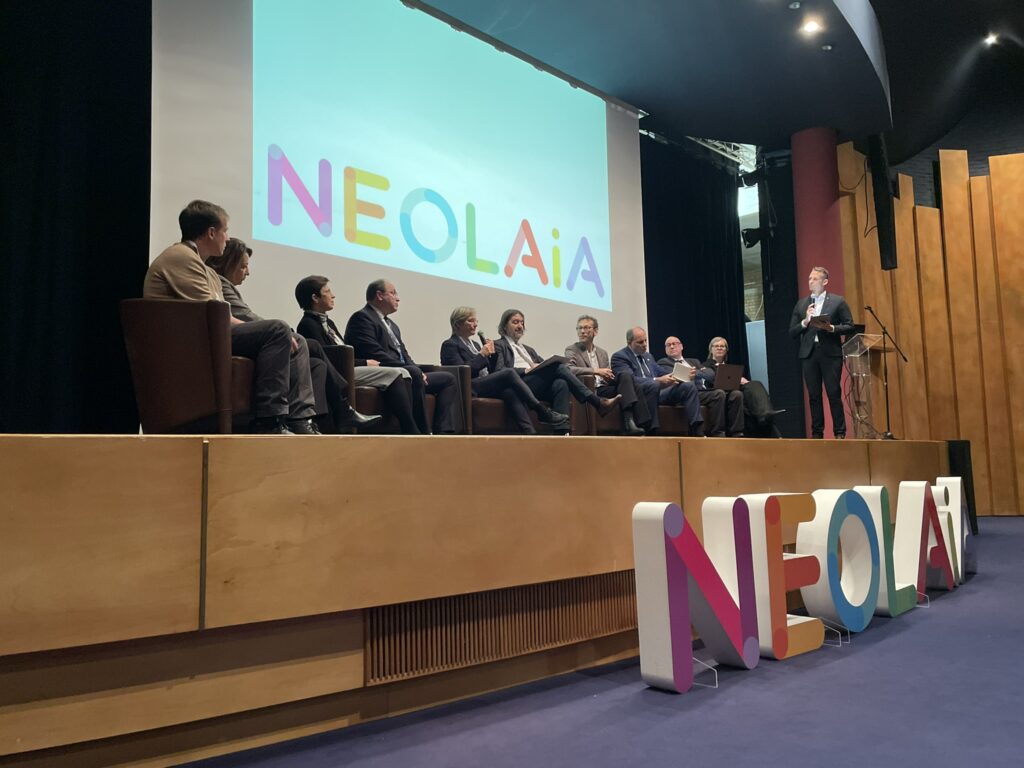
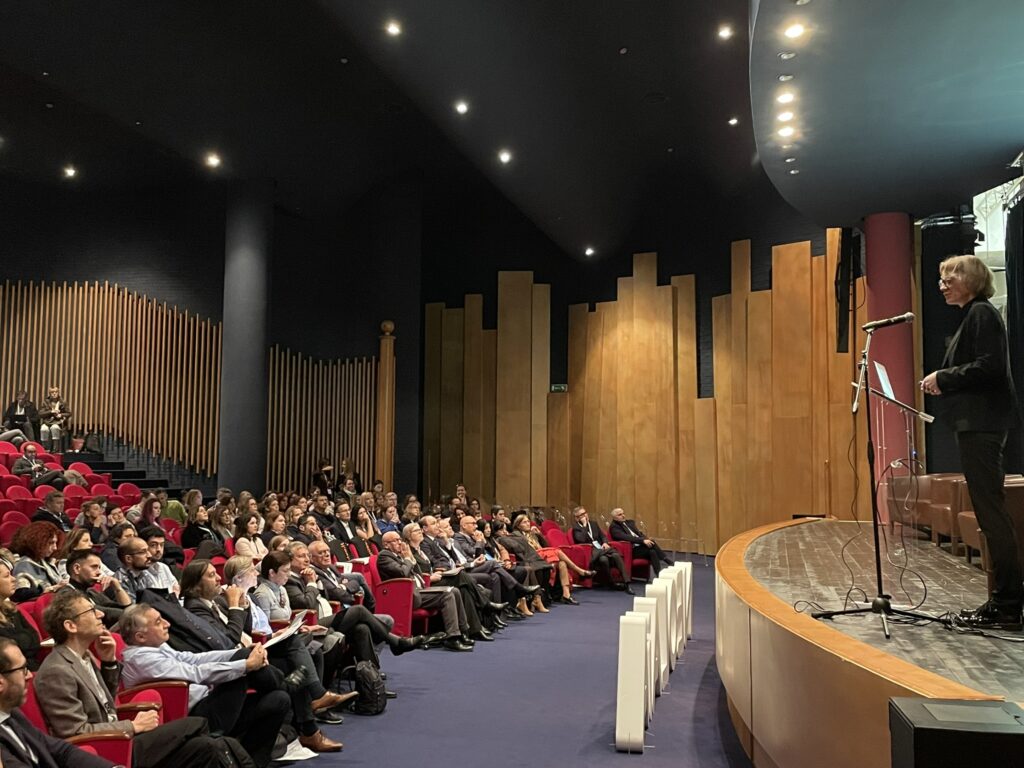
The 150 representatives of all European partners who travelled to the event discussed and presented in various formats: At the NEOLAiA Agora – a kind of market of opportunities – all work packages presented their work to the other delegates. During a panel discussion, rectors and university representatives presented how NEOLAiA is having an impact in the respective regions, what new forms of mobility have already been tried out and what role digitalisation plays in this. Bielefeld Rector Professor Dr Angelika Epple also spoke at the event.
Another key component in Salerno were the working sessions of the ten work packages, which were able to take place in Salerno in a face-to-face format. The focus here was on reviewing current tasks and results, coordinating upcoming milestones and achievements and exploring new opportunities for collaboration in the coming years. A world café session invited all partners to contribute to the long-term direction of NEOLAiA through structured discussions. The results were summarised in the plenary session.
An external impulse rounded off the programme: Professor Dr Beatrix Busse, Chair of FOREU4ALL, the initiative of all European university alliances, gave a digital presentation on the role of European university alliances in promoting cooperation and shaping joint learning and innovation processes.
Background: What is NEOLAiA?

NEOLAiA is a European university alliance between the universities of Jaén (Spain), Tours (France), Bielefeld University, Örebro (Sweden), Salerno (Italy), Šiauliai (Lithuania), Suceava (Romania), Ostrava (Czech Republic) and Nicosia (Cyprus) since 2023.
The strategic goals of the NEOLAiA alliance include a common digital identity, transforming the educational environment through digitalisation, promoting tolerance, diversity and inclusion, investing in research and civic engagement, strengthening democracy, developing innovative solutions for global health and providing quality education for all.
Bielefeld University is one of 67 German universities participating in a European University Alliance. A total of 73 European university alliances are being funded. Almost 650 universities from 36 countries are involved across Europe.
Click here for the Bielefeld website of NEOLAiA.